South Asia · India
The
Sitar · for evening calm
A tender late-night raga in the spirit of Bageshri, drawn out slowly over a continuous tanpura drone and an unhurried tabla pulse — sitar music to come down into at the end of the day.
Quick answer
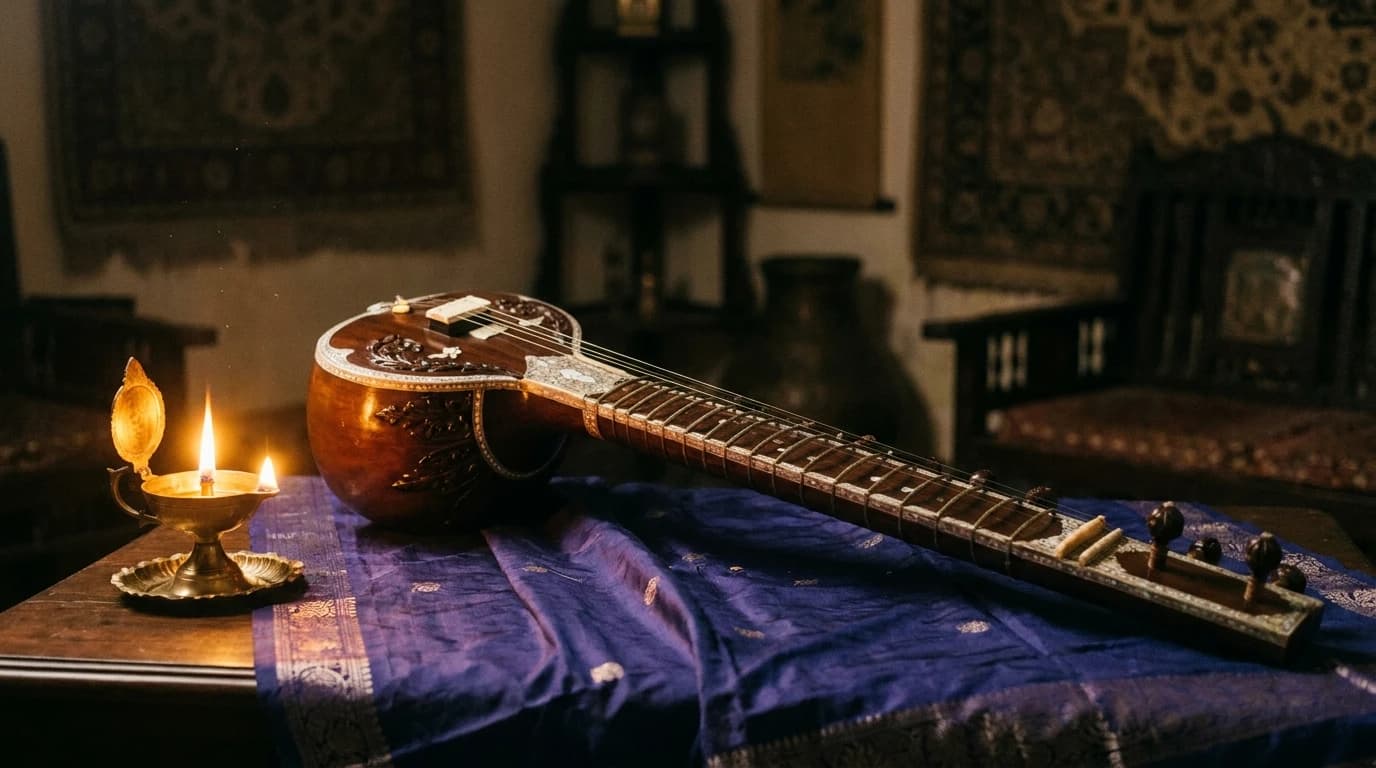
This is the nocturnal side of the sitar, built around raga Bageshri, a late-night mode traditionally associated with longing and with waiting. The playing leans on meend — the long pulls that slide between notes on a single pluck — so melodies bend instead of stepping. It is slow, sweet and unhurried, and it suits the last hour of the day.
Listen now
01 · The mood
Music for the end of the day, not the work of it.
This is the evening counterpart to our deep-focus sitar. Where focus music has to stay out of the way of a working mind, evening music has the opposite job: it is allowed to be beautiful, to be noticed, to be the thing you are doing rather than the thing behind what you are doing.
What it must not do is excite. No build, no climax, no surprise. The arc of the piece is a slow descent — phrases that settle lower and softer as the half hour goes on, the way the body settles when the day finally lets go.
Underneath the sitar runs a continuous tanpura drone and, unlike our other sitar recordings, a very gentle tabla — a soft, slow pulse around sixty beats a minute. It is barely there. But that quiet heartbeat is what turns a sparse alap into something that feels like company in the room.
02 · The raga
Bageshri — the tender raga of the late night.
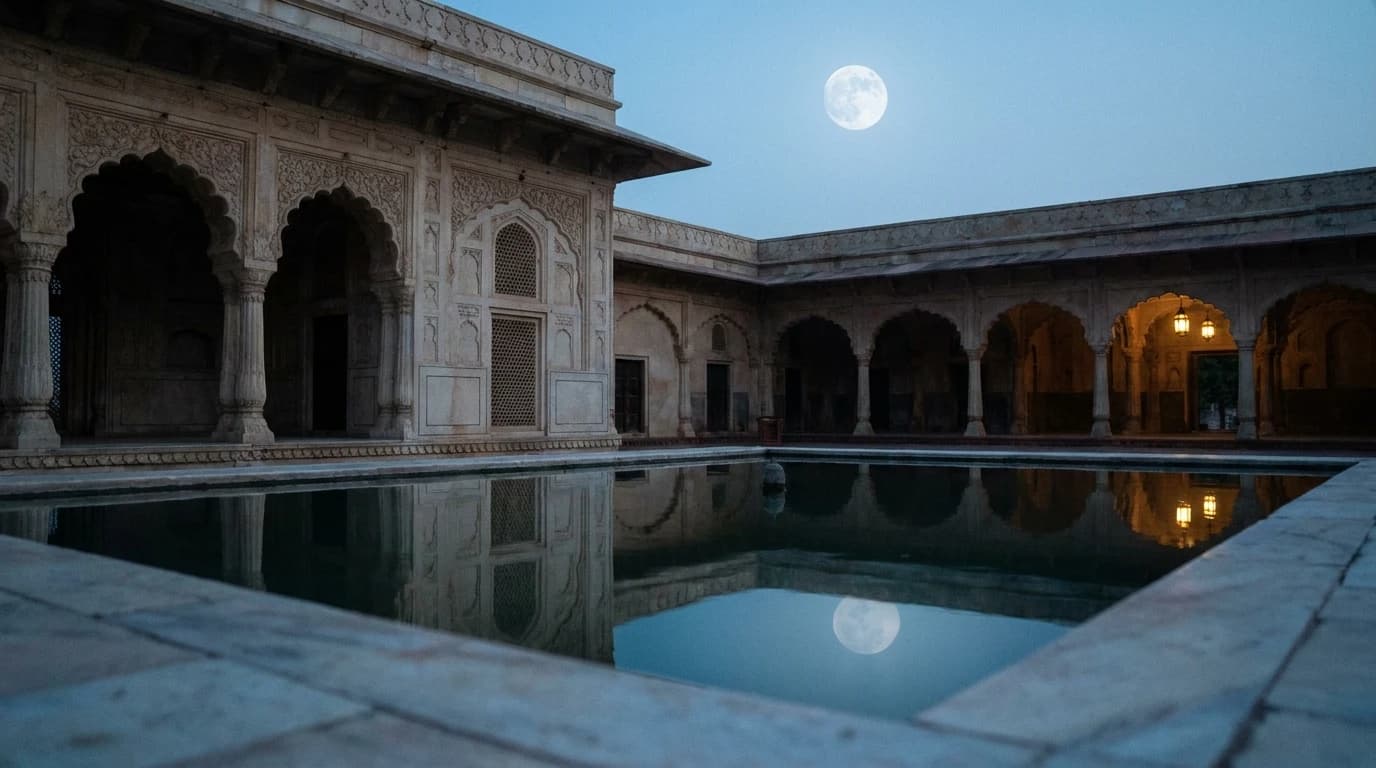
Raga Bageshri is one of the most beloved night ragas of the Hindustani tradition — a raga of the deep evening and the hours after, traditionally tied to the ache of waiting for someone who has not yet come. It belongs to the Kafi family, and its character is sweetness shaded with longing, rather than the bright lift of an evening raga like Yaman.
That tenderness is why it sits so well at the close of a day. The melodic motion folds back on itself, returning again and again to its resting tones, never reaching for a peak. This recording draws on that spirit — slow, sweet, circular — rather than performing the raga to the letter.
As in all sitar music, the thirteen tarab strings ring sympathetically beneath every plucked note, filling the room with a continuous shimmer. The meend — the long gliding slide between pitches — does most of the emotional work, bending each note into the next the way a voice would.
03 · The listening
Put it on as the day ends.
Start it as you wind down — over dinner, with a book, in the bath, in the slow hour before sleep. It does not demand attention, but unlike focus or reading music it rewards it: there is enough melody to follow if you want to, and enough quiet to let go of if you don't.
The gentle tabla gives the piece a slow forward motion, so it works well as a backdrop to unhurried movement — tidying, stretching, moving through the house turning the lights down. The tempo is slow enough that it never hurries you.
Low volume, warm room, soft light. Speakers rather than headphones if you can — the tanpura's shimmer is built to fill a space, not an ear.
A listening guide
What to listen for
The tarab shimmer. The thirteen sympathetic strings ring continuously without being plucked — a soft halo around every note.
The meend. The gliding slide between pitches that bends one note into the next, three to five seconds at a time. Bageshri's longing lives here.
The gentle tabla. A soft, slow pulse around sixty beats a minute — barely present, but it keeps the piece company. The one thing this recording adds that our focus sitar leaves out.
The tanpura. The continuous low drone underneath, holding the raga's tonic for the whole half hour.
The descent. No crescendo, no peak. The piece settles lower and softer as it goes — made to be left running as the day closes.
Common questions
Questions people ask about the sitar · for evening calm
What is raga Bageshri?
Bageshri is a late-night raga in the Hindustani tradition, conventionally connected with a mood of longing for someone absent. Like all ragas it is a framework of pitches and phrases rather than a fixed piece of music.
Do ragas really have times of day?
Assigning ragas to times and seasons is a long-standing convention of Hindustani practice and is taken seriously by musicians. It is a tradition about when a mode is performed, not a claim about what it does to a listener.
How does this differ from the sitar for yoga page?
Both are slow and drone-backed. The yoga selection stays in the pulse-free alap of a bright evening raga; this one sits in a later, sweeter mode and leans harder on the sliding meend the sitar is known for.
Listen to the sitar · for evening calm.
The full 30-minute piece lives on the channel. Subscribe to catch each new tradition as it arrives.
Subscribe on YouTubeFree · No email required
More from this tradition
Other pieces for the sitar
Continue the atlas
Other traditions
Duduk
Armenia
Shakuhachi
Japan
Quena
Peru & Bolivia
Celtic Harp
Ireland & Scotland
Kora
Mali & Senegal
Santur
Iran
Oud
Turkey & Syria
Guzheng
China
Morin Khuur
Mongolia
Kantele
Finland
Slack Key
Hawaii · soon
Mbira
Zimbabwe
Bansuri
India
Ney
Turkey
Tagelharpa
Norway · soon
Begena
Ethiopia · soon
Gayageum
Korea · soon
Ngoni
Mali · soon
Guqin
China
Erhu
China
Koto
Japan
Pipa
China
Setar
Iran
Sarod
India
Sarangi
India
Xiao
China
Kaval
Bulgaria
Dizi
China
Nyckelharpa
Sweden
Hurdy-gurdy
France
Saz
Turkey