British Isles · Ireland & Scotland
The
Celtic Harp
The cláirseach. Played for Irish kings, then nearly silenced. The eighteen strings that survived are still carrying the weather of the islands.
Quick answer
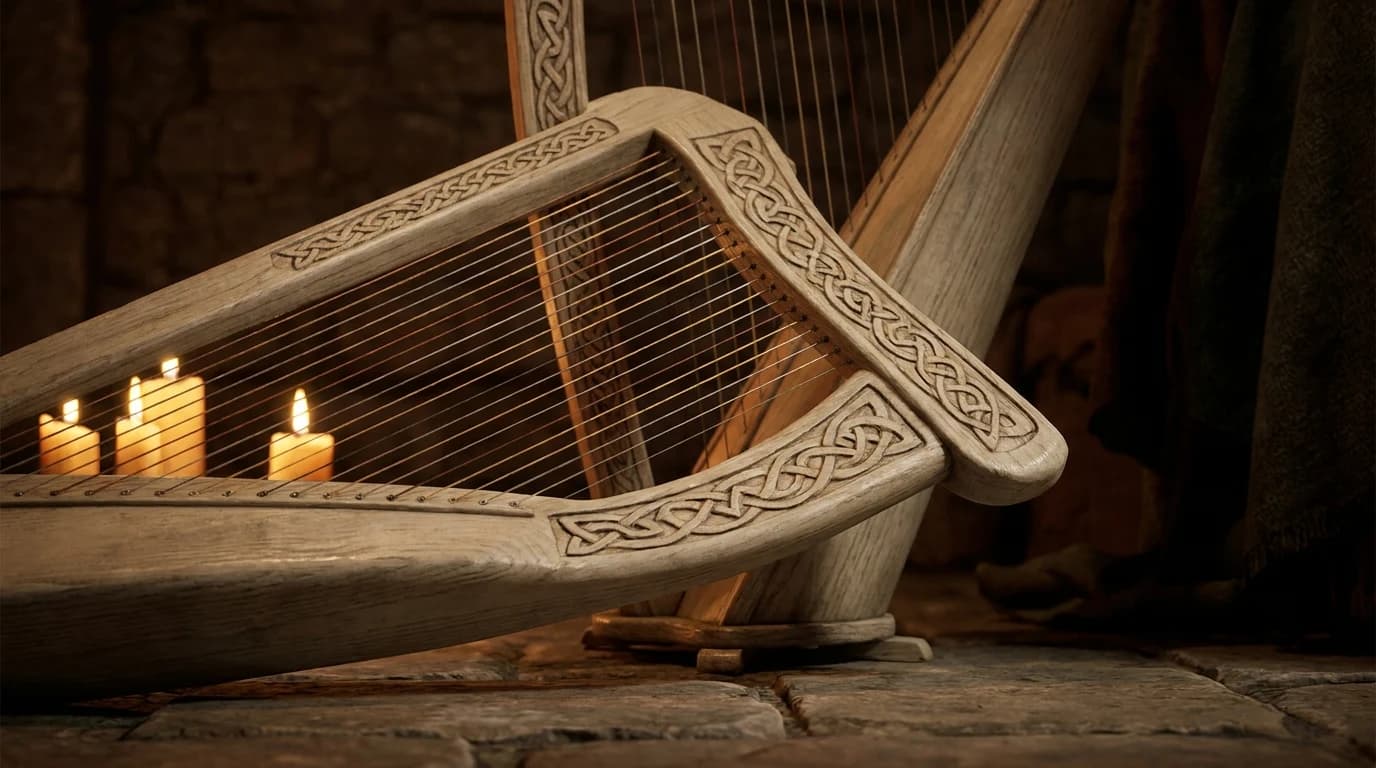
The Celtic harp is the small, shoulder-height harp of Ireland and Scotland, descended from the wire-strung cláirseach played in Gaelic courts. Modern instruments are usually gut or nylon strung, which gives a softer, more sustained tone than the bell-like ring of the old wire harps. Its repertoire of slow airs and laments is undemanding to have on in the background, which is why it suits reading and emotional quiet rather than active listening.
Listen now
01 · Origins
Older than the shamrock.
The Celtic harp is older than the English language as it is spoken today. Its ancestor, the cláirseach, appears on stone carvings in 8th-century Ireland, and by the medieval period it had become the defining court instrument of Gaelic nobility — so central to Irish identity that the harp, not the shamrock, is the national symbol of Ireland and appears on every Irish euro coin minted today.
The people who played it were the harpers, a hereditary class of itinerant court musicians who traveled between noble households, memorizing hundreds of airs, laments, and planxties in a tradition that was entirely oral. They did not write music down. Their repertoire lived in memory alone, passed from teacher to student in a lineage that could trace itself back ten or fifteen generations without a single sheet of notation.
In the 17th and 18th centuries, the twin pressures of the English plantations and the social collapse of Gaelic Ireland nearly killed the tradition entirely. The old harp was not fashionable. The harpers lost their patrons. By 1792, the scholar and antiquarian Edward Bunting was alarmed enough to organize a harp festival in Belfast — a gathering of the remaining masters, most of them old, most of them blind — where he sat beside each player and tried to write down, as quickly as he could, whatever they performed. He captured only a fraction. But what he saved became the spine of what we still play.
02 · The instrument
A body that remembers all its strings.
The modern concert harp has forty-seven strings and seven foot pedals, each of which can raise every string of a given note name by a half-step. This mechanism, developed in 19th-century France, allows the instrument to play in any key and modulate freely. But the sound it makes — that long, ringing sustain, that overlap of harmonics that makes single notes bloom into chords — is the same sound described in 12th-century Irish poetry as ceol síde, the music of the otherworld.
The strings are tuned in the pattern of the white keys of a piano, which is itself the pattern of the old Celtic modal scales. A harp in C flat major — the default position of a pedal harp with all pedals resting — sounds medieval in the best way: spacious, modal, and slightly outside the brightness of our modern equal-tempered ears.
The technique that gives Celtic harp music its distinctive character is the art of damping. Unlike a piano, where notes stop automatically when you lift a key, a harp string rings until the player touches it again. A skilled harper manages a constant flow of sounds — starting some, letting others ring, cutting a few at exactly the right moment to create silence as structure. It is less like playing an instrument and more like tending a garden of sound.
03 · The tradition
Elegiac by nature.
The emotional register of Celtic harp music is narrow in range and vast in depth. Almost all of it is tender, reflective, and touched with a quiet sadness the Irish call caoineadh — keening — even when the melody is technically in a major mode. This is not an accident of cultural temperament. It is a consequence of the harp's history: most of the pieces that survived into Bunting's collection were laments, elegies, and airs written for people who had died or for things that had been lost.
The pieces are also slow. Not slow in the sense of dragging or heavy, but slow in the sense that each note is given its full time to speak. The tradition has no percussion, no bass line, no harmonic thickening from other instruments. It is one player, one harp, and the patience to let a single note fade before playing the next.
Our piece draws on this tradition — the long singing phrases, the modal harmonies, the careful management of resonance and silence. It is music for early morning or late evening, for the hours when the mind is neither fully in the world nor fully removed from it.

A listening guide
What to listen for
The sustain. Celtic harp strings ring for two to four seconds after they are plucked. Each note is a decision about how long to let the previous one keep sounding.
The modal tuning. The piece uses Mixolydian and Dorian modes — old scales that avoid the sharp leading tones of modern Western music. This is why it sounds, in the best way, slightly ancient.
The damping. Moments of silence that seem to arrive by design are the harper touching a ringing string exactly when the phrase requires quiet. Silence here is technique, not absence.
The left hand. The bass and harmonic material lives in the lower strings. Listen for it holding a steady pattern underneath the melody — a kind of long, slow breathing.
The wistfulness. It is not sadness exactly. It is the emotion of looking at something beautiful from a slight distance, knowing it will change.
From the listener to the player
If the Celtic harp pulled you in
A full lever harp is a serious instrument. A small lyre harp is the gentlest way into plucked strings and resonance.
Start here
~$76
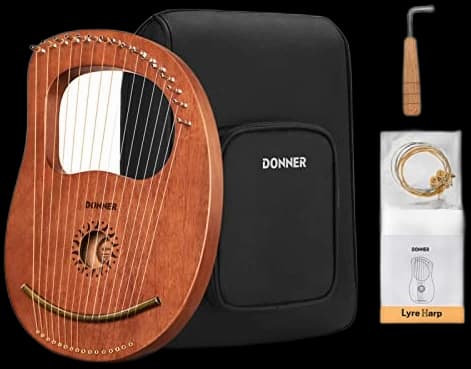
Donner 16-String Lyre Harp
Not a Celtic harp — but the same gesture: plucked strings ringing over a resonant body. The most affordable, forgiving way to learn touch, decay, and pattern before a full harp.
Buy on Amazon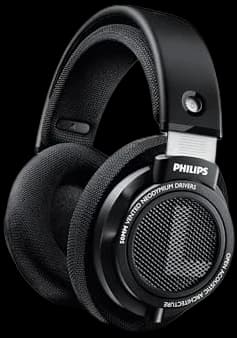
To hear it
~$85
Philips SHP9500
Open-back headphones keep the harp's overtones airy and let each string's decay ring out — ideal for music this resonant in a quiet room.
Buy on AmazonA real Celtic lever harp
For a proper lever harp from a specialist maker, Reverb is the place to compare new and used instruments.
Affiliate links
These are honest recommendations — the ones we’d point a friend toward. As an Amazon Associate, SlowHum earns from qualifying purchases; we may also earn from other links. It costs you nothing extra, and prices are approximate. Full disclosure.
Common questions
Questions people ask about the celtic harp
How is a Celtic harp different from a concert harp?
It is much smaller, has fewer strings, and has no pedals. Sharps and flats are set by hand with levers at the top of each string before or during a piece, so the harp works within a chosen key rather than modulating freely.
Why is the harp the national symbol of Ireland?
The harp was the instrument of Gaelic nobility for centuries, and harpers held a formal place in court life. It survived as the emblem of Ireland long after the courts did, and it appears on Irish coinage today.
What is a planxty?
A planxty is a harp tune written in honour of a particular patron, a form strongly associated with the blind harper Turlough O’Carolan. They are melodic and courtly rather than mournful, and sit between dance tune and slow air.
Listen to the celtic harp.
The full 30-minute piece lives on the channel. Subscribe to catch each new tradition as it arrives.
Subscribe on YouTubeFree · No email required
More from this tradition
Other pieces for the celtic harp
Continue the atlas
Other traditions
Duduk
Armenia
Shakuhachi
Japan
Quena
Peru & Bolivia
Kora
Mali & Senegal
Santur
Iran
Oud
Turkey & Syria
Sitar
India
Guzheng
China
Morin Khuur
Mongolia
Kantele
Finland
Slack Key
Hawaii · soon
Mbira
Zimbabwe
Bansuri
India
Ney
Turkey
Tagelharpa
Norway · soon
Begena
Ethiopia · soon
Gayageum
Korea · soon
Ngoni
Mali · soon
Guqin
China
Erhu
China
Koto
Japan
Pipa
China
Setar
Iran
Sarod
India
Sarangi
India
Xiao
China
Kaval
Bulgaria
Dizi
China
Nyckelharpa
Sweden
Hurdy-gurdy
France
Saz
Turkey