Nordic · Sweden
The
Nyckelharpa
Sweden's keyed fiddle. A bowed instrument played with rows of wooden keys instead of fingertips, ringing with a forest of sympathetic strings.
Sweden
Nyckelharpa
Quick answer
The nyckelharpa is the Swedish keyed fiddle: a bowed instrument whose pitch is set not by the fingers on a string but by rows of wooden keys that push tangents against it. Under the bowed strings runs a bank of sympathetic strings, so every note is followed by a soft resonant halo. Images of keyed fiddles appear in medieval Swedish church art, and the instrument has been in more or less continuous use in Uppland ever since.
01 · What it is
A fiddle you play with keys.
The nyckelharpa is a Swedish bowed string instrument — in English it is usually called the keyed fiddle, sometimes the key fiddle or keyed violin. The name says exactly what it is: nyckel is the Swedish word for “key,” and instead of pressing the strings to the fingerboard with fingertips, the player presses rows of wooden keys. Each key carries a small upright peg called a tangent, and when the key is pushed, the tangent rises and stops the string at a precise point — a mechanical fingerboard, closer in spirit to the hurdy-gurdy's keybox than to anything in the violin family.
The instrument hangs from a strap across the player's shoulders and is bowed with a short bow in the right hand while the left works the keys from below. It is larger than a violin — roughly the length of a viola with a deep, boat-shaped body — and its silhouette, with the keybox running along the neck, is unmistakable once you have seen it. If it is the bowed sound itself that draws you, the violin is the bowed string instrument you can most easily buy and find a teacher for; our guide to the best violins for beginners explains how to avoid the cheap outfits that will not hold a tune.
02 · Origins
Six centuries of keys.
The earliest evidence of a keyed fiddle in Scandinavia is carved in stone: a relief on a gate of Källunge Church on the island of Gotland, dated to around 1350, shows two musicians playing instruments with what appear to be key mechanisms. From the seventeenth century onward the record is continuous, and its heartland is specific — the farming parishes of northern Uppland, north of Stockholm, where the nyckelharpa was for generations the ordinary instrument of dances, weddings, and village ceremony, built and played by farmers and craftspeople rather than court musicians.
By the early twentieth century the tradition had thinned to a handful of players, and the instrument might have joined the museum instruments around it. Instead it was rebuilt from within. The fiddler and builder August Bohlin developed a chromatic version, and Eric Sahlström (1912–1986) — a farmer from Uppland who became the instrument's great modern master — refined the design, composed for it, and taught it for decades. The revival held: the Eric Sahlström Institute in Tobo now teaches the instrument year-round, and in 2023 UNESCO added the nyckelharpa network's building-and-playing tradition to its register of good safeguarding practices.
03 · The instrument
Sixteen strings, and the bow touches four.
The modern chromatic nyckelharpa has sixteen strings, but the bow only ever touches four of them: three melody strings and one drone string. The other twelve are sympathetic strings — tuned resonance strings that run beneath the playing strings and through the bridge, never bowed and never touched. They ring entirely by vibration, each one waking whenever its pitch sounds in the melody above. The effect is a built-in reverb, as if the instrument were being played inside a small stone chapel of its own.
The keybox carries thirty-seven keys in three rows, one row for each melody string, giving the modern instrument a fully chromatic range of about three octaves. This is the twentieth-century design; the older folk instruments of Uppland — the drone-string gammalharpa and its relatives — had fewer keys and a rawer, more open sound, and some revival players still seek those older forms out for exactly that quality.
04 · The voice
A ringing room of strings.
What makes the nyckelharpa unmistakable is its resonance: the sympathetic strings ring constantly under the bowed melody, so the instrument sounds less like a single fiddle than like a small, warm room full of strings. Every note arrives wrapped in the after-glow of the notes around it. Underneath the sustain there is a faint mechanical intimacy — the soft click of wooden keys — that reminds you a person's hand is doing this, not a machine.
That resonance is why the instrument suits slow listening so well. The traditional Swedish repertoire — the walking triple-time polska, wedding marches, slow airs — already leans unhurried and inward, and when it is played gently the nyckelharpa's ring fills the spaces between notes the way light fills a room at dusk. Our piece lives in that register: long bowed phrases, the drone string underneath, and twelve untouched strings quietly answering everything.
Watch the tradition
Watch the keys at work
The nyckelharpa is fascinating to see: the keys stop the strings while the bow draws across, and the whole instrument rings.
Chippewa Valley Museum
Nyckelharpa: A traditional Swedish instrument
A performance that shows the keyed mechanism and the nyckelharpa's deep sympathetic resonance.
A listening guide
What to listen for
The constant ring of the sympathetic strings under the melody
The faint mechanical click of the wooden keys
The warm, slightly archaic, resonant tone
How a single bowed note arrives wrapped in resonance
The inward, meditative feel of slow Swedish airs
From the listener to the player
If the nyckelharpa pulled you in
A real nyckelharpa is a specialist instrument. Begin by listening closely, then find the real thing when the sound has truly stayed with you.
To hear it
$95
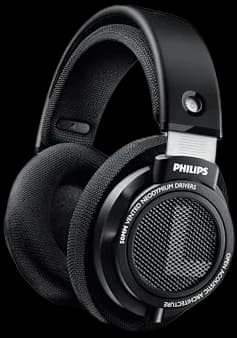
Philips SHP9500
The nyckelharpa's whole charm is resonance — sympathetic strings ringing under the bow, which headphones keep and small speakers lose.
Buy on AmazonA real nyckelharpa
A nyckelharpa is a specialist, largely Nordic instrument. Reverb is one of the few places to find one outside Scandinavia.
Affiliate links
These are honest recommendations — the ones we’d point a friend toward. As an Amazon Associate, SlowHum earns from qualifying purchases; we may also earn from other links. It costs you nothing extra. Amazon prices are from our last check and change often. Full disclosure.
Common questions
Questions people ask about the nyckelharpa
How does a nyckelharpa work?
The player bows with the right hand and presses keys with the left. Each key drives a small wooden tangent up against a string to stop it at a fixed point, so the instrument is fretted in effect, but by keyboard rather than by finger.
Why does it ring after the note stops?
A set of sympathetic strings runs beneath the played strings and is never bowed. They vibrate in response to the notes above them, leaving the resonant tail that gives the instrument its woodsmoke quality.
Is the nyckelharpa a kind of hurdy-gurdy?
No, though both use keys and tangents. A hurdy-gurdy is sounded by a rosined wheel turned with a crank; a nyckelharpa is bowed by hand like a fiddle, so its phrasing follows the arm rather than a continuous rotation.
A SlowHum nyckelharpa piece is in the making.
We're composing a thirty-minute piece for this tradition. Subscribe to be first — and watch the performances above in the meantime.
Subscribe on YouTubeFree · No email required
Continue the atlas
Other traditions
Duduk
Armenia
Shakuhachi
Japan
Quena
Peru & Bolivia
Celtic Harp
Ireland & Scotland
Kora
Mali & Senegal
Santur
Iran
Oud
Turkey & Syria
Sitar
India
Guzheng
China
Morin Khuur
Mongolia
Kantele
Finland
Slack Key
Hawaii · soon
Mbira
Zimbabwe
Bansuri
India
Ney
Turkey
Tagelharpa
Norway · soon
Begena
Ethiopia · soon
Gayageum
Korea · soon
Ngoni
Mali · soon
Guqin
China
Erhu
China
Koto
Japan
Pipa
China
Setar
Iran
Sarod
India
Sarangi
India
Xiao
China
Kaval
Bulgaria
Dizi
China
Hurdy-gurdy
France
Saz
Turkey