Middle East · Iran
The
Setar
A small long-necked lute plucked with one fingernail, so quiet it seems to be played for no one but the player.
Iran
Setar
Quick answer
The setar is the small Persian long-necked lute, played not with a plectrum but with the nail of the right index finger. It is very quiet — one of the quietest instruments in Persian classical music — and it was historically an instrument for private practice and Sufi reflection rather than the concert stage. Listened to closely, at low volume, it sounds like someone thinking out loud.
01 · Origins
The lute of inwardness
The setar is the most intimate instrument of Persian classical music — not to be confused with the Indian sitar, though the names share a root meaning 'three strings' (the setar in fact has four). It is small, light, and quiet, traditionally associated with Sufi and contemplative settings rather than the concert hall. Where other instruments project, the setar withdraws. It is played with the nail of the index finger alone, and its whole character is one of confiding rather than declaring.
02 · The voice
A nail, a whisper, a mode
Persian classical music is built on the dastgah, a modal system of melodic frameworks, and the setar explores these in a hushed, searching way — long unmetered passages that turn a phrase over, pause, and answer it. Listen for the tremolo of the single nail, the faint buzz of the sympathetic resonance, and the silences that are as expressive as the notes. It is nocturnal music: best heard late, quietly, when its smallness becomes its strength rather than a limitation.
Watch the tradition
Watch the setar up close
The setar's intimacy is easiest to understand when you can see the single nail doing all the work.
Panos Skouteris
Eurus Mneme - Khazan by Hossein Alizadeh
An intimate performance that shows the setar's nail tremolo and its searching, modal phrasing.
Behnam Samani
Persian Classical Music Concert HOSSEIN ALIZADEH & Hamavayan Ensemble 2024 Europe Tour
A second performance, useful for hearing the instrument from another angle.
A listening guide
What to listen for
The single-fingernail tremolo, soft and rapid
Unmetered passages that explore a mode and pause to think
The faint buzz of the strings' sympathetic resonance
How quiet the whole instrument is — confiding, not projecting
Silences that carry as much weight as the notes
From the listener to the player
If the setar pulled you in
A real setar is a specialist instrument. Begin by listening closely, then find the real thing when the sound has truly stayed with you.
To hear it
$95
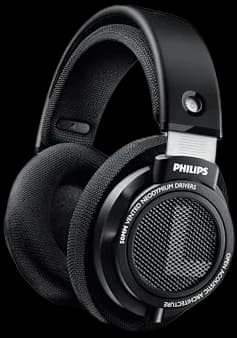
Philips SHP9500
The setar is one of the quietest instruments in this whole atlas. Headphones are nearly required to hear what it is doing.
Buy on AmazonA real setar
A good setar comes from specialist Persian instrument makers. Reverb is a sensible place to look beyond generic listings.
Affiliate links
These are honest recommendations — the ones we’d point a friend toward. As an Amazon Associate, SlowHum earns from qualifying purchases; we may also earn from other links. It costs you nothing extra. Amazon prices are from our last check and change often. Full disclosure.
Common questions
Questions people ask about the setar
How many strings does a setar have?
Despite the name, which means three strings, the modern setar has four — a fourth was added centuries ago and the older name stuck.
Why is the setar played with a fingernail?
The nail gives a softer, more intimate attack than a plectrum, matching an instrument built for a small room. It also lets the player produce the rapid rolls the repertoire relies on.
How is the setar different from the tar?
The tar is larger, has a double-bowl skin-faced body and is played with a brass-tipped plectrum, so it is louder and more percussive. The setar is a quieter, more inward instrument in the same classical tradition.
A SlowHum setar piece is in the making.
We're composing a thirty-minute piece for this tradition. Subscribe to be first — and watch the performances above in the meantime.
Subscribe on YouTubeFree · No email required
Continue the atlas
Other traditions
Duduk
Armenia
Shakuhachi
Japan
Quena
Peru & Bolivia
Celtic Harp
Ireland & Scotland
Kora
Mali & Senegal
Santur
Iran
Oud
Turkey & Syria
Sitar
India
Guzheng
China
Morin Khuur
Mongolia
Kantele
Finland
Slack Key
Hawaii · soon
Mbira
Zimbabwe
Bansuri
India
Ney
Turkey
Tagelharpa
Norway · soon
Begena
Ethiopia · soon
Gayageum
Korea · soon
Ngoni
Mali · soon
Guqin
China
Erhu
China
Koto
Japan
Pipa
China
Sarod
India
Sarangi
India
Xiao
China
Kaval
Bulgaria
Dizi
China
Nyckelharpa
Sweden
Hurdy-gurdy
France
Saz
Turkey