The Best Studio Headphones for Tracking and Mixing
Closed-back headphones keep sound out of the microphone; open-back headphones let you hear a mix the way you'll eventually hear it in a room.
Published September 15, 2026 · 6 min read
Quick answer
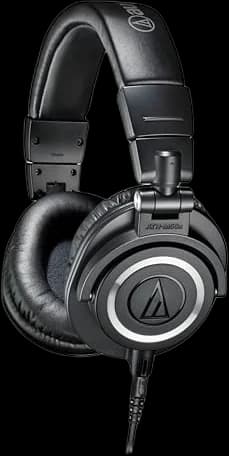
The Audio-Technica ATH-M50x is the best all-around studio headphone for most people: closed-back, detachable-cable, and low enough impedance to drive from a phone or basic interface.
Key takeaways
- Closed-back headphones prevent sound bleed into a microphone during recording.
- Open-back headphones give a wider soundstage and are generally preferred for mixing.
- High-impedance headphones like the Sennheiser HD 600 need a headphone amp to sound their best.
- A detachable cable is the single biggest predictor of how long a pair survives daily studio use.
At a glance
| Pick | Best for | Price* | |
|---|---|---|---|
| Anyone who needs one closed-back pair for everything | $159 | Buy on Amazon → |
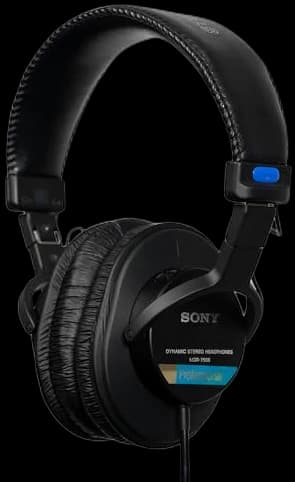 | Tracking vocals and instruments on a budget | $113 | Buy on Amazon → |
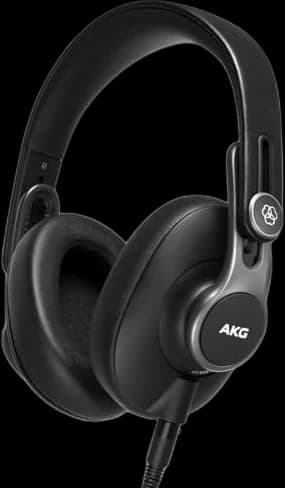 | Producers who record and mix on the move | $145 | Buy on Amazon → |
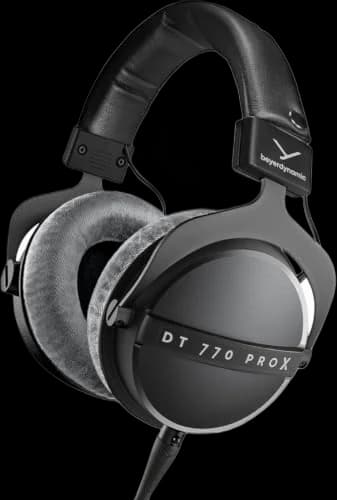 Best closed-back for tracking Beyerdynamic DT 770 Pro X (48 Ohm) Closed-Back Studio Headphones★ 4.5 (644 Amazon ratings) | Tracking sessions where isolation and detail both matter | $200 | Buy on Amazon → |
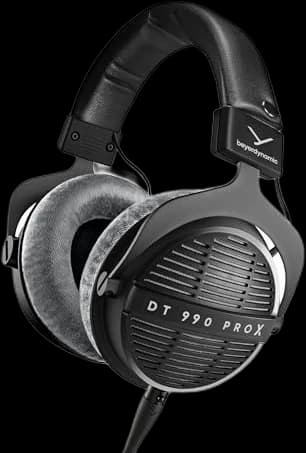 Best open-back for mixing Beyerdynamic DT 990 Pro X (48 Ohm) Open-Back Studio Headphones | Mixing in a quiet room where isolation isn't the priority | $200 | Buy on Amazon → |
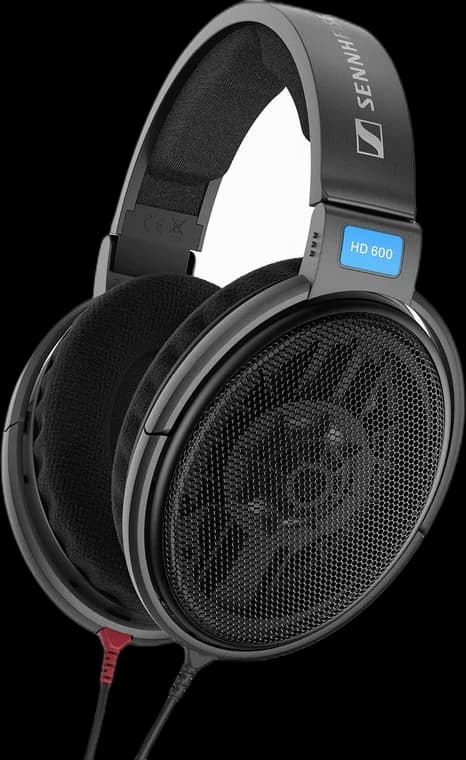 | Mixing engineers who own a headphone amp | $260 | Buy on Amazon → |
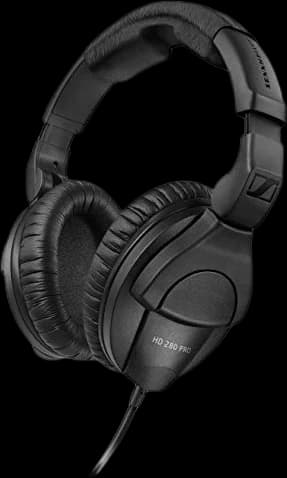 Best budget closed-back for isolation Sennheiser HD 280 Pro Closed-Back Monitor Headphones★ 4.5 (11,433 Amazon ratings) | Tracking in loud or shared rooms | $85 | Buy on Amazon → |
* Prices are approximate and may vary. Please check the latest price on Amazon.
The first real choice in studio headphones isn't brand, it's open-back versus closed-back. Closed-back headphones seal around the ear and keep sound from leaking into a nearby microphone, which is why they're standard for tracking vocals or instruments. Open-back headphones let air (and sound) pass through the earcup, trading isolation for a wider, more speaker-like soundstage that many engineers prefer for mixing decisions.
None of the seven picks below need special equipment beyond, in two cases, a headphone amp. Impedance is the spec that tells you which: low-impedance headphones (24-48 ohms) drive fine from a phone, laptop, or basic interface, while the 300-ohm Sennheiser HD 600 needs real voltage behind it to sound its best.
01 · Best overall
Audio-Technica ATH-M50x Professional Monitor Headphones
The most widely owned studio headphone for a reason: capable, portable, and easy to drive.
Audio-Technica specifies 45mm drivers, a 38-ohm impedance, and a 15Hz-28kHz frequency response, low enough impedance to run straight off a phone or laptop with no amp. The ATH-M50x ships with three detachable cables and swiveling earcups for one-ear monitoring. On r/audioengineering and similar forums it's less often called the best-sounding option than the most practical one: closed-back isolation for tracking, portable enough to travel, and cheap enough that losing or breaking a cable isn't a crisis.
Strengths
- + Detachable cable, three included
- + Low impedance drives from a phone or laptop
- + Foldable and travel-friendly
Trade-offs
- − Bass-forward tuning is less neutral than reference open-back options
- − Clamping force can feel tight over very long sessions
- Driver
- 45mm dynamic
- Impedance
- 38 ohms
- Frequency response
- 15Hz-28kHz
- Weight
- 285g
- Design
- Closed-back, circumaural
- Cable
- Detachable, 3 included
4.7 out of 5 from 33,831 Amazon ratings
Amazon’s summary of its reviews: Customers praise these headphones for their sound quality, value for money, comfort, and noise isolation, with one customer noting they're great for drowning out obnoxious coworkers. Moreover, they appreciate the three included cables and find them worth the price. However, the fit receives mixed feedback - while some say they fit snugly over the ears, others report they don't stay on well. Additionally, durability is also mixed, with some finding them long-lasting while others report them breaking within a month.
What buyers praise
- sound quality — 87% positive of 6,057 mentions
- value for money — 88% positive of 1,793 mentions
- comfort — 71% positive of 1,779 mentions
- recommendation — 95% positive of 619 mentions
What buyers complain about
- fit — 36% negative of 857 mentions
02 · Best budget closed-back
Sony MDR-7506 Professional Headphones
A decades-old broadcast standard that still does the closed-back job for less.
Sony's spec sheet lists a 40mm neodymium driver, 24-ohm impedance, and a 10Hz-20kHz frequency response, easily driven by an interface's headphone output. It's been a fixture in broadcast and recording studios for over 30 years, and that longevity is the actual selling point: it's a known, predictable closed-back sound that isolates well enough for tracking without needing a headphone amp. The coiled 9.8-foot cable is fixed, not detachable, which is the main tradeoff for the price.
Strengths
- + Low impedance, easy to drive from any interface
- + Folds flat for storage and travel
- + Long-standing broadcast and studio standard
Trade-offs
- − Cable is fixed, not detachable
- − Earpads wear out faster than the headphones themselves
- Driver
- 40mm dynamic
- Impedance
- 24 ohms
- Frequency response
- 10Hz-20kHz
- Weight
- 260g
- Design
- Closed-back, foldable
- Cable
- Fixed, 9.8 ft coiled
4.7 out of 5 from 28,355 Amazon ratings
Amazon’s summary of its reviews: Customers find these headphones to be of great quality with crystal clear sound and good value for money. They perform well and offer good noise cancellation. Comfort and fit receive mixed feedback - while some find them soft on the ears and comfortable to wear all day, others report they make ears hurt and are too tight. Durability is also mixed, with some saying they last longer than most headphones while others find them not durable.
What buyers praise
- quality — 92% positive of 4,409 mentions
- sound quality — 86% positive of 4,312 mentions
- value for money — 93% positive of 1,867 mentions
- performance — 82% positive of 703 mentions
What buyers complain about
- comfort — 43% negative of 974 mentions
- durability — 45% negative of 922 mentions
03 · Best for portability
AKG K371 Over-Ear Closed-Back Studio Headphones
A folding design and detachable mini-XLR cable built for a laptop bag, not just a desk.
AKG specifies 50mm titanium-coated drivers, 32-ohm impedance, and a 5Hz-40kHz frequency response tuned toward the Harman target curve. The fold-flat hinge and detachable mini-XLR cable set it apart from the fixed-cable Sony and make it the more repairable option if a cable fails on the road. Reviewers commonly place it alongside the ATH-M50x as a closed-back all-rounder, with a slightly more neutral, less bass-boosted tuning.
Strengths
- + Foldable design travels well
- + Detachable mini-XLR cable is easy to replace
- + Harman-curve tuning is close to neutral
Trade-offs
- − Clamping force runs tight out of the box
- − Less common in professional studios than the M50x or 7506
- Driver
- 50mm dynamic
- Impedance
- 32 ohms
- Frequency response
- 5Hz-40kHz
- Weight
- 255g
- Design
- Closed-back, foldable
- Cable
- Detachable, mini-XLR
4.2 out of 5 from 822 Amazon ratings
Amazon’s summary of its reviews: Customers praise these headphones for their sound quality, noting they give enough oomph and clarity, and consider them well worth their price. The build quality and comfort receive mixed feedback - while some find them well-built and comfortable, others report extremely poor construction and discomfort. Moreover, the fit and noise cancellation also get mixed reviews, with some saying they fit exactly what they were looking for while others find the earcups too small and shallow, and while some appreciate the noise isolation, others note the headphones don't cancel much ambient sound. Additionally, durability is a concern, with multiple customers reporting that the pads fell apart within 8 months of use.
What buyers praise
- sound quality — 75% positive of 169 mentions
- quality — 74% positive of 116 mentions
- price-performance ratio — 82% positive of 71 mentions
What buyers complain about
- build quality — 51% negative of 45 mentions
- fit — 47% negative of 32 mentions
- noise cancellation — 47% negative of 32 mentions
04 · Best closed-back for tracking
Beyerdynamic DT 770 Pro X (48 Ohm) Closed-Back Studio Headphones
More soundstage and detail than most closed-back headphones manage, with an amp-free 48-ohm driver.
Beyerdynamic's current DT 770 PRO X uses its STELLAR.45 driver at 48 ohms, a 5Hz-40,000Hz frequency response, and a detachable cable with a locking mini-XLR connector, replacing the fixed cable on the older DT 770 PRO. Across Reddit's edmproduction and headphones communities, the DT 770 shows up repeatedly as the pick people prefer over the ATH-M50x for mids, highs, and soundstage, even though the M50x wins on portability and cable convenience. Beyerdynamic still sells the original DT 770 PRO in 32, 80, and 250-ohm versions for studios that already have a headphone amp built around a specific impedance.
Strengths
- + Detachable cable, unlike the older DT 770 PRO
- + 48-ohm impedance needs no headphone amp
- + Wider soundstage than most closed-back designs
Trade-offs
- − Earpads run warm on the ears over long sessions
- − Original DT 770 PRO's other impedance options are a separate, still-current product line
- Driver
- STELLAR.45 dynamic
- Impedance
- 48 ohms
- Frequency response
- 5Hz-40,000Hz
- Weight
- 305g
- Design
- Closed-back
- Cable
- Detachable, mini-XLR
4.5 out of 5 from 644 Amazon ratings
Amazon’s summary of its reviews: Customers praise these headphones for their studio-quality sound, build quality, and value for money, with one customer noting they're particularly suitable for monitoring 32-channel audio mixers. The detachable cable is a nice touch, and customers find them built for long-term use. Comfort and fit receive mixed feedback - while some say they can wear them for hours without ear soreness, others find them too tight.
What buyers praise
- sound quality — 81% positive of 86 mentions
- value for money — 79% positive of 33 mentions
- cable — 72% positive of 18 mentions
- build quality — 93% positive of 15 mentions
What buyers complain about
- comfort — 40% negative of 20 mentions
$200
Buy on Amazon05 · Best open-back for mixing
Beyerdynamic DT 990 Pro X (48 Ohm) Open-Back Studio Headphones
An open, spacious soundstage for judging a mix, at an impedance any interface can drive.
Beyerdynamic lists the same STELLAR.45 driver platform at 48 ohms, a 5Hz-40,000Hz response, and a detachable mini-XLR cable, in an open-back design meant for analytical listening rather than isolation. Open-back headphones let air pass through the earcup, which reduces the boxy resonance closed-back designs can add and creates a wider stereo image, closer to speaker listening. The tradeoff is audibility: sound leaks out, so it's a mixing headphone for a quiet room, not a tracking headphone near a live microphone. As with the DT 770, the original 80/250-ohm DT 990 PRO remains available separately for amp-equipped setups.
Strengths
- + Wide, natural soundstage for mixing decisions
- + 48-ohm version needs no amp
- + Detachable cable
Trade-offs
- − Leaks sound, unsuitable near an open microphone
- − Not the right choice if the room isn't quiet
- Driver
- STELLAR.45 dynamic
- Impedance
- 48 ohms
- Frequency response
- 5Hz-40,000Hz
- Weight
- 292g
- Design
- Open-back
- Cable
- Detachable, mini-XLR
06 · Best reference for mixing
Sennheiser HD 600 Open-Back Headphones
A decades-old reference that still sets the bar for balanced, revealing mixing headphones.
Sennheiser specifies a 300-ohm impedance, a 16Hz-30kHz frequency response, and a removable cable on the HD 600, a design largely unchanged since its release because it hasn't needed to change. That 300-ohm impedance is the catch: it needs real voltage to sound right, so it's a headphone-amp purchase, not a phone-and-dongle one. In mixing-focused Reddit threads it's cited as one of the most measured, well-documented reference headphones available, still recommended alongside far newer designs.
Strengths
- + Balanced, well-documented reference tuning
- + Detachable cable simplifies repairs
- + Decades of independent measurement data available
Trade-offs
- − 300-ohm impedance needs a headphone amp to sound right
- − Open-back design leaks sound, unsuitable for tracking
- Driver
- Dynamic, open-back
- Impedance
- 300 ohms
- Frequency response
- 16Hz-30kHz
- Weight
- 260g
- Design
- Open-back
- Cable
- Detachable
07 · Best budget closed-back for isolation
Sennheiser HD 280 Pro Closed-Back Monitor Headphones
The most isolating budget closed-back here, at the cost of a fixed cable.
Sennheiser rates the HD 280 PRO at 64 ohms impedance, an 8Hz-25kHz frequency response, and up to 32dB of passive noise attenuation, notably higher isolation than the Sony or Audio-Technica options above. That extra isolation is genuinely useful for tracking in a room with bleed from another instrument or a loud building. Its collapsible, swiveling earcups and rugged, user-replaceable parts have kept it in circulation since 2003 with only minor revisions.
Strengths
- + Highest passive isolation of the closed-back picks here
- + User-replaceable earpads and cable parts
- + Collapsible for storage
Trade-offs
- − Cable is fixed rather than detachable
- − Clamping force is firm, less comfortable for very long sessions
- Driver
- Dynamic, closed-back
- Impedance
- 64 ohms
- Frequency response
- 8Hz-25kHz
- Weight
- 285g
- Isolation
- Up to 32dB attenuation
- Cable
- Fixed, coiled, user-replaceable
4.5 out of 5 from 11,433 Amazon ratings
Amazon’s summary of its reviews: Customers praise the headphones' sound quality, build quality, and noise isolation, with one customer noting they mask outside sounds effectively. The comfort, fit, and reliability receive mixed feedback - while some find them super comfortable and easy to wear for hours, others report they feel like they're squeezing the head, and some report issues with the right earphone stopping working after two years. The durability is also mixed, with some saying they're made to last while others report them breaking after four months.
What buyers praise
- sound quality — 83% positive of 2,293 mentions
- quality — 92% positive of 2,098 mentions
- noise isolation — 82% positive of 711 mentions
- build quality — 76% positive of 291 mentions
What buyers complain about
- durability — 50% negative of 615 mentions
- fit — 51% negative of 592 mentions
Closed-back for tracking, open-back for mixing
The rule of thumb holds up in practice: use closed-back headphones whenever a live microphone is nearby, because any sound that leaks out of the earcup can bleed into the recording. Reach for open-back headphones during mixing and editing, when there's no microphone to protect and the wider, more natural soundstage helps judge stereo placement and reverb tails. A semi-open design like the original Beyerdynamic DT 880 splits the difference, but for most home setups, owning one of each covers both jobs properly.
Impedance decides what can power them
Impedance, measured in ohms, roughly predicts how much power a headphone needs to reach a comfortable volume. The Sony MDR-7506 (24 ohms), Audio-Technica ATH-M50x (38 ohms), AKG K371 (32 ohms), and both Beyerdynamic PRO X models (48 ohms) all drive easily from a phone, laptop headphone jack, or a basic USB interface. The Sennheiser HD 600 at 300 ohms is different: it's designed to be driven by a proper headphone amplifier, and most audio interfaces built for home studios can push it, but a phone or unpowered dongle generally can't get it loud enough to judge a mix accurately.
Comfort for long sessions
- Clamping force matters more than weight for multi-hour sessions; a tight-clamping pair like the AKG K371 out of the box loosens with use but can feel snug at first.
- Velour earpads (Beyerdynamic's DT series, Sennheiser's HD 600 and HD 280 PRO) breathe better than the pleather pads on the Sony and stock Audio-Technica, at the cost of slightly less isolation.
- Weight differences among these seven are small, from 255g to 305g, and less noticeable in practice than pad material and clamping force.
Detachable cables and repairability
A cable is usually the first thing to fail on a studio headphone, especially one that gets coiled and uncoiled daily. The AKG K371 and both current-generation Beyerdynamic PRO X models use a detachable mini-XLR cable that's simple to replace. The Sennheiser HD 600 uses its own detachable connector. The Sony MDR-7506 and Sennheiser HD 280 PRO both ship with a fixed, coiled cable; the HD 280 PRO's is at least a user-replaceable part, while the Sony's failure means either a repair or a replacement pair.
How these seven differ
The Audio-Technica ATH-M50x and Sony MDR-7506 cover the same closed-back tracking role at different price points, with the M50x adding a detachable cable and slightly wider frequency response. The AKG K371 adds portability and repairability to that same category. The two Beyerdynamic PRO X models are a matched pair built for the same 48-ohm driver platform, one closed for tracking and one open for mixing. The Sennheiser HD 600 sits above all of them as a dedicated mixing reference that needs a headphone amp, while the HD 280 PRO trades comfort for the highest passive isolation of any closed-back pick here.
Questions people ask
Do I need both open-back and closed-back headphones?
Not to get started, but many home studios eventually own one of each. Closed-back headphones handle tracking, where sound leaking into a microphone is a real problem, while open-back headphones give a wider, more natural soundstage for mixing decisions once tracking is done.
Can I mix on closed-back headphones?
Yes, plenty of engineers do, especially in noisy environments where open-back isolation isn't practical. The tradeoff is a narrower, boxier soundstage than open-back designs provide, which can make stereo width and depth harder to judge accurately.
Why do some headphones need an amp and others don't?
It comes down to impedance, measured in ohms. Higher-impedance headphones like the 300-ohm Sennheiser HD 600 need more voltage to reach a comfortable, accurate volume than a phone or basic interface typically provides, so a dedicated headphone amplifier gets the most out of them.
Are studio headphones good for regular music listening?
Generally yes, though reference-tuned models like the Sennheiser HD 600 or Beyerdynamic DT 990 PRO X sound less bass-boosted than typical consumer headphones by design. Closed-back options like the ATH-M50x tend to feel more familiar to listeners used to consumer headphone tuning.
How long do studio headphone cables usually last?
It varies widely with use, but a cable that gets coiled and flexed daily is typically the first part of a headphone to fail. That's the main reason detachable-cable designs, such as the AKG K371 or Beyerdynamic PRO X models, tend to outlast fixed-cable headphones in daily studio use.
Sources
As an Amazon Associate, SlowHum earns from qualifying purchases, at no extra cost to you. Full disclosure.