The Best In-Ear Monitors for Musicians
A good in-ear monitor is judged first by fit and isolation, and only after that by driver count.
Published September 15, 2026 · 6 min read
Quick answer
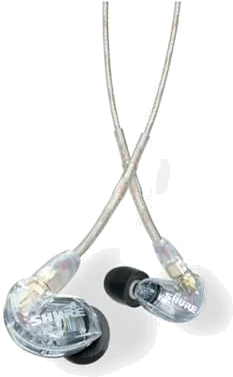
The Shure SE215 is the best all-around in-ear monitor for most performers: a durable single-driver design with real isolation and a detachable cable, at a price that survives being lost on tour.
Key takeaways
- Isolation depends more on eartip fit than on driver type or price.
- A detachable cable is worth prioritizing, since cables fail before drivers do.
- More balanced-armature drivers generally means more detail, not automatically better isolation.
- Dynamic-driver IEMs tend to have a fuller low end; balanced armature drivers tend to be more detailed and efficient.
At a glance
| Pick | Best for | Price* | |
|---|---|---|---|
Best overall Shure SE215 PRO Sound Isolating Earphones | Most performers who want one durable, reliable pair | $119 | Buy on Amazon → |
 | Touring musicians who want more detail across the band mix | $499 | Buy on Amazon → |
 Best alternative single-driver pick Sennheiser IE 100 PRO In-Ear Monitoring Headphones★ 4.2 (1,051 Amazon ratings) | A warmer-tuned alternative to the Shure SE215 | $109 | Buy on Amazon → |
 | Working musicians who want a reference-grade stage monitor | $450 | Buy on Amazon → |
 Best budget multi-driver KZ ZS10 Pro X Hybrid In-Ear Monitors | Budget performers who still want a multi-driver sound | $50 | Buy on Amazon → |
 | A backup pair, or a first IEM to try before spending more | $23 | Buy on Amazon → |
* Prices are approximate and may vary. Please check the latest price on Amazon.
For a musician on stage, an in-ear monitor's job is narrower than a home listener's headphones: block out stage volume, deliver a clean monitor mix, and survive being coiled up and thrown in a gig bag between shows. That means fit and isolation decide whether an in-ear monitor works before driver count or price ever enter the picture. A $500 pair with a poor seal isolates worse than a $20 pair that fits correctly.
The six picks below span single dynamic drivers to five-driver hybrids, at prices from $20 to $500, all sold new on Amazon with a standard 3.5mm or MMCX/2-pin connection.
$119
Buy on Amazon01 · Best overall
Shure SE215 PRO Sound Isolating Earphones
The default recommendation for a reason: real isolation, a detachable cable, and a low price if lost.
Shure specifies a single dynamic driver, 17-ohm impedance, and sound-isolating sleeves that block up to 37dB of ambient noise, with a detachable cable using Shure's MMCX connector. Reddit's headphones and live-sound communities repeatedly call the SE215 the default "professional" entry-level IEM, and the over-ear cable routing keeps it secure during movement on stage. It won't out-detail a multi-driver design, but for the price of losing or damaging one on tour, it's the safest first purchase.
Strengths
- + High passive isolation for a single-driver design
- + Detachable MMCX cable is easy and cheap to replace
- + Secure over-ear fit for movement on stage
Trade-offs
- − Less detailed than the multi-driver picks below
- − Bass-forward tuning isn't neutral for critical mixing
- Driver
- Single dynamic
- Impedance
- 17 ohms
- Frequency range
- 22Hz-17.5kHz
- Isolation
- Up to 37dB
- Cable
- Detachable, MMCX
- Sensitivity
- 107dB SPL/mW
02 · Best step-up
Shure SE535 PRO Sound Isolating Earphones
Three balanced-armature drivers resolve a full-band monitor mix more clearly than a single driver can.
Shure's SE535 uses three balanced-armature drivers per side, one tweeter and two woofers, at 36 ohms impedance with the same 37dB sound-isolating design as the SE215. The extra drivers matter specifically for musicians monitoring a full band mix: separating a click track, vocal, and multiple instruments is easier with three drivers splitting the frequency range than with one doing all of it. It uses the same MMCX detachable cable system as the SE215, so cables and most third-party upgrades are interchangeable between the two.
Strengths
- + Three drivers separate a busy monitor mix more clearly
- + Same isolation rating as the SE215
- + MMCX cable compatible with the SE215's ecosystem
Trade-offs
- − Five times the price of the SE215
- − Overkill for a musician monitoring just a click and one instrument
- Driver
- Triple balanced armature
- Impedance
- 36 ohms
- Frequency range
- 18Hz-19kHz
- Isolation
- Up to 37dB
- Cable
- Detachable, MMCX
- Sensitivity
- 119dB SPL/mW
03 · Best alternative single-driver pick
Sennheiser IE 100 PRO In-Ear Monitoring Headphones
A warmer-tuned single dynamic driver with real passive isolation and a detachable cable.
Sennheiser specifies a 10mm dynamic driver, 20-ohm impedance, and a 20Hz-18kHz frequency response rated to handle up to 115dB SPL without distortion, with foam ear adapters rated at up to 26dB of passive attenuation. It's positioned as the successor to Sennheiser's long-running IE 40 PRO, aimed at the same stage and studio use case as the Shure SE215 but with a warmer tonal balance. The detachable straight cable is compatible with wireless in-ear bodypack receivers, which the SE215's angled MMCX connector doesn't accommodate as directly.
Strengths
- + Warmer tuning than the Shure SE215
- + Cable compatible with common wireless IEM bodypacks
- + Rated to handle high stage SPL without distortion
Trade-offs
- − Slightly lower passive isolation than the Shure options
- − Single driver, less separation than a multi-driver design
- Driver
- 10mm dynamic
- Impedance
- 20 ohms
- Frequency response
- 20Hz-18kHz
- Isolation
- Up to 26dB (foam tips)
- Cable
- Detachable, straight 3.5mm
- Max SPL
- 115dB
4.2 out of 5 from 1,051 Amazon ratings
Amazon’s summary of its reviews: Customers find these headphones to be fantastic in-ear monitors and consider them excellent value for money. However, the sound quality receives mixed feedback, with some praising it while others report muddy/boomy bass and poor noise cancellation. Moreover, the fit, reliability, and durability show mixed results - while some say they fit well and work well, others report they don't stay in place, stop working after one month, and fail within 6-8 months of use. Additionally, the volume control and cord length also receive mixed reviews, with customers noting reasonable volume levels but wishing the cord was half a foot longer.
What buyers praise
- value for money — 79% positive of 47 mentions
What buyers complain about
- fit — 38% negative of 42 mentions
- reliability — 38% negative of 21 mentions
- durability — 65% negative of 20 mentions
$450
Buy on Amazon04 · Best premium pick
Westone Audio MACH 30 Universal In-Ear Monitors
A three-way, three-driver design built specifically for musicians rather than audiophile listening.
Westone specifies three balanced-armature drivers, one each for low, mid, and high frequencies, joined by a passive three-way crossover, at 110dB sensitivity and a 20Hz-18kHz frequency response. Westone splits its lineup between the MACH series, developed with musicians and sound engineers, and a separate audiophile-oriented line, which matters if searching their catalog turns up both. It ships with Westone's own Linum BAX cable, thinner and lighter than a typical MMCX cable, plus a hard case built to survive a gig bag.
Strengths
- + Three-way crossover separates lows, mids, and highs cleanly
- + Thin, low-profile Linum BAX cable
- + Built specifically for stage and studio monitoring, not general listening
Trade-offs
- − Premium price puts it well above casual use
- − Higher impedance than most picks here, benefits from a dedicated IEM mixer or bodypack
- Driver
- Triple balanced armature, 3-way crossover
- Impedance
- 91 ohms
- Frequency response
- 20Hz-18kHz
- Sensitivity
- 110dB SPL @ 1kHz
- Cable
- Detachable, Linum BAX
- Case
- Impact-resistant hard case
05 · Best budget multi-driver
KZ ZS10 Pro X Hybrid In-Ear Monitors
Five drivers per side at a fraction of the price of the Shure or Westone options above.
KZ's ZS10 Pro X pairs one dynamic driver with four balanced-armature drivers per side, using a detachable 0.75mm 2-pin cable rather than MMCX. It's a step up from KZ's cheaper single-driver models, which come up repeatedly in budget in-ear-monitor discussions as sounding overly bass-heavy or harsh in the upper midrange; the ZS10 Pro X's added driver count is specifically aimed at correcting that balance. It's a reasonable option for a performer who wants to try a multi-driver sound before committing to a $500 pair, with the caveat that build consistency varies more than it does with Shure or Sennheiser.
Strengths
- + Five drivers per side at a budget price
- + Detachable 2-pin cable
- + Noticeably more balanced than KZ's cheaper single-driver models
Trade-offs
- − Build and QC consistency varies more than established brands
- − No official passive isolation rating published
- Driver
- 4 balanced armature + 1 dynamic
- Cable
- Detachable, 0.75mm 2-pin
- Faceplate
- Alloy
- Cavity
- Resin
- Eartips
- S/M/L included
06 · Best ultra-budget pick
Moondrop CHU II Dynamic Driver In-Ear Monitors
A single dynamic driver that punches well above its price, with an interchangeable cable.
Moondrop's CHU II uses a 10mm dynamic driver with an aluminum-magnesium alloy composite diaphragm and a 0.78mm 2-pin interchangeable cable. In head-to-head Reddit comparisons against similarly priced KZ models, the CHU II is frequently preferred for a more neutral, less shouty tuning, which matters for a beginner deciding whether in-ear monitoring is worth investing further in. It won't isolate or separate a mix as well as the pricier picks above, but as a spare pair to keep in a gig bag, the price makes that beside the point.
Strengths
- + Lowest price of any pick here
- + Detachable cable despite the low cost
- + More neutral tuning than similarly priced hybrid models
Trade-offs
- − Single driver, less separation on a busy stage mix
- − No official isolation or frequency response spec published by Moondrop
- Driver
- 10mm dynamic
- Diaphragm
- Aluminum-magnesium alloy composite
- Cable
- Detachable, 0.78mm 2-pin
- Shell
- Alloy casting
4.2 out of 5 from 4,227 Amazon ratings
Amazon’s summary of its reviews: Customers find these in-ear headphones deliver good sound quality and are extremely good for the price. They appreciate the comfort, with one customer noting the soft silicone ear tips, and the build quality receives mixed feedback - while some say they work decently well, others report issues with the right earbud stopping after 3 days. The fit and cable quality also receive mixed reviews, with some finding them comfortable and well-fitting, while others describe them as extremely tight and complain about tangled cords. The durability is concerning, with multiple customers reporting that the earbuds broke after two months of regular use.
What buyers praise
- sound quality — 75% positive of 542 mentions
- quality — 82% positive of 402 mentions
- value for money — 86% positive of 382 mentions
- comfort — 78% positive of 169 mentions
What buyers complain about
- reliability — 54% negative of 155 mentions
- cable quality — 42% negative of 120 mentions
Fit and isolation come before driver count
Passive isolation on an in-ear monitor depends mostly on how well the eartip seals the ear canal, not on how many drivers are inside the shell. Foam tips generally isolate better than silicone tips because they expand to fill the canal's shape, at the cost of degrading faster and needing periodic replacement. Trying multiple included tip sizes before assuming a pair "doesn't isolate well" solves more fit complaints than switching models does.
Ear shape varies enough between people that the same monitor can feel secure for one performer and loose for another. If a pair ships with only one tip size or style, budget for a small aftermarket set of foam and silicone tips in different sizes before deciding a monitor doesn't fit.
Dynamic drivers vs. balanced armature drivers
Dynamic drivers, the same basic technology used in most headphones and speakers, tend to produce a fuller, more physical low end. Balanced-armature drivers are smaller, more efficient, and better suited to splitting a signal across multiple drivers tuned to specific frequency ranges, which is why higher-driver-count IEMs like the Shure SE535 and Westone MACH 30 use them. Neither type is universally "better"; a single well-tuned dynamic driver, like the Shure SE215 or Moondrop CHU II here, can sound more coherent than a poorly integrated multi-driver design.
Detachable cables matter more here than on headphones
- An in-ear monitor's cable gets coiled, uncoiled, and pulled far more often than a headphone cable, and it's the single most common failure point.
- MMCX (Shure, and compatible with many third-party cables) and 2-pin (KZ, Moondrop) are the two dominant detachable connector standards; they aren't interchangeable with each other.
- A detachable cable also means a broken microphone or remote control on a cable doesn't require replacing the entire monitor, only the cable.
A note on stage volume and hearing
Sennheiser markets in-ear isolation specifically as a way to monitor comfortably at lower volumes than stage wedges typically require, since a well-sealed IEM needs less volume to sound loud enough over ambient stage noise. NIOSH's published guidance on occupational noise exposure notes that both duration and level matter for hearing damage, so an IEM's isolation is one part of a bigger practice, not a substitute for tracking overall exposure across a full set or tour.
That's also a reason to prioritize fit over spec sheets when buying a first pair: a monitor that isolates well lets you request a quieter mix from the sound engineer without straining to hear it, which compounds over a long tour in a way a single loud show doesn't reveal.
How these six differ
The Shure SE215 and Sennheiser IE 100 PRO occupy the same single-dynamic-driver, roughly $100 category, with the Shure isolating slightly better and the Sennheiser tuned warmer. The Shure SE535 and Westone MACH 30 both step up to triple balanced-armature drivers for separating a full band mix, with the Westone built specifically around a musician's three-way crossover. The KZ ZS10 Pro X undercuts both with five drivers at a fraction of the price, at the cost of less consistent build quality, and the Moondrop CHU II is the cheapest, simplest option here, a single driver worth keeping as a backup pair.
Questions people ask
What's the difference between in-ear monitors and regular earbuds?
In-ear monitors are built for isolation and accurate monitoring rather than consumer listening, typically with replaceable tips for a deeper seal, detachable cables, and a flatter tuning than most consumer earbuds, which are often tuned to boost bass for casual listening.
Do I need multiple balanced-armature drivers?
Only if you're monitoring a busy mix, such as a full band with a click track, backing vocals, and multiple instruments. For monitoring a simple mix, a well-tuned single dynamic driver like the Shure SE215 or Sennheiser IE 100 PRO is often plenty.
Are budget in-ear monitors like KZ or Moondrop actually usable on stage?
Yes, for casual or backup use. They generally isolate and detail a mix less consistently than an established brand's mid-range model, and build quality varies more between units, but as a first pair or a spare kept in a gig bag, they're a reasonable low-cost option.
How do I get a better seal with my in-ear monitors?
Try every eartip size included in the box before assuming the monitor doesn't fit; foam tips generally seal better than silicone for isolation. Angling the earpiece slightly and letting foam tips fully expand for a few seconds after insertion also improves the seal.
Can in-ear monitors protect my hearing on stage?
They can help by reducing how loud you need to run a monitor mix to hear it clearly over stage volume, since a well-sealed IEM blocks ambient noise passively. They aren't a substitute for managing overall volume and exposure time, which NIOSH's occupational noise guidance identifies as the two factors that matter most for hearing damage.
Sources
As an Amazon Associate, SlowHum earns from qualifying purchases, at no extra cost to you. Full disclosure.