The Best Acoustic Panels
Acoustic panels fix how a room sounds to the people inside it. They will not stop sound from leaving. Here's how to buy the right ones.
Published September 17, 2026 · 7 min read
Quick answer
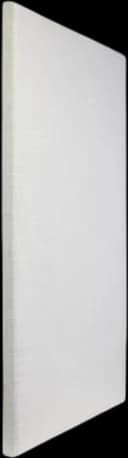
For most home studios, the ATS Acoustics 24x48x2 panel is the best overall pick: a mineral-wool panel with a maker-published NRC of 1.0, sold as a single panel so you can scale up slowly.
Key takeaways
- Acoustic panels absorb reflections inside a room; they do almost nothing to stop sound from reaching the next room.
- NRC (Noise Reduction Coefficient) is a 0-1 scale, and it should come from the maker, not a reseller's guess.
- Two-inch panels handle mid and high frequencies; real bass control needs a deeper corner bass trap, not a thicker flat panel.
- Thin foam and egg-crate packs under about 2 inches are mostly decorative. Buy them for that reason, not as treatment.
At a glance
| Pick | Best for | Price* | |
|---|---|---|---|
Best overall ATS Acoustics 24" x 48" x 2" Acoustic Panel | First reflection points in a home studio or listening room | $80 | Buy on Amazon → |
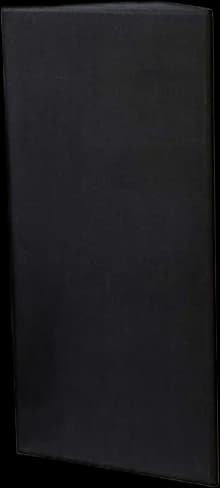 Best for bass buildup in corners ATS Acoustics Corner Bass Trap | Rooms with boomy or muddy low end | $250 | Buy on Amazon → |
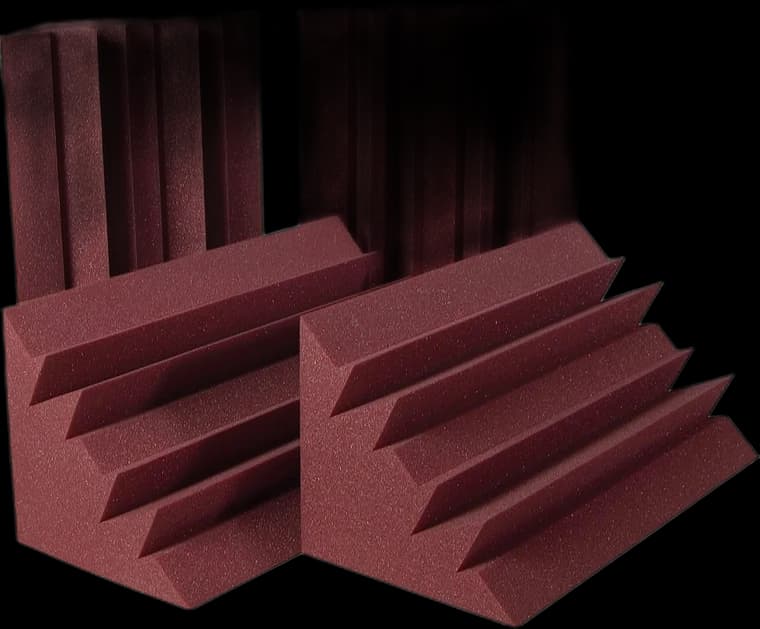 Best budget corner bass trap Auralex LENRD Bass Trap (4-Pack) | Corner-mounting on a smaller treatment budget | $235 | Buy on Amazon → |
* Prices are approximate and may vary. Please check the latest price on Amazon.
Acoustic panels change how a room sounds to the people inside it. That is a narrower job than "soundproofing": panels absorb reflections bouncing around your walls, they do not stop sound from reaching the next room. If a neighbor complains about volume, panels will not fix that; mass, sealed gaps, and distance will. If your recordings sound boxy, boomy, or splashy because the room talks back to your microphone, panels are the right tool.
The six picks below were chosen for published specs, not marketing language: a Noise Reduction Coefficient (NRC) from the maker, a stated thickness and material, and a fire rating only where the maker publishes one. None were tested in-house — every number below is the manufacturer's own, cross-checked against the listing.
01 · Best overall
ATS Acoustics 24" x 48" x 2" Acoustic Panel
A mineral-wool panel ATS rates NRC 1.0, sold one at a time so you can treat a room in stages.
ATS builds this panel around Rockwool AFB mineral wool inside a solid wood frame, wrapped in jute burlap. The maker publishes an NRC of 1.0 at 2 inches thick, which is near the top of what a flat panel this size can do for mid and high-frequency reflections. Because it ships as a single panel rather than a locked kit size, it's the easiest of these six to buy exactly as many as your first-reflection points require, then add more later. It is not fire-rated, which ATS states plainly on the product page, so skip it if your building code requires a rated panel.
Strengths
- + NRC 1.0 published directly by the maker
- + Solid wood internal frame resists corner damage
- + Sold as a single panel, easy to scale a room slowly
Trade-offs
- − Not fire-rated; check local code before covering a wall
- − 2 inches handles mid/high frequencies, not bass
- Core
- Rockwool AFB mineral wool
- NRC
- 1.0
- Thickness
- 2 in
- Panel size
- 24 x 48 in
- Fabric
- 100% jute burlap
- Fire rating
- Not fire-rated (per maker)
$250
Buy on Amazon02 · Best for bass buildup in corners
ATS Acoustics Corner Bass Trap
A 13-inch-deep triangular trap built to sit in the corner, where bass actually piles up.
Flat 2-inch panels barely touch bass, because low frequencies need real depth to absorb, not surface area. ATS's corner trap is 13 inches deep at the center and rated NRC 1.60 in its full-frequency version, which is what corner placement is for: room nodes build up where two walls (or a wall and ceiling) meet, and a flat wall panel can't reach into that space the way a wedge-shaped trap can. It ships with mounting hardware and a template, and comes in a low-frequency-only version if you specifically want to leave mids and highs alone.
Strengths
- + NRC 1.60 published rating, full-frequency
- + Purpose-built for corners flat panels can't treat
- + Ships with mounting hardware and template
Trade-offs
- − 13 inches deep takes real floor-to-ceiling space
- − Costs more per panel than flat wall absorbers
- NRC
- 1.60 (full-frequency version)
- Depth
- 13 in
- Panel size
- 24 x 48 in
- Frame
- Solid wood
- Fabric
- Jute burlap or microsuede
$235
Buy on Amazon03 · Best budget corner bass trap
Auralex LENRD Bass Trap (4-Pack)
A foam corner trap Auralex rates NRC 1.50, built to wedge into a wall-wall or wall-ceiling corner with no cutting.
LENRD (Low-End Node Reduction Device) was one of the first commercially sold corner bass traps, and Auralex still rates it NRC 1.50 at its 12 x 12 x 24-inch size. Because it's molded foam rather than a dense mineral-wool wedge, it's noticeably lighter and cheaper per corner than ATS's 13-inch trap, which makes it a reasonable way to add corner treatment to two or three corners without committing a large budget to bass control alone. It reaches less deeply into the bottom octaves than a deeper mineral-wool trap, so treat it as a starting point rather than a final answer for a boomy room.
Strengths
- + Corner-shaped, no measuring or cutting
- + NRC 1.50 published rating
- + Lighter and cheaper than a mineral-wool trap of similar footprint
Trade-offs
- − Reaches less deeply into low bass than a deeper mineral-wool trap
- − Only 2 linear feet per piece; a small room may need several
- NRC
- 1.50
- Dimensions
- 12 x 12 x 24 in
- Material
- Studiofoam
- Mounting
- Corner (wall-wall or wall-ceiling)
- Pack size
- 4
Absorption is not soundproofing
This is the most common misunderstanding about acoustic panels, and it comes up constantly among people who use them daily. On r/audioengineering and r/MusicBattlestations, the recurring explanation is that panels reduce sound bouncing around inside a room; they do essentially nothing to stop sound passing through a wall to the room next door. One r/Acoustics thread, from someone trying to cut noise between two bedrooms, got a blunt answer: panels are "exactly what you're not looking for" for that job.
Isolating sound between rooms takes mass, decoupling, and sealed gaps — a heavier wall, weatherstripped doors, not fabric on a frame. Panels solve a different problem: a small room with hard, parallel surfaces that makes recordings sound harsh or boomy. For a quieter house, start with sleep and noise fixes instead.
What NRC actually measures
Noise Reduction Coefficient is a single number, generally between 0 and 1, averaging how much sound a material absorbs across four standard frequencies. Near 0 means the surface reflects almost everything back; near 1 means it absorbs almost everything at those frequencies. It says nothing about isolation between rooms, only about a material's job as a wall or ceiling surface.
Every panel here lists an NRC the maker actually publishes: ATS's 2-inch panel at 1.0, Primacoustic's 2-inch Broadway at 1.00, Auralex's 2-inch Studiofoam Wedge at 0.75. Ratings above 1.0, which do appear on some mineral-wool panels, come from edge diffraction in the test method, not a manufacturing error. Treat the number as a comparison between panels of similar size and thickness, not a promise about your room.
Thickness and density decide what a panel can do
NRC tracks thickness closely. Auralex's own published numbers show the pattern: 0.50 at 1 inch, 0.75 at 2 inches, 0.90 at 3 inches, 1.10 at 4 inches. A thin panel handles high frequencies fine and does little for anything low. That's also why bass traps look nothing like flat wall panels: ATS's corner trap is 13 inches deep, because bass needs real depth and volume of material, not just surface area.
Density matters alongside thickness. Primacoustic's Broadway panels use 6 lb/cu ft glass wool, denser than typical open-cell foam — part of why a 2-inch mineral-wool or glass-wool panel generally out-absorbs a 2-inch foam wedge, even when published NRC numbers land close together.
Where to put them: first reflection points and corners
Placement matters as much as panel quality. The standard method for finding first reflection points is the mirror trick: sit in your listening position while someone slides a mirror flat along the side walls; wherever you can see the speaker face in the mirror is a point where sound bounces once before reaching your ears, coloring what you hear. Treat both side walls, then the ceiling above the listening spot, before anything else.
Corners are a separate problem. Bass builds up specifically where two walls meet, or a wall meets the ceiling, which is why corner-shaped bass traps exist as their own category rather than thicker flat panels. Treating first-reflection points fixes clarity; treating corners fixes boominess. Neither substitutes for the other.
Fire ratings, only where the maker states one
Fire rating claims vary a lot between these brands, so compare only what each maker actually publishes. Primacoustic states its Broadway panels meet ASTM E84 Class A/1 and CAN/ULC-S102, ratings it markets for commercial and public spaces. Auralex rates its Studiofoam to UL 94 HF-1, a flammability standard, while still telling installers to check local fire code before large installations. ATS Acoustics states plainly that its standard 2-inch panel is not fire-rated, and sells a separate fire-rated fabric option for buyers who need one.
If you're covering a rental, a basement, or any space with a building inspector involved, confirm which rating your project actually requires before ordering.
Skip thin foam and egg-crate packs, or be honest about what they do
Thin foam — egg-crate profiles under about 2 inches, or felt tiles like TroyStudio's half-inch pack — comes up constantly in acoustics forums, and the consensus is consistent. On r/Acoustics, the estimate is that cheap eggcrate-style foam absorbs on the order of half what a fabric-wrapped fiberglass panel does per unit of area, doing little for mid-band frequencies and nothing for bass. On r/livesound, the same shape gets described as fine for highs and simply too thin to matter in the bass region where small rooms actually struggle.
None of that makes thin foam or felt useless — it can quiet a small patch of wall or add texture. Buy it for that reason, honestly, not as a substitute for a real 2-inch panel.
How to choose between these three
Start with the ATS 24x48x2 panel for first-reflection points, buying only as many as your reflection points and ceiling cloud require. Add a corner bass trap — ATS's 13-inch version for a real bass problem, the lighter Auralex LENRD for a cheaper start on two or three corners.
Questions people ask
Will acoustic panels stop my neighbors from hearing my music?
No. Panels absorb sound reflecting around inside your room; they do very little to stop sound from passing through a wall, floor, or door to another room. Stopping sound from leaving requires mass, sealed gaps, and decoupling, not wall panels. If noise complaints are the problem, look at door seals, window inserts, or rugs and furniture placement first.
What NRC rating should I look for?
For general reflection control at 2 inches thick, an NRC around 0.75 to 1.0 from the maker is typical of a well-built panel. Ratings should come from the manufacturer's own published specs, not a reseller's marketing copy, and they only compare panels tested at similar thickness and size.
How many panels does a small room need?
There's no universal number, since it depends on room size, existing furnishings, and what you're trying to fix. A common starting approach is treating both first-reflection points on the side walls, one ceiling cloud above the listening position, and the room's front corners, then listening before adding more.
Is foam as good as mineral wool or glass wool panels?
At the same thickness, dense mineral-wool or glass-wool panels generally absorb more sound, especially in the low-mid range, than open-cell foam. Foam is lighter, cheaper, and easier to hang, which is a reasonable trade-off for many home setups, but it isn't a like-for-like substitute at equal thickness.
Are the 1-inch foam packs sold cheaply on Amazon worth buying?
They can quiet a small patch of hard wall or take the edge off a slap echo, but forum consensus among people who've measured the difference is that thin foam under about 2 inches does very little for mid or bass frequencies. Treat it as a light accent, not room treatment.
Do I need a professional to install acoustic panels?
Most of the panels here mount with adhesive tabs, hook-and-loop tape, or basic mounting hardware included in the box, and are designed for a single person to install without special tools. A professional matters more for whole-room acoustic design than for hanging individual panels.
Sources
- Auralex Studiofoam Wedges — product and NRC specs
- Auralex LENRD Bass Traps — product and NRC specs
- Primacoustic Broadway Wall Panels — product page
- ATS Acoustics 24x48x2 Acoustic Panel — product page
- GIK Acoustics — Early Reflections Explained (knowledge base)
- ATS Acoustics Corner Bass Trap, NRC 1.60 — Amazon listing
As an Amazon Associate, SlowHum earns from qualifying purchases, at no extra cost to you. Full disclosure.