The Best Flutes for Beginners
Closed hole, offset G, and a name brand: what flute teachers actually look for in a first instrument, and where a curved headjoint helps small hands.
Published September 17, 2026 · 5 min read
Quick answer
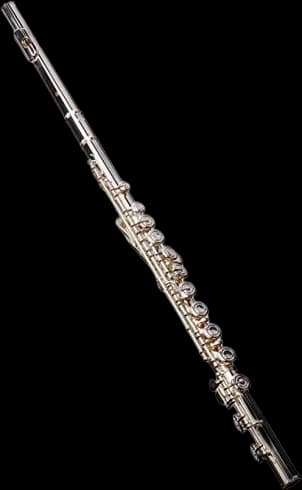
The Gemeinhardt 2SP or Yamaha YFL-222 are the standard, teacher-approved closed-hole beginner flutes; a small child usually does better starting on a curved-headjoint model like the Trevor James 10X.
Key takeaways
- Closed hole (plateau keys) is the standard beginner configuration; open-hole models are for later, once basic fingerings are solid.
- Offset G and a C foot joint are the two features flute teachers consistently look for on a first instrument.
- A curved headjoint shortens the reach for small kids and can be swapped for a straight one as they grow, on models that offer both.
- Flute communities are as wary of ultra-cheap Amazon flutes as sax and trumpet players are of their own budget brands — durability, not sound, is the worry.
At a glance
| Pick | Best for | Price* | |
|---|---|---|---|
Best overall (with a warranty caveat) Yamaha YFL-222 Student Flute | A beginner whose family trusts Yamaha's reputation | $579 | Buy on Amazon → |
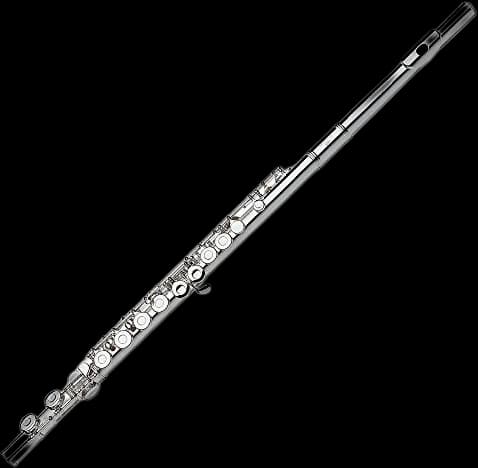 | A beginner who wants a full US warranty at a lower price | $416 | Buy on Amazon → |
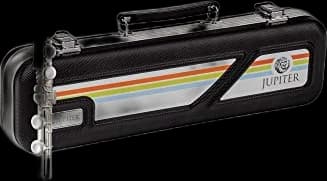 Best alternative to Yamaha/Gemeinhardt Jupiter JFL700A Student Flute | A true first-time beginner just starting band or lessons | $1,229 | Buy on Amazon → |
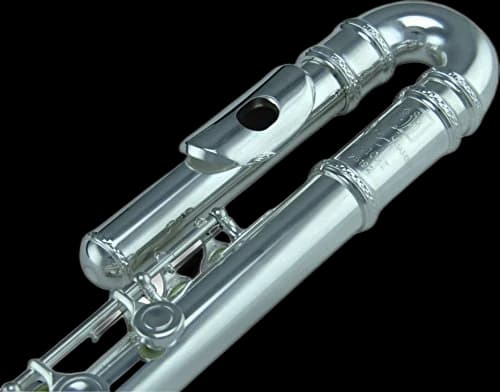 Best for small hands or young kids Trevor James 10X Flute with Curved & Straight Headjoints★ 5.0 (2 Amazon ratings) | A young child whose arms aren't ready for a straight flute | $1,520 | Buy on Amazon → |
* Prices are approximate and may vary. Please check the latest price on Amazon.
A first flute has a narrower set of right answers than it might seem. Teachers and specialist flute communities converge on the same handful of features — closed hole, offset G, a C foot joint — and the same short list of trusted brands, while treating ultra-cheap Amazon flutes with the same skepticism saxophone and trumpet communities reserve for their own budget instruments.
This guide covers the standard teacher-approved picks, the case for a curved headjoint on a small child, and the cleaning habit that protects any of them.
$579
Buy on Amazon01 · Best overall (with a warranty caveat)
Yamaha YFL-222 Student Flute
A genuinely well-regarded student flute, but the specific Amazon listing is an international-market unit without Yamaha's US warranty.
Yamaha specs the YFL-222 with a silver-plated nickel silver headjoint, body and footjoint, hand-assembled silver-plated keys, an offset G key, and a C foot joint — the exact combination flute teachers look for in a first instrument. It's consistently described as one of the most reliable student flutes on the market, a reputation that comes from consistent intonation and keywork rather than any one flashy feature. The catch: the version listed on Amazon is explicitly sold as an "international version," which typically means it comes with a soft case rather than a hard case and doesn't qualify for Yamaha's US factory warranty. Buying the same flute through an authorized dealer costs meaningfully more but includes that warranty.
Strengths
- + Widely regarded as one of the most consistent student flutes available
- + Correct beginner spec: closed hole, offset G, C foot
- + Cheaper than buying through an authorized Yamaha dealer
Trade-offs
- − No US factory warranty on this specific listing
- − Comes with a soft case, not the hard case authorized-dealer units include
- Headjoint
- Silver-plated nickel silver
- Body
- Silver-plated nickel silver
- Keys
- Closed hole (plateau), hand-assembled, silver-plated
- G key
- Offset
- Foot joint
- C foot
- Warranty
- Not covered by Yamaha's US warranty on the international-version listing
02 · Best overall, full warranty
Gemeinhardt 2SP Flute
Decades of being the default beginner flute for a reason, with the paperwork to back it up.
Gemeinhardt describes the 2SP as the choice of dealers and educators for decades, and it remains one of the most commonly issued flutes in school band programs. It ships with the standard beginner spec: a J1 straight headjoint, closed-hole plateau keys with an offset G, a C foot joint, and silver plating across the headjoint, body and foot, plus a 5-year warranty and a hard-shell case. It doesn't carry quite the same brand cachet as Yamaha in online flute communities, but it's consistently named in the same breath as Yamaha and Jupiter as a safe beginner choice.
Strengths
- + 5-year manufacturer warranty
- + Long-standing standard choice for school band programs
- + Correct beginner spec at a lower price than Yamaha
Trade-offs
- − Slightly less name recognition than Yamaha among some teachers
- − Straight headjoint only — not suited to very small hands without an adapter
- Headjoint
- J1, straight, silver-plated
- Keys
- Closed hole (plateau), Y-arm
- G key
- Offset
- Foot joint
- C foot
- Plating
- Silver-plated throughout
- Case
- Hard-shell case with cleaning rod
$1,229
Buy on Amazon03 · Best alternative to Yamaha/Gemeinhardt
Jupiter JFL700A Student Flute
Jupiter's most straightforward beginner model, built to the same core spec as the Yamaha and Gemeinhardt.
The JFL700A is built to the same beginner-standard spec as the two picks above: a silver-plated nickel silver headjoint and body, closed-hole plateau keys, offset G, and a C foot joint, with a hard case included. It's regularly grouped with Yamaha and Gemeinhardt as an acceptable beginner brand in flute teacher recommendations. One recurring caveat from flute players: Jupiter's quality has been described as more variable than Yamaha's, with occasional reports of harder-to-tune intonation on individual units, so it's worth having a teacher or shop check any Jupiter flute before committing to it long-term.
Strengths
- + Same core beginner spec as the Yamaha and Gemeinhardt picks
- + Regularly named alongside Yamaha and Gemeinhardt as an acceptable beginner brand
- + Hard case included
Trade-offs
- − Some players report more unit-to-unit variation in intonation than Yamaha
- − Worth having a teacher check the specific unit before committing
- Headjoint
- Silver-plated nickel silver
- Body
- Silver-plated nickel silver
- Keys
- Closed hole (plateau)
- G key
- Offset
- Foot joint
- C foot
- Case
- Hard case included
$1,520
Buy on Amazon04 · Best for small hands or young kids
Trevor James 10X Flute with Curved & Straight Headjoints
A specialist, teacher-recommended pick specifically because it includes both headjoints a growing child needs.
Trevor James describes the 10X as a multi-award-winning first flute used by beginners internationally, and this listing includes both a curved and a straight headjoint in one package. The curved headjoint shortens the effective length of the instrument, reducing the arm stretch that makes a full-size flute awkward for younger kids, while the straight headjoint lets the same flute keep working as they grow. Flute teachers and community discussion consistently point to this swap-the-headjoint approach, on a Trevor James, Jupiter or Di Zhao flute, as the standard solution for a small beginner rather than buying a scaled-down flute that gets outgrown.
Strengths
- + Includes both headjoints, so it grows with a young player
- + Named by flute teachers as a trusted starting point internationally
- + Reduces the arm-stretch problem that discourages some young beginners
Trade-offs
- − Costs more than the single-headjoint picks above
- − A young player will eventually need to relearn intonation habits when switching to the straight headjoint permanently
- Headjoints
- Curved and straight, both included
- Body
- Silver-plated tubing over copper flash layer
- Finish
- Triple-plated silver
- Weight
- Approx. 360 grams
- Target player
- First-time flute students, including younger children
Closed hole vs. open hole
Closed-hole keys, also called plateau keys, cover each tone hole completely and are the standard for beginners because they don't require covering open rings precisely to get a sound. Open-hole flutes, with a hole in the center of several keys, are generally introduced later, once basic fingerings and hand position are solid, and are associated with slightly improved tone and technique at a more advanced stage. Every pick in this guide is closed hole for that reason.
Offset G and why it's on every recommended list
An offset G key sits slightly apart from the other left-hand keys, which reduces the hand strain of reaching it, especially for smaller hands. An inline G, where all the left-hand keys sit in a single row, is more common on professional flutes but harder for a beginner to manage comfortably. Every flute recommended here uses offset G for that reason.
Curved headjoints for small hands
A curved headjoint bends the top section of the flute back toward the player, shortening the distance a young player's arms need to stretch to reach the keys. It's specifically aimed at younger kids, not a quality difference from a straight headjoint. The common solution flute teachers describe is a flute that ships with both headjoints, so a child starts on curved and switches to straight as they grow, rather than needing an entirely new instrument.
Why flute communities are wary of ultra-cheap Amazon flutes
The pattern here matches saxophone and trumpet: flute players online consistently warn that flutes priced well under $200 tend to use thin, low-quality metal that dents and goes out of alignment quickly, and that unnamed brands are difficult to get serviced. The concern isn't that a cheap flute can't make a sound on day one — it's that keeping it in playable adjustment over a school year is a real problem. Every pick in this guide comes from a brand flute teachers recognize and will service.
How these picks differ
The Yamaha and Gemeinhardt are functionally similar and both hit the standard beginner spec; the deciding factor is often warranty and price rather than sound, since the specific Yamaha listing here lacks a US warranty while the Gemeinhardt includes one. Jupiter fills the same role on paper, but this listing currently sells for well over $1,000 — more than twice the Gemeinhardt — and it carries slightly more reported variation between units, so it only makes sense if the other two are unavailable. The Trevor James is the pick to reach for specifically when the player is young enough that arm length is the limiting factor, not budget.
Renting first, especially for a young child
Many school band programs default to renting a flute for the first semester or year, and that's a reasonable default for families too, not just a school-supply formality. A rental from a local shop is already correctly regulated and serviced, and if a young player's hand size or interest changes, swapping or returning a rental is far simpler than reselling a purchased instrument. It's a particularly sensible option for a first-time family that isn't yet sure whether a curved headjoint will be needed, since a local shop can size a child in person rather than guessing from measurements online.
Questions people ask
Should a beginner start on open-hole or closed-hole flute?
Closed hole. Open-hole flutes are typically introduced later, once basic fingerings and hand position are secure, and add difficulty a first-time player doesn't need.
Does my child need a curved headjoint?
It depends on arm length rather than age specifically. If reaching the keys on a straight flute feels like a stretch, a curved headjoint shortens that distance. Flutes that include both a curved and straight headjoint let a child switch to straight as they grow, without buying a new instrument.
Is a cheap flute from Amazon really a problem?
Flute communities consistently warn that very cheap flutes use thin metal that dents and slips out of adjustment quickly, and that unnamed brands are hard to get serviced properly. As with saxophones and trumpets, the concern is durability and repairability more than initial sound.
Why does the Yamaha YFL-222 listing mention an international version?
Some Amazon listings for this flute are gray-market imports, which typically include a soft case instead of a hard case and don't qualify for Yamaha's US factory warranty. It's still the same instrument, but buying through an authorized dealer costs more and includes that warranty.
What's the difference between Yamaha, Gemeinhardt and Jupiter student flutes?
All three build to a similar beginner spec — closed hole, offset G, C foot, silver plating — and are commonly recommended together by flute teachers. Differences show up in warranty terms, price, and some reports of more unit-to-unit variation on Jupiter than on Yamaha.
How often does a beginner flute need cleaning?
After every session. Moisture left inside the headjoint and body is one of the more common causes of early pad damage, so swabbing the flute out each time it's put away is a basic habit worth building from day one.
Sources
Keep reading
Listen first
As an Amazon Associate, SlowHum earns from qualifying purchases, at no extra cost to you. Full disclosure.