The Best Bass Guitars for Beginners
Five first basses, three full-size and two short-scale, and the one decision that shapes how the instrument will feel in your hands: scale length.
Published September 14, 2026 · 6 min read
Quick answer

The Yamaha TRBX174 is the best bass guitar for beginners with average or larger hands: a full 34 in scale, P and J pickups for a wide range of tones, and Yamaha build quality. Smaller players and guitarists should look first at the 30 in Ibanez Talman TMB30.
Key takeaways
- Scale length is the big choice: 34 in is standard, while 30 in short-scale basses have closer frets and lower string tension.
- Plan for a bass amp. Guitar amps are not designed for low frequencies and can be damaged over time.
- A passive four-string bass is the simplest place to start; active electronics and a fifth string can wait.
- A P/J pickup pairing covers both classic Precision and Jazz sounds, useful before you know your style.
At a glance
| Pick | Best for | Price* | |
|---|---|---|---|
| Most beginners with average or larger hands | $292 | Buy on Amazon → |
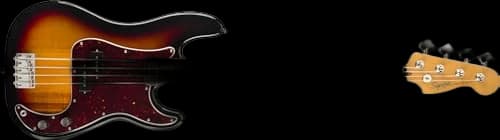 Best to grow into Squier Classic Vibe '60s Precision Bass | Adults who want a classic bass to keep for years | $530 | Buy on Amazon → |
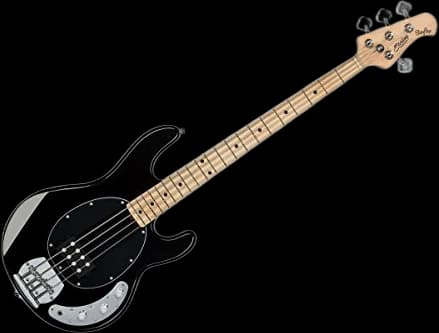 | Funk, rock and modern tones; slim-neck lovers | $400 | Buy on Amazon → |
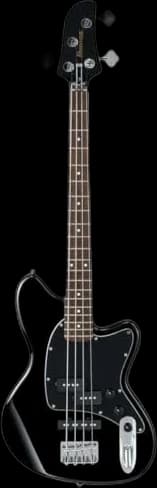 | Smaller hands, teens and guitarists moving to bass | $250 | Buy on Amazon → |
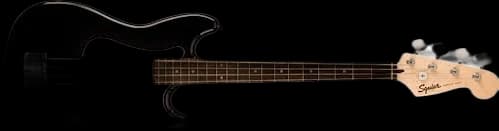 Best for kids Squier Sonic Bronco Bass | Children and very small hands | $260 | Buy on Amazon → |
* Prices are approximate and may vary. Please check the latest price on Amazon.
The bass is the instrument you feel as much as hear. It holds the rhythm and the harmony together, and a beginner can sound genuinely musical on it within weeks, playing one clear note at a time.
Choosing a first bass is mostly about fit. A full-size bass is longer than a guitar, and the difference between a 34 in and a 30 in scale is something your fretting hand notices immediately. We researched maker specifications, beginner guides from Guitar World, Guitar Player and BassBuzz, and the long-running scale-length debate on r/Bass. We did not play these basses ourselves.
01 · Best overall
Yamaha TRBX174 4-String Electric Bass
A dependable full-size bass that covers both Precision and Jazz sounds.
When beginners ask r/Bass for a safe first instrument, the TRBX174 comes up repeatedly, and it is easy to see why. Yamaha pairs a mahogany body with a P-style split-coil pickup and a J-style single coil, each with its own volume, plus a master tone. That covers the round thump of a Precision and the brighter, more defined Jazz sound, so you can find your voice before committing. The neck measures 40 mm at the nut on a standard 34 in scale. Skip it if you have small hands or come from guitar and want something compact.
Strengths
- + P/J pickups cover a wide range of tones
- + Passive, no battery to manage
- + Full two-octave neck
Trade-offs
- − Full-size scale can feel long for small players
- − No pickup blend knob, just two volumes
- Body
- Mahogany
- Pickups
- P-style split coil + J-style single coil
- Controls
- 2 volumes, master tone
- Scale
- 34 in (863.6 mm)
- Nut width
- 40 mm
- Frets
- 24
4.7 out of 5 from 1,070 Amazon ratings
Amazon’s summary of its reviews: Customers find this bass guitar to be a high-quality instrument that's easy to play and appreciate its appearance, with one customer noting it sounds like a more expensive instrument. The bass receives positive feedback for its perfect intonation, and customers consider it a great choice for beginners who are just starting out. Customers like the ergonomics, with one mentioning it won't hurt their fingertips, though opinions about tuning are mixed, with some saying it stays in tune while others report issues.
What buyers praise
- quality — 94% positive of 66 mentions
- sound quality — 86% positive of 37 mentions
- bass quality — 97% positive of 34 mentions
- appearance — 100% positive of 29 mentions
$530
Buy on Amazon02 · Best to grow into
Squier Classic Vibe '60s Precision Bass
The classic P-Bass sound and look, built well enough to stay past the first year.
The Precision Bass is the design most other electric basses answer to, and Guitar Player names this Classic Vibe version its best beginner bass overall. Fender specifies a poplar body, a maple neck with a C shape, and a single Fender-designed alnico split-coil pickup with one volume and one tone. That single pickup is a strength for a learner: fewer controls, and the thick, rounded tone associated with classic soul and rock. Guitar Player notes the neck is a little slimmer than a traditional P-Bass. Skip it if you want lots of tonal variety, or need a shorter instrument.
Strengths
- + Classic Precision tone
- + Simple two-knob layout
- + Build quality reviewers praise
Trade-offs
- − One pickup limits tonal range
- − Most expensive bass here
- Body
- Poplar
- Pickup
- Fender-designed alnico split single coil
- Controls
- Master volume, master tone
- Scale
- 34 in (864 mm)
- Nut width
- 42.8 mm
- Frets
- 20
03 · Best active bass
Sterling by Music Man StingRay Ray4 Bass
StingRay punch on a budget, with a slim neck and an active preamp.
The Ray4 is Sterling's affordable take on the Music Man StingRay, and it is a perennial recommendation on r/Bass for a first bass that will not feel like a compromise. Sterling fits a single ceramic humbucker and a 9V active two-band preamp, which gives a punchy, articulate sound with more boost and cut than a passive bass. Its neck is notably slim at 38 mm across the nut. Guitar World rates it its best beginner bass for adults. Skip it if you want zero fuss: Guitar World suggests a passive bass for total beginners, and active electronics need batteries.
Strengths
- + Punchy, defined StingRay-style tone
- + Slim 38 mm neck
- + Fully adjustable bridge
Trade-offs
- − Needs a 9V battery
- − Full-size scale
- Body
- Basswood
- Pickup
- 1 ceramic humbucker
- Electronics
- 9V active 2-band preamp
- Scale
- 34 in (86.4 cm)
- Nut width
- 38 mm
- Frets
- 21
4.5 out of 5 from 379 Amazon ratings
Amazon’s summary of its reviews: Customers find the bass guitar's sound amazing, with one noting how its active electronics help it cut through without needing much EQ. The instrument is well-constructed, plays smoothly, and offers good value for money, with one customer highlighting its affordable rosewood finish. Customers disagree on the setup experience, with some praising the out-of-the-box configuration while others find it requires significant adjustments. The tuning control receives mixed feedback, with some customers finding it easy to adjust while others report needing extensive adjustments.
What buyers praise
- sound quality — 89% positive of 63 mentions
- quality — 84% positive of 49 mentions
- value for money — 98% positive of 48 mentions
- appearance — 89% positive of 19 mentions
04 · Best short-scale
Ibanez Talman TMB30 Short-Scale Bass
A comfortable short-scale with P and J pickups at an entry price.
The TMB30 takes the P/J versatility of the Yamaha and puts it on a 30 in neck. Ibanez lists a poplar body, Dynamix P and J passive pickups and a B10 bridge. Guitar World names it its best budget beginner bass, praising the playable neck and noting the lightweight offset body suits younger players and working musicians alike. It also adds that the neck is slightly wider than some beginner basses. Skip it if you are left-handed; there is no lefty version.
Strengths
- + Short scale eases stretches and string tension
- + P/J pickups for a range of tones
- + Lightweight offset body
Trade-offs
- − No left-handed model
- − Neck slightly wider than some rivals, per Guitar World
- Scale
- 30 in (762 mm)
- Body
- Poplar
- Pickups
- Dynamix P (neck) + Dynamix J (bridge), passive
- Bridge
- B10
- Nut width
- 41 mm
- Frets
- 20
4.4 out of 5 from 173 Amazon ratings
Amazon’s summary of its reviews: Customers praise the bass guitar's sound quality, noting it's built with the quality of high-end models, and appreciate its fantastic value for money. They find it beautiful, comfortable, and easy to play, with one customer mentioning it's ready to gig right out of the box. The neck receives positive feedback, with one customer noting its flat design. While some customers report no buzzing issues, others mention problems with the upper register. The action receives mixed reviews, with one customer describing it as exceptionally low while another found it too high out of the box.
What buyers praise
- sound quality — 76% positive of 37 mentions
- value for money — 75% positive of 16 mentions
$260
Buy on Amazon05 · Best for kids
Squier Sonic Bronco Bass
Small, light and simple, with a narrow neck made for young hands.
The Bronco is the smallest full-feature bass here. Fender lists a 30 in scale, a poplar body, one ceramic single-coil pickup with master volume and tone, and a narrow 1.5 in nut. Guitar World picks it as its best beginner bass for kids, describing a light instrument that will not strain necks and backs when played standing, while Guitar Player names it its best budget choice. The single pickup keeps controls simple. Skip it for adults or players moving from guitar; Guitar World suggests it will feel too small for older players.
Strengths
- + Narrow neck for small hands
- + Light body
- + Very simple controls
Trade-offs
- − One pickup, limited tones
- − Can feel too small for adults
- Scale
- 30 in (762 mm)
- Body
- Poplar
- Pickup
- Ceramic single coil
- Controls
- Master volume, master tone
- Nut width
- 1.5 in (38.1 mm)
- Frets
- 19
Short scale or long scale?
Scale length is the vibrating length of the string, from nut to bridge. Most basses use 34 in; short-scale basses are usually around 30 in. As Guitar Player explains, a short scale puts the frets closer together and lowers string tension, and the whole instrument is closer to the size of an electric guitar.
- Choose short scale for children, smaller adults, and guitarists who want something familiar under the hand. Guitar World recommends short scale for young players.
- Choose long scale if your hands are average or larger. It is the standard, so there are far more models, strings and used basses to choose from.
On r/Bass the debate never quite ends. One camp says short scales are much easier for small hands; another says four inches is manageable and every bass feels big at first. Players also describe short scales as rounder and thumpier, long scales as more even. Neither is wrong.
You need a bass amp, not a guitar amp
Budget for amplification from day one. Guitar Player and Guitar World both caution that guitar amp speakers are not built for a bass's low frequencies and can be damaged over time, especially at volume.
BassBuzz's beginner buying guide is blunt about it: do not skimp, because a tiny amp makes a good bass sound weak and twangy. In its practice amp comparison, the Fender Rumble 40 came out on top. On r/Bass, smaller 25-watt combos are generally considered fine for bedroom and headphone practice, though some owners say they wish they had bought the next size up. Whatever you choose, a headphone jack and an aux input for playing along are worth having.
P, J or both?
Pickup layout shapes the voice. Guitar Player's FAQ summarises it well: a Precision-style split-coil pickup gives a punchy, mid-focused sound that sits well in a band, while a Jazz-style layout with two single coils is brighter and more versatile. Many beginner basses combine a P pickup with a J pickup to offer both.
If you already know you love that round, classic Precision sound, a single P pickup, like the Classic Vibe's, is all you need. If you are still exploring, a P/J bass such as the TRBX174 or TMB30 gives you room to find your sound.
Active or passive, four strings or five
Active basses run a preamp from a 9V battery, which adds output and tone shaping. Passive basses plug straight in and never go quiet mid-song. Guitar World suggests a passive bass for total beginners, for simplicity; the Ray4 is the one active pick here, for players who want its sound.
Stick with four strings to start. BassBuzz and Guitar World both recommend it: a fifth string adds a wider neck and more to mute, and nearly all beginner material is written for four.
What else to budget for
The bass is only part of the cost. BassBuzz lists a cable, a strap, a gig bag, a tuner and an amp as the essentials, and recommends a simple clip-on tuner to start. Always play with a strap, even seated; it helps balance and keeps the neck from diving. A professional setup is worth considering too, since Guitar Player notes many factory basses benefit from one.
How the five picks differ
- Most beginners with average hands: Yamaha TRBX174, full size with P and J tones.
- An adult who wants a classic to keep: Squier Classic Vibe '60s Precision Bass.
- Punchy modern tone and a slim neck: Sterling StingRay Ray4, if you do not mind a battery.
- Small hands, a teen, or a guitarist crossing over: Ibanez Talman TMB30.
- A young child: Squier Sonic Bronco Bass.
Three are full-size, two short-scale. If you are unsure, try both lengths in a shop before deciding; the right answer is the one your hand relaxes on.
Questions people ask
Is a short-scale bass good for beginners?
Yes, particularly for children, smaller adults and guitarists. A 30 in scale has closer fret spacing and lower string tension, so stretches are easier. Players with average or larger hands usually adapt to a standard 34 in bass quickly, and long-scale basses offer far more model and string choices.
Can I use a guitar amp for bass?
Briefly and at low volume, but it is not recommended. Guitar Player and Guitar World both note that guitar amp speakers are not designed for bass frequencies and can be damaged over time. A small bass combo, or a modeling amp with bass presets, is the better choice.
Should I start on a 4-string or 5-string bass?
Four strings for most beginners. The neck is narrower, there is less to mute, and almost all lessons assume four. Guitar Player adds that a five-string can still make sense if you are certain it is the style you will play long term.
How much should I spend on a first bass?
Guitar World suggests roughly $200 to $500 for a first bass: enough for a well-made instrument without over-investing before you know you will continue. The picks here run from about $250 to $530. Keep another $100 or more for a proper bass amp.
Is bass easier to learn than guitar?
The first steps are often gentler, because you usually play one note at a time rather than chords. The strings are thicker and the frets further apart, though, so it asks for strength and stretch. Playing in time with a drummer is the real skill, and that takes as long to master as anything on guitar.
Sources
- Guitar World: Best beginner bass guitars 2026 (buying guide)
- Guitar Player: Best beginner bass guitars 2026 (buying guide and FAQ)
- BassBuzz: Beginner Bass Buying Guide
- BassBuzz: Best Bass Practice Amp comparison
- Yamaha USA: TRBX174 4-String Electric Bass Guitar product page
- Fender: Squier Classic Vibe '60s Precision Bass product page
- Sterling by Music Man: StingRay Ray4 product page and specs
- Ibanez USA: Talman TMB30 product page and specs
As an Amazon Associate, SlowHum earns from qualifying purchases, at no extra cost to you. Full disclosure.