The Best Guitar Amps
Seven amps built for bedrooms and small apartments, chosen for quiet-hours wattage, honest headphone tone, and app control worth using.
Published September 15, 2026 · 8 min read
Quick answer
The Boss Katana-50 Gen 3 is the best all-around guitar amp for home and practice, thanks to a power switch that drops to half a watt, a real cab-simulated headphone output, and enough amp voicings to cover most styles without extra gear.
Key takeaways
- For apartments, a power-reduction switch and a good headphone output matter more than raw wattage.
- Modeling amps (Boss Katana, Fender Mustang, Positive Grid Spark) deliver more usable tones per dollar than tube amps at bedroom volume.
- Bluetooth and companion apps mainly help with backing tracks and preset storage, not core tone.
- The only battery-powered pick here, the Spark Mini, trades some low end for practicing anywhere, cords included.
At a glance
| Pick | Best for | Price* | |
|---|---|---|---|
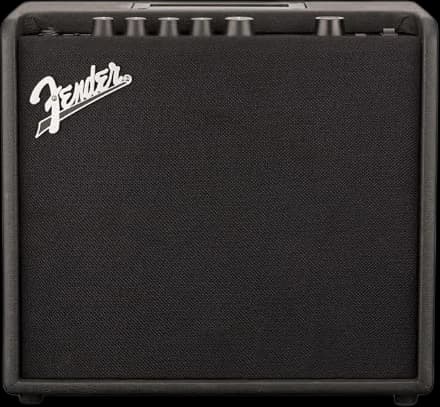
Best budget Fender Mustang LT25 | A first amp that skips the app and menus | $180 | Buy on Amazon → |
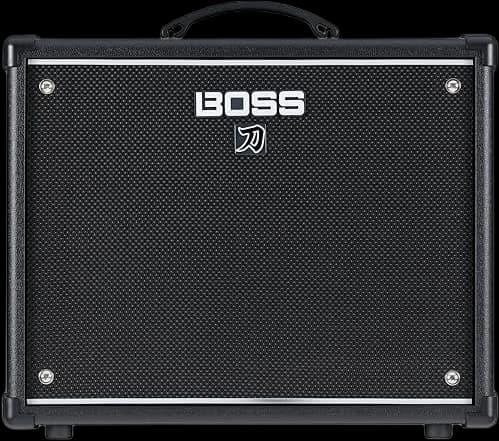 Best overall Boss Katana-50 Gen 3 | One amp that covers clean to heavy and goes quiet fast | $350 | Buy on Amazon → |
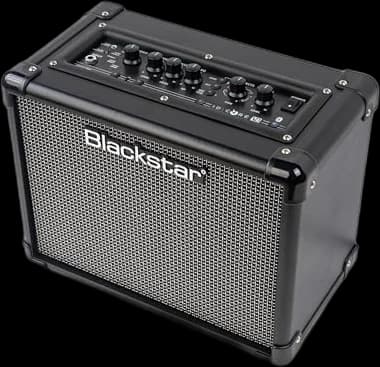 | Practicing at near-zero volume without losing tone | $280 | Buy on Amazon → |
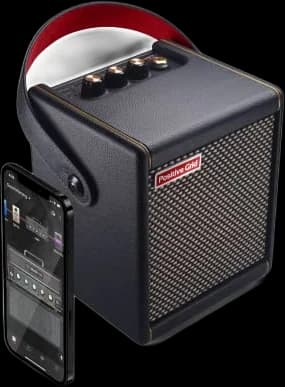 | Practicing untethered from an outlet | $199 | Buy on Amazon → |
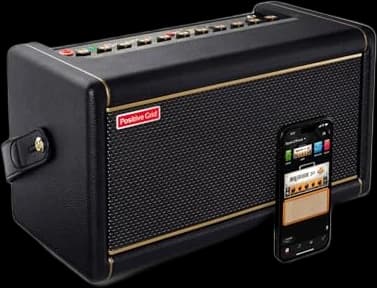 Best app-controlled smart amp Positive Grid Spark 2 | Players who want AI tone-matching and a built-in looper | $349 | Buy on Amazon → |
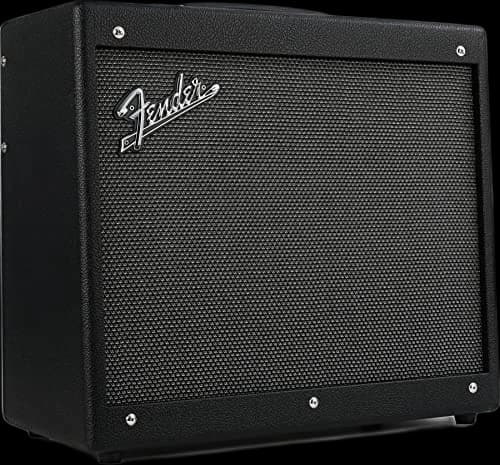 | Fender tone plus deep effects and Wi-Fi updates | $400 | Buy on Amazon → |
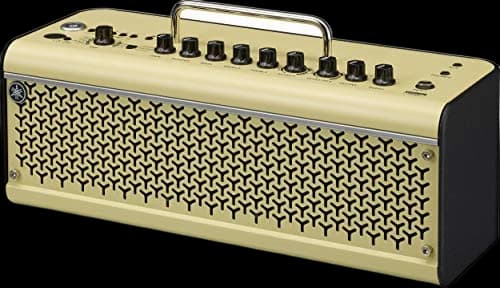 | A desk amp that sounds like a real cabinet at low volume | $600 | Buy on Amazon → |
* Prices are approximate and may vary. Please check the latest price on Amazon.
Search "best guitar amp" and most results are built for gigging musicians: 100-watt heads, 4x12 cabinets, effects loops sized for a five-pedal board. Almost none of that applies if you're practicing in a bedroom, an apartment, or a spare room with thin walls and close neighbors.
This guide covers seven amps built for exactly that situation: modeling amps that recreate classic tube tones in software, real headphone outputs for silent hours, and Bluetooth or app control for streaming backing tracks and saving presets. We checked manufacturer specs directly and confirmed each pick is the current generation, not a model that's already been replaced.
$180
Buy on Amazon01 · Best budget
Fender Mustang LT25
A no-fuss 25-watt modeling combo with a real headphone jack and enough presets to start.
The LT25 skips Bluetooth and deep menus in favor of a single knob-per-function layout, a 1.8-inch color display, and 30 presets built around 20 amp models and 25 effects. It runs at 25 watts through an 8-inch Fender speaker, loud enough for a bedroom but never dangerously so, and its 1/8-inch headphone output doubles as a line out for silent practice. Skip it if you want backing-track streaming or a companion app — for that, step up to the GTX50. For a beginner who just wants to plug in and play, it is honest value.
Strengths
- + Simple control layout with no app required
- + Real headphone output for late-night practice
- + Genuinely low price for a modeling amp
Trade-offs
- − No Bluetooth for streaming or app editing
- − Micro-USB rather than USB-C
- Power
- 25W
- Speaker
- 8" Fender Special Design
- Amp Models
- 20
- Effects
- 25
- Presets
- 30 (curated)
- Connectivity
- USB (Micro-B) + 1/8" headphone, no Bluetooth
$350
Buy on Amazon02 · Best overall
Boss Katana-50 Gen 3
Twelve amp characters, five effects sections, and a power switch that drops to half a watt.
Boss's Gen 3 update keeps the Katana formula that made it a practice-room staple — six amp types (twelve counting the new Pushed voicing), five onboard effects sections, and a stereo headphone output with cabinet simulation built in — and adds USB-C plus wider Bluetooth support for streaming and app control through BOSS Tone Studio. The Power Control switch (50/25/0.5 watts) is the feature that matters most in an apartment: full tone, dialed down to a whisper. Skip it if you specifically want tube warmth over modeling accuracy, or you never plan to use an app to edit tones.
Strengths
- + Power Control switch makes true late-night volume possible
- + Headphone output includes cabinet simulation, not just a raw signal
- + Wide tonal range from clean jazz to high gain
Trade-offs
- − Bluetooth audio streaming needs an optional adapter
- − Heavier than the desktop-style amps on this list
- Power
- 50W, switchable 50/25/0.5W
- Speaker
- 12" custom
- Amp Characters
- 12 (6 types x 2 voicings)
- Effects
- 5 independent sections
- Connectivity
- USB-C; stereo headphone out with cab sim; Bluetooth via optional adapter
$280
Buy on Amazon03 · Best for silent practice
Blackstar ID:Core V4 Stereo 10 Bluetooth
A 10-watt stereo combo that reduces to 1 watt and streams backing tracks over Bluetooth.
Blackstar's V4 update keeps the ID:Core's stereo speaker trick — two 3-inch speakers spread the signal wider than a single-cone amp this size usually manages — and adds USB-C recording, a CabRig speaker simulator on the headphone output, and Bluetooth streaming built into this specific model. Six amp voices, shaped through Blackstar's ISF tone control, cover clean to high gain, and the power-reduction switch goes as low as 1 watt for genuinely late-night sessions. Skip it if you want a bigger onboard speaker for playing unplugged in a room, or footswitch support, which this model lacks.
Strengths
- + Power reduction down to 1 watt for true silent hours
- + Stereo speakers give more width than the size suggests
- + Bluetooth streaming built in, no adapter needed
Trade-offs
- − No footswitch support for changing patches on the fly
- − Smaller speakers mean less low end than the 12-inch amps here
- Power
- 10W (2x5W), reducible to 1W
- Speakers
- 2x 3" stereo
- Amp Voices
- 6
- Connectivity
- USB-C, Bluetooth streaming, CabRig headphone out
- Footswitch
- Not supported
04 · Best portable, battery-powered
Positive Grid Spark Mini
A battery-powered 10-watt amp with up to 8 hours of play time and full app control.
The Spark Mini packs two 2-inch stereo speakers, a passive radiator, and Positive Grid's amp-modeling library — 33 amp models and 43 effects — into a 3.3-pound body that runs up to eight hours on its internal battery. It pairs with the Spark app over Bluetooth for tone editing, a built-in tuner, and Smart Jam backing tracks, and doubles as a USB audio interface for recording. It is not the loudest or fullest-sounding amp here — the small speakers show their limits past bedroom volume — so treat it as the grab-and-go option rather than the main practice rig.
Strengths
- + Runs untethered for up to 8 hours
- + Full Spark app tone library and Smart Jam backing tracks
- + Doubles as a USB interface for quick recording
Trade-offs
- − Smaller speakers than the Spark 2, with less low-end punch
- − Full tone library depends on the companion app
- Power
- 10W Class D
- Speakers
- 2x 2" + passive radiator, stereo
- Battery
- 3,000mAh, up to 8 hours
- Amp Models
- 33
- Effects
- 43
- Connectivity
- Bluetooth 5.0, USB-C audio interface, 1/8" headphone out
4.6 out of 5 from 2,396 Amazon ratings
Amazon’s summary of its reviews: Customers find the amplifier performs well as a practice amp, particularly for home use and lessons, with believable tones and hours of battery life. They appreciate its portability for travel and customization options via the phone app. The Bluetooth connectivity receives mixed feedback, with some customers easily connecting while others experience frequent disconnections. Value for money opinions are divided between those who find it well worth the price and those who consider it overpriced.
What buyers praise
- performance — 87% positive of 234 mentions
- sound quality — 78% positive of 215 mentions
- practice amp — 97% positive of 65 mentions
- portability — 98% positive of 60 mentions
What buyers complain about
- value for money — 38% negative of 72 mentions
$349
Buy on Amazon05 · Best app-controlled smart amp
Positive Grid Spark 2
A 50-watt smart amp with angled stereo speakers, a real looper, and AI tone matching.
The Spark 2 doubles the processing power of the original Spark and adds new HD amp models, eight onboard presets across two banks, and a proper looper with genre-aware drum backing tracks. Two angled 4-inch speakers create a stereo spread that's unusual at this price, and the amp works equally well as a silent practice tool (headphone out, Bluetooth) or a small-room amp on its own. Its AI features — tone matching from a recording, auto-chord detection — are genuinely useful for learning by ear, though they lean on the phone app rather than the amp's own controls. Skip it if you would rather not depend on an app at all.
Strengths
- + Angled stereo speakers genuinely widen the sound
- + Built-in looper with backing tracks for practice
- + AI tone-matching from recordings is a real time-saver
Trade-offs
- − Most useful features require the companion app
- − Heavier and pricier than the Mini for the portability trade-off
- Power
- 50W RMS Class D
- Speakers
- 2x 4" angled, stereo
- Amp Models
- 33
- Effects
- 43
- Looper
- Built-in, up to 60 seconds
- Connectivity
- Bluetooth 5.0, USB-C, 1/8" headphone out
06 · Best step-up modeling amp
Fender Mustang GTX50
A 50-watt modeling combo with 40 amp models, 200 presets, and both Bluetooth and Wi-Fi.
The GTX50 sits above the LT25 in Fender's modeling line with a 12-inch Celestion speaker, 40 amp models drawn from classic Fender and third-party amp types, and 200 onboard preset slots. Bluetooth handles audio streaming and app control through Fender Tone, while Wi-Fi enables over-the-air firmware updates. An effects loop and XLR stereo outs make it more capable for recording or a small studio setup than the entry-level LT models, at real added weight (8.8kg) and cost. Skip it if the LT25's simpler feature set already covers what you need — the GTX50's extra depth is easy to leave unused.
Strengths
- + 40 amp models plus a deep effects loop for real versatility
- + Bluetooth and WiFi cover both streaming and firmware updates
- + XLR stereo outs useful for recording or a small PA
Trade-offs
- − Noticeably heavier and pricier than the LT25
- − Footswitch for preset changes is sold separately
- Power
- 50W
- Speaker
- 12" Celestion G12P-80
- Amp Models
- 40
- Presets
- 200
- Connectivity
- Bluetooth + WiFi, USB recording, 3.5mm headphone out
- Weight
- 8.8kg / ~19.4 lbs
4.6 out of 5 from 225 Amazon ratings
Amazon’s summary of its reviews: Customers love this guitar amplifier's performance and sound quality, particularly its ability to create unique sounds, and appreciate its many preset options and ease of use with the phone app. They find it versatile for home use, with one customer noting its dual showman and acousatasonic amp models. However, the connectivity receives mixed feedback, with several customers reporting poor Bluetooth connectivity, and reliability is also mixed as the amp cuts out at random times. Value for money opinions are divided, with some finding it incredible for the price while others say it's not worth buying.
What buyers praise
- performance — 81% positive of 37 mentions
- sound quality — 81% positive of 26 mentions
- tone options — 79% positive of 19 mentions
What buyers complain about
- value for money — 40% negative of 20 mentions
07 · Best desktop amp for tone quality
Yamaha THR30II Wireless Desktop Amp
A 30-watt battery-capable desktop amp with a built-in wireless receiver and convincing low-volume tone.
Yamaha effectively created the desktop-amp category with the original THR, and the THR30II Wireless remains the flagship: two 3.5-inch full-range speakers deliver a stereo image real guitar cabinets rarely manage at bedroom volume, and 15 guitar amp models plus 3 bass and 3 acoustic-mic voicings cover most instruments a home player owns. Its internal battery runs up to five hours, and a built-in Line 6 wireless receiver pairs with an optional transmitter for cordless practice. Bluetooth handles both audio playback and app editing through THR Remote. It costs more than anything else on this list — worth it mainly if desktop tone quality is the priority over amp-in-a-room feel.
Strengths
- + Stereo full-range speakers sound convincing at low volume
- + Built-in wireless receiver for cordless practice
- + Covers electric, bass, and acoustic-electric tones in one unit
Trade-offs
- − The most expensive amp on this list by a wide margin
- − Battery mode halves the wattage
- Power
- 30W (2x15W) on AC, 15W on battery
- Speakers
- 2x 3.5" full-range
- Amp Models
- 15 guitar + 3 bass + 3 acoustic-mic
- Battery
- Up to 5 hours
- Connectivity
- Bluetooth (audio + app), USB, wireless receiver built in
- Weight
- 4kg / ~9 lbs
4.6 out of 5 from 382 Amazon ratings
Amazon’s summary of its reviews: Customers praise the amplifier's sound quality, with one noting its incredible tone for its size, and appreciate its wireless capabilities, including Bluetooth connectivity. The device features a rechargeable battery, is easy to use, and offers good versatility with lots of options. While customers find it well worth the money, opinions about reliability are mixed, with some reporting it worked wonderfully while others say it stopped working.
What buyers praise
- sound quality — 86% positive of 78 mentions
- wireless — 76% positive of 33 mentions
- battery life — 87% positive of 15 mentions
What buyers complain about
- value for money — 43% negative of 23 mentions
Modeling vs. tube: what decides the sound
Every pick here is a modeling amp: a solid-state or digital amp that simulates the sound of classic tube circuits, rather than generating that sound with actual vacuum tubes. That's a deliberate choice for home use. A real tube amp typically needs to be driven hard, loud enough to push the tubes into breakup, before it sounds like what you hear on a record — and that volume is rarely apartment-friendly.
Modeling amps sidestep the problem: the Boss Katana, Fender Mustang, and Positive Grid Spark lines all reproduce overdriven tube tones at whisper volume, because the distortion is calculated rather than created by physically pushing a power tube. The tradeoff is a slightly different feel under the fingers, most noticeable to players who've spent years on tube amps. For a first amp, or a dedicated home practice amp alongside a gigging tube amp, that tradeoff rarely matters.
Wattage doesn't mean what you think it means
On paper, a 50-watt amp looks twice as loud as a 25-watt one. In practice, loudness scales logarithmically, so a 50-watt amp is only modestly louder than a 25-watt amp at the same setting — and both can produce far more volume than a bedroom needs. The more useful spec for home use is a power-reduction switch: the Boss Katana-50 Gen 3 drops to 0.5 watts, and the Blackstar ID:Core V4 goes as low as 1 watt, both while keeping the tone character of the amp at full power.
If a listing doesn't mention power reduction, the headphone output becomes the real test of whether an amp works for quiet hours.
Headphone practice and silent recording
Every amp on this list has a headphone output, but the quality varies. The better implementations — Boss's cab-sim-equipped output, Blackstar's CabRig, Yamaha's dedicated headphone circuit — run the signal through a virtual speaker cabinet first, so headphones don't just sound like a guitar signal with no low end. Weaker implementations skip that step and sound thin.
Most of these amps also double as USB audio interfaces, so the same headphone-friendly signal can be recorded directly into a laptop without a separate interface — useful for tracking practice sessions or recording a quick idea.
Bluetooth, apps, and preset control
Three separate things get lumped under "Bluetooth" on an amp spec sheet: streaming music or backing tracks to play along with, editing tones from a phone app, and wireless guitar transmission with no cable to the amp. The Yamaha THR30II Wireless and the Positive Grid models handle the first two natively; wireless guitar transmission on the Yamaha requires a separate Line 6 transmitter, sold apart from the amp.
The companion apps — BOSS Tone Studio, Fender Tone, and the Spark app — matter most for saving and organizing presets rather than for core tone, and they're genuinely optional: every amp here sounds complete using only its physical knobs.
What's in the box, and what to skip
None of these amps ship with a footswitch, and a guitar cable is rarely included. Budget for a basic instrument cable if you don't already own one. A footswitch is worth adding only if you plan to switch presets mid-song without using your hands — for solo bedroom practice, most players never need one.
Skip any bundle pairing a starter guitar with one of these amps unless you specifically need a guitar too; the pricing above is for the amp alone.
How these seven compare
Start with budget and portability. The Fender Mustang LT25 is the least expensive here and among the simplest to operate, while the Blackstar ID:Core V4 Stereo 10 Bluetooth is the smallest combo and drops to 1 watt for genuinely quiet practice. The Positive Grid Spark Mini is the only battery-powered option here, worth it if you want to practice on a porch or in a room without an outlet nearby.
For an all-around home amp, the Boss Katana-50 Gen 3 covers the widest range of tones with the most useful power-reduction switch. Players who want AI-assisted tone matching and a real looper should look at the Positive Grid Spark 2; those who want deep Fender-specific modeling and Wi-Fi updates should look at the Fender Mustang GTX50. The Yamaha THR30II Wireless costs the most but delivers the most convincing stereo tone at low volume, worth it mainly for players who prioritize desktop sound quality above all else.
Questions people ask
Do I need a tube amp to sound good at home?
No. Modeling amps like the Boss Katana and Positive Grid Spark reproduce tube-style breakup in software at any volume, including near-silent levels a real tube amp can't reach without being turned up loud. Tube amps still have fans for their feel under the fingers, but for home practice a modeling amp is usually the more practical choice.
What wattage guitar amp is best for an apartment?
Wattage matters less than a power-reduction switch. A 50-watt amp that can drop to 0.5 or 1 watt, like the Boss Katana-50 Gen 3 or Blackstar ID:Core V4, gives full tone at a whisper. On r/guitar and r/GuitarAmps, that switch, plus a good headphone output, comes up more often than raw wattage as the deciding factor for apartment use.
Can I practice guitar silently with headphones?
Yes. Every amp in this guide has a headphone output, and the better ones run the signal through a cabinet simulator first so it doesn't sound thin. The Yamaha THR30II Wireless, Boss Katana-50 Gen 3, and Blackstar ID:Core V4 all handle this well.
What's the difference between the Positive Grid Spark 2 and Spark Mini?
The Spark 2 (50W, angled stereo speakers, built-in looper) is the fuller-sounding home amp. The Spark Mini (10W, battery-powered, up to 8 hours) trades some low end and volume for true portability. Both share the same amp-modeling library and companion app.
Do I need Bluetooth on a practice amp?
Not strictly. Every amp here sounds complete using only its physical controls. Bluetooth mainly helps with streaming backing tracks to play along with and editing presets from a phone app, which is convenient but not essential to the core tone.
What's the difference between the Fender Mustang LT25 and GTX50?
The LT25 is a simpler, cheaper 25-watt amp with no Bluetooth, aimed at beginners. The GTX50 is a 50-watt step up with 40 amp models, 200 presets, Bluetooth and Wi-Fi, and an effects loop, better suited to players who want deeper tone-shaping and app control.
Sources
- BOSS Katana: What's New in the Gen 3 Amplifier Series?
- ID:CORE V4 lineup overview (Stereo 10/20/40) — Blackstar
- ID:CORE V4 Stereo 10 Bluetooth product page — Blackstar Amp Shop
- Spark MINI product page — Positive Grid
- Spark 2 product page — Positive Grid
- Yamaha THR30II Wireless review — MusicRadar
- Fender Mustang LT25 25W spec sheet — Equipboard
- Fender Mustang GTX50 product listing — Thomann
As an Amazon Associate, SlowHum earns from qualifying purchases, at no extra cost to you. Full disclosure.