The Best Acoustic Guitars
From a solid-top Yamaha under $300 to an all-solid Epiphone J-45, six acoustics worth owning, and the few details that truly separate them.
Published September 14, 2026 · 7 min read
Quick answer
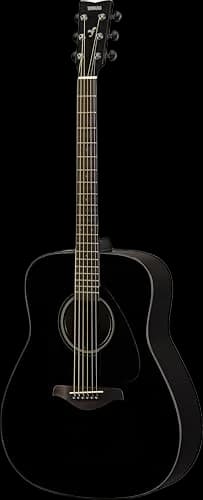
The Yamaha FG800J is the best acoustic guitar for the widest range of players: a solid spruce top for under $300. If you can spend around $850, the all-solid Epiphone J-45 Standard is the step up worth making.
Key takeaways
- Under $500, insist on a solid top. Above that, the extra money mostly buys solid back and sides.
- Body size shapes comfort and sound: dreadnoughts are bold, while parlors and minis are intimate and easier to hold.
- Pay for a pickup only if you will play through a PA or record by plugging in.
- Solid-wood guitars are more sensitive to humidity than laminate ones, so plan for a case and a humidifier.
At a glance
| Pick | Best for | Price* | |
|---|---|---|---|
| A first acoustic, or a worry-free second guitar | $280 | Buy on Amazon → |
| Players ready for an all-solid guitar to keep | $849 | Buy on Amazon → | |
 Best for fingerstyle Seagull S6 Original Acoustic Guitar | Warm-voiced fingerpicking and songwriting | $639 | Buy on Amazon → |
 | Travel, sofa playing and smaller hands | $599 | Buy on Amazon → |
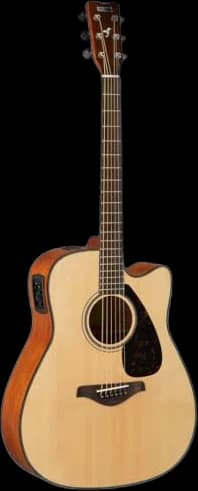 Best budget acoustic-electric Yamaha FGX800C Solid Top Cutaway Acoustic-Electric Guitar★ 4.7 (273 Amazon ratings) | Open mics, busking and recording direct | $440 | Buy on Amazon → |
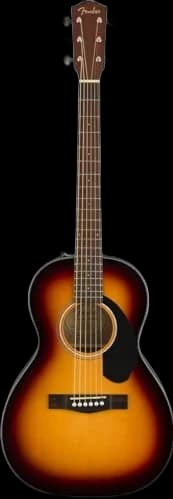 | Small spaces, blues and fingerstyle on a budget | $230 | Buy on Amazon → |
* Prices are approximate and may vary. Please check the latest price on Amazon.
An acoustic guitar is wood, air and six strings, and yet two that look nearly identical can feel worlds apart. The differences that matter are few: whether the top is solid, how big the body is, whether you need a pickup, and how the neck sits in your hand.
This guide spans the realistic range for most players, from about $230 to about $850. We read the current roundups at Guitar Player and Guitar World, followed the long-running threads on r/AcousticGuitar, and took every spec from the maker or the Amazon listing. We stopped short of four figures on purpose. Guitar Player's own buying advice is that the gap between a $200 and a $700 acoustic is substantial, while the gap between $700 and $1,500 is smaller.
01 · Best overall value
Yamaha FG800J Solid Top Acoustic Guitar
A solid spruce top and honest build for well under $300. Still the value benchmark.
Guitar Player and Guitar World both give the FG800 their budget slot, and Guitar Player argues it holds its own against guitars costing two or three times as much. The version Yamaha USA currently lists is the FG800J: a solid spruce top, nato and mahogany back and sides, a 25-inch scale and a matte-finish neck. There is no pickup and no cutaway, so the money goes where it counts, into the top. Buy it as a first acoustic, a campfire guitar or a spare you won't fret over. If you will mostly play through a PA, its plugged-in sibling, the FGX800C, is further down.
Strengths
- + Solid spruce top at an entry price
- + Consistent Yamaha build quality
- + Comfortable matte-finish neck
Trade-offs
- − No pickup for stage or direct recording
- − Full dreadnought can feel big for small players
- Body
- Dreadnought
- Top
- Solid spruce
- Back & sides
- Nato/mahogany
- Scale
- 25 in (634 mm)
- Nut width
- 1 11/16 in (43 mm)
- Neck finish
- Matte
4.7 out of 5 from 85 Amazon ratings
Amazon’s summary of its reviews: Customers find this acoustic guitar to be of good quality and appreciate its stunning appearance. They praise its sound, with one customer noting it sounds like an expensive instrument, and consider it a great value for money.
What buyers praise
- quality — 100% positive of 19 mentions
$849
Buy on Amazon02 · Best step-up
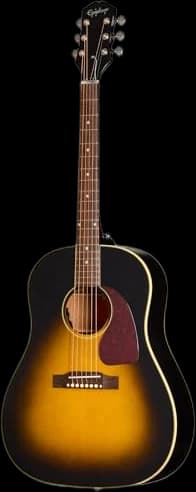
Epiphone Inspired by Gibson J-45 Standard Acoustic-Electric Guitar
All solid woods, Grover tuners and a Fishman pickup: the classic Workhorse recipe for far less.
Guitar Player picks the Epiphone J-45 Standard as its best mid-range acoustic and points out there are no laminates anywhere in it. Epiphone's spec sheet confirms a solid spruce top, solid mahogany back and sides, a bone nut and saddle, a tapered dovetail neck joint, Grover Rotomatic tuners and Fishman Presys VT electronics, with a premium gig bag included. Guitar Player adds that the rounder shoulders make it feel a little smaller than a square dreadnought. This is the guitar for someone who plays most days and wants one acoustic for the long haul. Guitar Player found the soundhole controls a little fiddly, and it is the priciest guitar here.
Strengths
- + All-solid construction
- + Pickup and gig bag included
- + Grover tuners, bone nut and saddle
Trade-offs
- − Soundhole-mounted controls can be fiddly
- − Priced a little above $800
- Top
- Solid spruce
- Back & sides
- Solid mahogany
- Scale
- 24.75 in (628.65 mm)
- Nut width
- 1.69 in (43 mm), bone
- Electronics
- Fishman Presys VT preamp, S-Core pickup
- Case
- Premium gig bag
$639
Buy on Amazon03 · Best for fingerstyle
Seagull S6 Original Acoustic Guitar
A cedar-topped, Canadian-built dreadnought with a roomy neck and a warm, focused voice.
The S6 comes up again and again on r/AcousticGuitar when someone asks for a great acoustic under $800 or so. Seagull builds it in Canada and describes its sound as warm, with a crisp midrange and a tight low end. The Amazon listing specifies a solid cedar top, wild cherry back and sides and a silver leaf maple neck, and its 1.8-inch nut is wider than any other guitar here, which gives picking fingers a little more room. Choose it for fingerstyle and quiet songwriting. Players with small hands who mostly strum may prefer the slimmer Epiphone neck, or the S6 Original Slim.
Strengths
- + Solid cedar top with a warm voice
- + Built in Canada
- + Roomy neck for fingerpicking
Trade-offs
- − No pickup
- − Wide neck can feel chunky to small hands
- Top
- Solid cedar
- Back & sides
- Wild cherry
- Neck
- Silver leaf maple
- Scale
- 25.5 in (647.7 mm)
- Nut width
- 1.8 in
- Made in
- Canada
04 · Best compact acoustic
Taylor GS Mini Mahogany Acoustic Guitar
A short-scale Taylor with a solid mahogany top that sounds bigger than it looks.
Guitar Player calls the GS Mini one of the best non-full-size acoustics around, and it is the rare small guitar that serious players keep. The mahogany version pairs a solid mahogany top, which Taylor credits with a focused midrange, with layered sapele back and sides, on a 23 1/2-inch scale with an ebony fingerboard. It arrives strung with D'Addario XS coated strings and packed in a structured gig bag. The short scale and small body make it easy to hold on a sofa or take traveling. It won't match a dreadnought's volume or bass, and the largest hands may find the neck cramped.
Strengths
- + Easy to hold and carry
- + Solid mahogany top
- + Coated strings and gig bag included
Trade-offs
- − Less volume and bass than full-size guitars
- − Short scale feels cramped to very large hands
- Top
- Solid mahogany
- Back & sides
- Layered sapele
- Scale
- 23 1/2 in
- Nut width
- 1 11/16 in
- Fingerboard
- West African Crelicam ebony
- Case
- Structured gig bag
4.6 out of 5 from 42 Amazon ratings
Amazon’s summary of its reviews: Customers praise the guitar's sound quality, with one noting it sounds just like a full-size instrument. Moreover, the build quality is well-received, with one customer highlighting its gorgeous workmanship. Additionally, the size receives positive feedback, with customers finding it perfect, and one mentioning it's great for smaller hands.
05 · Best budget acoustic-electric
Yamaha FGX800C Solid Top Cutaway Acoustic-Electric Guitar
The FG800 recipe with a cutaway, an onboard tuner and three-band EQ for plugging in.
Yamaha describes the FGX800C as derived from the FG800: a solid spruce top with nato and okoume back and sides, now with a cutaway and Yamaha's SYSTEM66 preamp over an under-saddle piezo pickup. The controls give you volume, a three-band EQ with an adjustable mid frequency and a built-in tuner, a practical toolkit for a first gigging acoustic. On r/AcousticGuitar it is a common answer for players who want electronics without a big price jump. If you will never plug in, save the difference and buy the FG800J instead.
Strengths
- + Onboard tuner and three-band EQ
- + Cutaway reaches the upper frets
- + Solid spruce top
Trade-offs
- − Costs more than the FG800J if you never plug in
- − Laminate back and sides
- Body
- Dreadnought cutaway
- Top
- Solid spruce
- Back & sides
- Nato/okoume
- Scale
- 25 9/16 in (650 mm)
- Nut width
- 1 11/16 in (43 mm)
- Electronics
- SYSTEM66 preamp, SRT piezo pickup
4.7 out of 5 from 273 Amazon ratings
Amazon’s summary of its reviews: Customers find this acoustic-electric guitar has good sound quality, with one noting its excellent tone for its price point, and appreciate its built-in tuner that works perfectly and stays in tune. The guitar receives positive feedback for its appearance, ease of use, and action, with one customer highlighting its smooth neck for easier playing. While customers find the guitar well-made, opinions about its build quality are mixed.
What buyers praise
- sound quality — 85% positive of 46 mentions
- value for money — 90% positive of 29 mentions
06 · Best parlor under $250
Fender CP-60S Parlor Acoustic Guitar
A solid-top parlor with a friendly neck. Small, warm and easy to keep within reach.
Parlor guitars are small, and Guitar Player describes their sound as punchy and clear with less bass, well suited to blues and recording at home. Fender's CP-60S puts a solid spruce top over laminated mahogany back and sides, with a 24.75-inch scale, a 20-fret walnut fingerboard and chrome die-cast tuners, according to the Amazon listing. Fender also rolls the fingerboard edges to soften the feel of the neck. It is the guitar to leave on a stand beside the reading chair. It will not fill a room the way a dreadnought does, and strummers who want a big low end should look elsewhere.
Strengths
- + Lowest price in this guide
- + Small body is easy to hold
- + Solid spruce top
Trade-offs
- − Modest bass and volume
- − No case included
- Body
- Parlor
- Top
- Solid spruce
- Back & sides
- Laminated mahogany
- Scale
- 24.75 in
- Fingerboard
- Walnut, 20 frets
- Tuners
- Chrome die-cast
4.5 out of 5 from 213 Amazon ratings
Amazon’s summary of its reviews: Customers find this acoustic guitar to be a great beginner instrument that offers good value for money, with one noting it sounds like a more expensive model. The parlor size is particularly suitable for young students, and customers appreciate its build quality, with one mentioning the clean bracing and absence of excess glue. The guitar holds its tuning well, and customers like its bright tone, with one highlighting its ample volume and midrange. The setup process receives mixed feedback.
What buyers praise
- quality — 95% positive of 37 mentions
- sound quality — 88% positive of 33 mentions
- value for money — 91% positive of 22 mentions
- tuning retention — 71% positive of 17 mentions
Solid top, laminate and all-solid
The top, or soundboard, does most of the singing. Guitar Player explains that a solid top is one continuous piece of wood, which typically brings more volume, sustain and harmonic complexity, and can improve with age. Laminate is thin layers glued together: less resonant, but more tolerant of humidity changes and knocks.
That gives a simple ladder. Under $300, look for a solid top with laminate back and sides, as on the Yamaha FG800J and Fender CP-60S; Guitar Player calls that pairing the sensible compromise. Closer to $850, all-solid construction becomes realistic, and the Epiphone J-45 Standard pairs a solid spruce top with solid mahogany back and sides.
Spruce, cedar or mahogany on top
Guitar Player describes spruce as bright, clear and punchy with a wide dynamic range, and darker tops such as mahogany as woodier, with a warmer midrange. Four of the six guitars here use spruce. The Taylor GS Mini Mahogany is the mahogany voice, and the Seagull S6 Original is the cedar one, a top Seagull tags as warm.
Don't overthink it, though. University of Rock's advice is not to obsess over tonewoods, and it is sound. Comfort and a good setup change how a guitar sounds in your hands more than the species of its top.
Body size: dreadnought, parlor and mini
Guitar Player sums up the shapes well. A dreadnought is loud with strong bass, ideal for strumming. An auditorium shape is more balanced and articulate, good for fingerstyle. A parlor is small and punchy, with less bass and plenty of clarity, suited to blues and home recording. Smaller players, the guide adds, may never get comfortable on the biggest bodies.
In this list, the FG800J, FGX800C, S6 and J-45 are full-size guitars; the J-45's rounded shoulders make it feel slightly smaller. The Fender CP-60S is a true parlor with a 24.75-inch scale, and the Taylor GS Mini is the most compact, with a 23 1/2-inch scale.
Do you need a pickup?
Only if you will play through a PA or amp, or want to record by plugging straight in. Guitar Player's view is that home players who don't record can do without, though a factory-fitted pickup has little downside. Two guitars here have one.
The Yamaha FGX800C's SYSTEM66 preamp includes a built-in tuner and three-band EQ, a useful combination for a first gigging guitar. The Epiphone J-45 Standard's Fishman Presys VT is simpler, with volume and tone controls tucked inside the soundhole where the audience won't see them.
Care: humidity, strings and a setup
Solid woods react more to humidity than laminate. Guitar Player recommends humidifying solid-wood guitars, preferably with a purpose-made soundhole or case humidifier rather than a damp sponge. Guitar Center's advice is simpler still: keep the guitar in a case with a humidifier, and never leave it in a car.
Budget for a setup, too. Guitar Player notes that mid- and low-priced acoustics are less likely to arrive with a thorough setup, and that adjusting the action, nut and saddle can transform how easily chords ring out.
A well-set-up acoustic rewards slow listening. If you love fingerpicked steel strings in open tunings, our slack-key guitar recordings make a gentle companion to practice.
How the six picks differ
- The safe default: Yamaha FG800J, a solid-top dreadnought under $300.
- Plugging in on a budget: Yamaha FGX800C, the same family with a cutaway and preamp.
- Small body, small budget: Fender CP-60S parlor.
- Travel, sofa or smaller hands: Taylor GS Mini Mahogany.
- A warm fingerstyle voice: Seagull S6 Original.
- One guitar to keep for decades: Epiphone J-45 Standard, all solid wood with a pickup.
Questions people ask
Is a solid top acoustic guitar worth it?
For most buyers, yes. Guitar Player notes that solid tops typically have more resonance, volume and sustain than laminate, and can improve with age. Laminate still has a place: it is less sensitive to humidity and knocks, which suits a travel or campfire guitar that lives a rougher life.
How much should I spend on a good acoustic guitar?
Around $230 to $300 buys a solid-top guitar from Fender or Yamaha that many players keep for years. Guitar Player's advice is that returns diminish as you climb: the jump from $200 to $700 is substantial, the jump from $700 to $1,500 less so. Buy the best you can comfortably afford.
What is the best acoustic guitar body shape?
It depends on your size and style. Dreadnoughts are loud with strong bass for strumming, auditorium shapes are balanced for fingerstyle, and parlors are small and clear, suited to blues and home recording. Let comfort decide close calls, because an awkward guitar is one you will play less.
Do acoustic guitars need a humidifier?
Solid-wood guitars benefit from one. Guitar Player recommends a purpose-made soundhole or case humidifier for solid-wood instruments and says laminate guitars are less demanding. Keeping the guitar in its case and out of hot cars, as Guitar Center advises, prevents most trouble before it starts.
Does nut width matter on an acoustic guitar?
More than most buyers expect. Guitar Player explains that nut width largely sets string spacing: about 1 11/16 inches feels narrower and suits strumming and smaller hands, while 1 3/4 inches or more gives fingerstyle players extra room. In this guide, the Seagull S6 Original's 1.8-inch nut is the widest.
What is the difference between the Yamaha FG800 and FG800J?
Yamaha USA's current spec sheet lists the FG800J, with a solid spruce top and nato and mahogany back and sides. The earlier FG800, still found at some retailers, used nato and okoume. Both are solid-top dreadnoughts built for the same job, so buy whichever is priced better.
Sources
- Guitar Player: Best acoustic guitars 2026, beginner, intermediate and top-end picks
- Guitar World: Best acoustic guitars 2026, 10 top options for guitarists of all ages and abilities
- GC Riffs (Guitar Center): The Best Acoustic Guitars for Beginners, including acoustic care advice
- Yamaha USA: FG/FS800 Series specifications (FG800J, FGX800C)
- Gibson: Epiphone J-45 Standard, Vintage Sunburst product page and specifications
- Godin Guitars: Seagull S6 Original product page
- Amazon: Seagull S6 Original Acoustic Guitar listing with materials and nut width
- Taylor Guitars: GS Mini Mahogany product page and specifications
Listen first
As an Amazon Associate, SlowHum earns from qualifying purchases, at no extra cost to you. Full disclosure.