The Best Acoustic-Electric Guitars
Quick answer
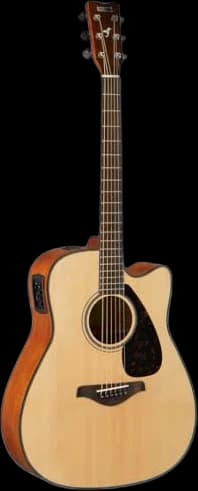
The Yamaha FGX800C is the best all-around acoustic-electric guitar for most players: a solid spruce top, a real cutaway, and Yamaha's System 66 preamp for around $440.
SlowHum may earn a commission when you buy through our links. Affiliate disclosure
A guide to guitars that sound like themselves plugged in, not like a microphone fighting feedback.
Updated October 22, 2026 · 6 min read
Key takeaways
- An acoustic-electric is a normal acoustic with a pickup and preamp added, not a different instrument, so it should still sound good unplugged.
- A solid top (not laminate) matters more for tone than the pickup brand; the pickup only amplifies what the top already does.
- Onboard tuners and 3-band EQ are conveniences, not tone upgrades; they don't change how the guitar sounds acoustically.
- Reddit's r/AcousticGuitar regulars lean toward Yamaha and Seagull over Fender's cheapest acoustics for reliability at the entry level.
At a glance
Best overall
Yamaha FGX800C Acoustic-Electric GuitarA first acoustic-electric that holds up onstage
- Top
- Solid Sitka spruce
- Back/Sides
- Nato
Trade-off: Laminate back and sides limit ceiling tone
Best budget
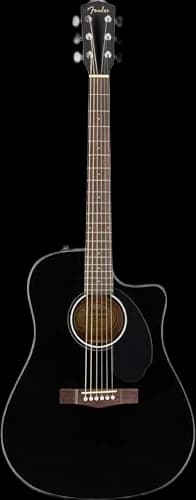
Fender CD-60SCE Dreadnought Cutaway Acoustic-ElectricTightest-budget buyers who still want a plug-in option
- Top
- Solid spruce
- Back/Sides
- Mahogany
Trade-off: Fit and finish is inconsistent unit to unit
Best thinline for stage comfort
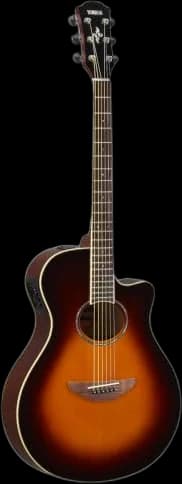
Yamaha APX600 Thin Body Acoustic-Electric GuitarPlayers who stand to play and want a slim, comfortable body
- Body
- Thin-line cutaway
- Scale
- 25 in
Trade-off: Quieter unplugged than a full-depth guitar
Best for fingerstyle
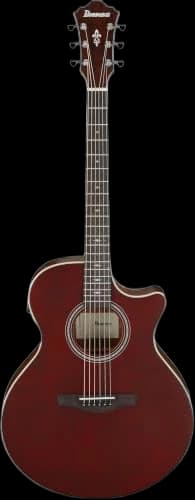
Ibanez AE100 Acoustic-Electric GuitarFingerstyle players who want a natural plugged-in tone
- Top
- Solid Sitka spruce
- Back/Sides
- Okoume
Trade-off: Less low-end thump than a full dreadnought
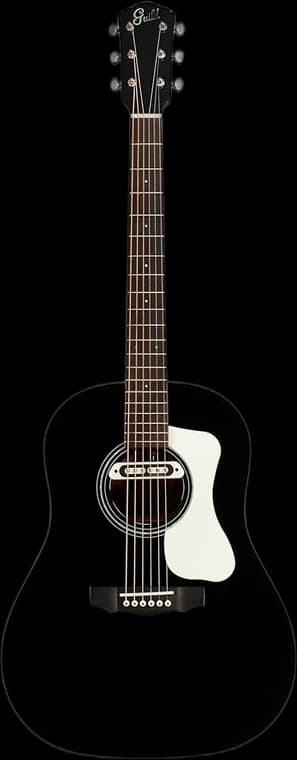
Best for vintage tone
Guild DS-240E Dreadnought Acoustic-Electric GuitarSinger-songwriters who want a warm, vintage-styled strummer
- Top
- Solid Sitka spruce
- Back/Sides
- Mahogany
Trade-off: Guild lists no onboard tuner or EQ controls
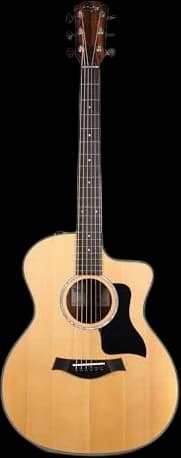
Best for gigging
Taylor 214ce Plus Acoustic-Electric GuitarGigging players who want Taylor's flagship pickup, cheaper
- Top
- Solid torrefied Sitka spruce
- Back/Sides
- Layered (rosewood or maple depending on finish)
★ 5.0 (3 Amazon ratings)
Trade-off: Meaningfully pricier than the rest of this list
| Pick | Best for | Price* | |
|---|---|---|---|
| A first acoustic-electric that holds up onstage Trade-off: Laminate back and sides limit ceiling tone | $440 | Buy on Amazon → |
| Tightest-budget buyers who still want a plug-in option Trade-off: Fit and finish is inconsistent unit to unit | $340 | Buy on Amazon → |
Best thinline for stage comfort Yamaha APX600 Thin Body Acoustic-Electric Guitar★ 4.5 (1,241 Amazon ratings) | Players who stand to play and want a slim, comfortable body Trade-off: Quieter unplugged than a full-depth guitar | $390 | Buy on Amazon → |
Best for fingerstyle Ibanez AE100 Acoustic-Electric Guitar | Fingerstyle players who want a natural plugged-in tone Trade-off: Less low-end thump than a full dreadnought | $430 | Buy on Amazon → |
Best for vintage tone Guild DS-240E Dreadnought Acoustic-Electric Guitar | Singer-songwriters who want a warm, vintage-styled strummer Trade-off: Guild lists no onboard tuner or EQ controls | $650 | Buy on Amazon → |
| Gigging players who want Taylor's flagship pickup, cheaper Trade-off: Meaningfully pricier than the rest of this list | $1,399 | Buy on Amazon → |
* Prices are approximate and may vary. Please check the latest price on Amazon.
"Acoustic-electric" just means an acoustic guitar with a pickup and a preamp built in — not a separate category of instrument. The good ones still sound like a real acoustic guitar with the cable unplugged; the electronics only carry that tone to a PA or an audio interface without a microphone's feedback risk. The picks below span a $350 Fender to a $1,400 Taylor, chosen for solid tops, honest electronics, and a genuine reason to pick each one over the others.
01 · Best overall
Yamaha FGX800C Acoustic-Electric Guitar
A solid-top dreadnought with clean, predictable electronics at a fair price.
Yamaha's FG line has been the default recommendation for a reliable starter acoustic for decades, and the FGX800C adds a cutaway and Yamaha's System 66 under-saddle piezo pickup with a 3-band EQ and onboard tuner. The solid Sitka spruce top means the unplugged tone actually improves with age, unlike an all-laminate budget guitar. Reddit's r/AcousticGuitar threads on sub-$500 acoustic-electrics consistently favor Yamaha's reliability over cheaper Fender models. Skip it if you specifically want a smaller body; this is a full dreadnought.
Strengths
- + Solid top ages and opens up over time
- + Onboard tuner is genuinely accurate
- + Slim nut width is easy for beginner hands
Trade-offs
- − Laminate back and sides limit ceiling tone
- − Stock strings are mediocre and worth replacing
- Top
- Solid Sitka spruce
- Back/Sides
- Nato
- Scale length
- 25.6 in
- Pickup/preamp
- Yamaha System 66 (piezo, 3-band EQ, tuner)
- Cutaway
- Venetian cutaway
- Body
- Dreadnought
4.7 out of 5 from 275 Amazon ratings
Amazon’s summary of its reviews: Customers find this acoustic-electric guitar has good sound quality, with one noting its excellent tone for its price point, and appreciate its built-in tuner that works perfectly and stays in tune. The guitar receives positive feedback for its appearance, ease of use, and action, with one customer highlighting its smooth neck for easier playing. While customers find the guitar well-made, opinions about its build quality are mixed.
What buyers praise
- sound quality — 85% positive of 46 mentions
- value for money — 90% positive of 29 mentions
02 · Best budget
Fender CD-60SCE Dreadnought Cutaway Acoustic-Electric
The cheapest common way into a solid-top acoustic-electric with real Fishman electronics.
The CD-60SCE pairs a solid spruce top with mahogany back and sides and a Fishman CD-1 preamp with onboard tuner, undercutting most solid-top competitors on price. It's a fixture on budget acoustic-electric shortlists for exactly that reason. Worth knowing before you buy: on r/AcousticGuitar, several longtime posters say they've never been fully satisfied with Fender's budget acoustic build quality and neck feel compared to Yamaha at the same price, so try one in person if you can, or lean toward the FGX800C if a store visit isn't practical.
Strengths
- + Solid top at an unusually low price
- + Fishman preamp is a known, serviceable unit
- + Slim, easy-playing neck profile
Trade-offs
- − Fit and finish is inconsistent unit to unit
- − Stock tuners drift and often get swapped early
- Top
- Solid spruce
- Back/Sides
- Mahogany
- Scale length
- 25.3 in
- Pickup/preamp
- Fishman CD-1 (preamp + tuner)
- Cutaway
- Single Venetian cutaway
- Body
- Dreadnought
4.4 out of 5 from 892 Amazon ratings
Amazon’s summary of its reviews: Customers find this acoustic guitar to be well-made and easy to play, particularly suitable for beginners and intermediate players. They appreciate its sound quality, with one customer noting its warm resonance, and consider it a great value for the price. The built-in tuner receives positive feedback for its accuracy, and customers like its appearance, with one describing it as a beautiful surprise present. Customers disagree on the guitar's tuning retention.
What buyers praise
- quality — 76% positive of 34 mentions
- sound quality — 88% positive of 25 mentions
- value for money — 75% positive of 16 mentions
03 · Best thinline for stage comfort
Yamaha APX600 Thin Body Acoustic-Electric Guitar
A thin, cutaway body that sits close to you on a strap, with a pickup system aimed at the stage.
The APX600 is a different idea from the dreadnoughts here: Yamaha's listing describes a thin-line cutaway body for playability, a 25-inch scale with narrower string spacing for comfort, a scalloped bracing pattern meant to restore bass response, and a stage-focused pickup system for sitting in a band mix. The thin body hugs your ribs on a strap and is easy to hold seated, which is why it is one of the best-selling acoustic-electrics on Amazon, with 4.5 stars across more than 1,200 ratings. The trade-off is volume: a thin body moves less air unplugged than a full dreadnought, and Yamaha's listing does not claim a solid top. Skip it if you mostly play unplugged at home; the FGX800C is the stronger acoustic.
Strengths
- + Thin body is comfortable standing or seated
- + Shorter 25-inch scale and narrower string spacing
- + Widely rated across more than 1,200 reviews
Trade-offs
- − Quieter unplugged than a full-depth guitar
- − Listing does not claim a solid top
- Body
- Thin-line cutaway
- Scale
- 25 in
- Bracing
- Scalloped
- Rosette
- Abalone
- Electronics
- Stage-focused pickup system
- Finish
- Old Violin Sunburst
$430
Buy on Amazon04 · Best for fingerstyle
Ibanez AE100 Acoustic-Electric Guitar
A Grand Auditorium-style body with a preamp built for nuance, not just volume.
Ibanez builds the AE100 with a solid Sitka spruce top over okoume back and sides, a shallower AE body depth that suits sitting and playing fingerstyle, and an A.I.R. sound port that directs more of the resonance toward the player's ear rather than only out the front. The AEQ-TP2 preamp adds bass, treble, and volume controls plus a tuner without overcomplicating the signal. It's a clear step up from entry-level dreadnoughts for anyone recording direct-in at home. This listing has too few ratings to judge yet, so weigh the maker's specs over the stars. Skip it if you want a big, boomy low end; the smaller body trades some bass for clarity.
Strengths
- + Balanced, articulate tone suited to fingerstyle
- + Preamp EQ is genuinely useful, not just marketing
- + Comfortable, shallower body for seated playing
Trade-offs
- − Less low-end thump than a full dreadnought
- − Fewer finish/color options than the bigger brands
- Top
- Solid Sitka spruce
- Back/Sides
- Okoume
- Neck
- Nyatoh, Comfort Grip profile
- Pickup/preamp
- Ibanez AEQ-TP2 (undersaddle piezo + tuner)
- Cutaway
- Single cutaway
- Extra
- A.I.R. sound port
$650
Buy on Amazon05 · Best for vintage tone
Guild DS-240E Dreadnought Acoustic-Electric Guitar
A solid-spruce, slope-shoulder dreadnought styled after the 1930s, with a simple soundhole pickup.
Guild's Westerly Collection DS-240E is a sloped-shoulder dreadnought, the rounder body shape associated with classic 1930s strummers, built with a solid Sitka spruce top over mahogany back and sides. Guild describes its voice as warm, clear and inviting, and the mahogany body leans toward that warmth rather than the scooped, bright sound of many modern dreadnoughts. Instead of an under-saddle preamp it uses a DeArmond Tone Boss soundhole pickup, and Guild lists no onboard tuner or EQ, so plan on a clip-on tuner and shaping tone at the amp or PA. It suits strummed singer-songwriter material better than fingerstyle precision. Skip it if you want onboard controls; the Yamaha FGX800C and Fender CD-60SCE both have a preamp and tuner built in for less.
Strengths
- + Solid Sitka spruce top
- + Warm, mahogany-backed voice suited to strumming
- + 1930s-inspired styling with a mother-of-pearl rosette
Trade-offs
- − Guild lists no onboard tuner or EQ controls
- − Few Amazon reviews so far compared with the Yamaha or Fender
- Top
- Solid Sitka spruce
- Back/Sides
- Mahogany
- Body
- Sloped-shoulder dreadnought
- Neck
- Mahogany, C-shaped profile
- Fingerboard/bridge
- Rosewood
- Pickup
- DeArmond Tone Boss soundhole pickup
- Finish
- Black gloss
$1,399
Buy on Amazon06 · Best for gigging
Taylor 214ce Plus Acoustic-Electric Guitar
Taylor's Expression System 2 in the brand's most accessible Grand Auditorium body.
Taylor updated its 200 Plus series with a torrefied, heat-aged solid Sitka spruce top, meant to sound broken-in from day one — this replaced the older 214ce, which used an untreated top and layered walnut back and sides. The Expression System 2 places sensors behind the saddle instead of directly under it, which Taylor says captures more of the guitar's natural dynamics than a standard undersaddle piezo. The Grand Auditorium body and Venetian cutaway suit both strumming and fingerstyle. Skip it if $1,400 is above budget; the FGX800C or CD-60SCE cover the same use case for far less.
Strengths
- + ES2 pickup is widely regarded as one of the best onboard systems
- + Torrefied top sounds broken-in from new
- + Grand Auditorium body suits most playing styles
Trade-offs
- − Meaningfully pricier than the rest of this list
- − Layered, not solid, back and sides at this tier
- Top
- Solid torrefied Sitka spruce
- Back/Sides
- Layered (rosewood or maple depending on finish)
- Scale length
- 25.5 in
- Pickup/preamp
- Expression System 2 (behind-saddle sensors)
- Cutaway
- Venetian cutaway
- Bracing
- C-Class
What "acoustic-electric" actually means
Every guitar here is a normal steel-string acoustic first. The electric part is a pickup — usually a piezo sensor under or behind the saddle — wired to a small preamp, almost always mounted in the soundhole with volume and tone knobs. Unplugged, these guitars should sound like any other acoustic in their price range. If a guitar sounds thin or lifeless with the cable out, no preamp fixes that; you're hearing the top and the wood, not the electronics.
Pickup and preamp systems, demystified
Most budget and mid-range acoustic-electrics use an under-saddle piezo, which senses string vibration through the saddle itself. It's reliable and simple but can sound a little quacky or thin on its own. More refined systems, like Taylor's Expression System 2, move the sensors behind the saddle to pick up more of the top's actual movement. A few guitars, like Fender's Acoustasonic line, blend a piezo with a modeled microphone signal for a rounder sound. An onboard tuner and 3-band EQ are conveniences for tuning quietly backstage and shaping tone at a gig — they don't change the guitar's acoustic voice.
Why almost every one of these has a cutaway
A cutaway trims away part of the upper bout so your fretting hand can reach the highest frets. It's nearly universal on acoustic-electrics because the same players who want to plug in for a gig also tend to want that upper-fret access for solos and fills. The tradeoff is a very slightly smaller soundbox, which in theory reduces bass response — in practice, on guitars this size, it's not something most players notice by ear.
Playing out live vs. recording at home
Onstage, a pickup avoids the two problems a microphone brings: feedback from stage monitors, and the guitar moving out of the mic's sweet spot as you play. Plugged into a DI box or acoustic amp, these guitars sound consistent night to night. At home, plenty of people still prefer close-mic'ing the guitar for recording and treat the built-in pickup as a backup or a blend partner — a pickup captures less of the room and the top's natural resonance than even an inexpensive condenser mic a foot away.
Matching the guitar to the player
- Full dreadnoughts (Yamaha FGX800C, Fender CD-60SCE) suit strummers who want volume and low end.
- Smaller Grand Auditorium and OM-style bodies (Ibanez AE100, Taylor 214ce Plus) suit fingerstyle and seated recording.
- The Yamaha APX600's thin-line body suits players who stand on stage and want a guitar that sits close and light on a strap.
- The Guild DS-240E's slope-shoulder dreadnought body and mahogany back lean warm, better for strummed songwriting than crisp fingerpicking.
What to skip
Be wary of any acoustic-electric under about $200 with an all-laminate top — the pickup will faithfully amplify a thin, boxy sound rather than fixing it. Also skip guitars whose only selling point is the electronics; a preamp with a flashy display doesn't compensate for a poorly built top or a neck that won't hold tuning.
Questions people ask
Do I need an acoustic-electric if I only play at home?
Not necessarily. If you never plan to plug into an amp, PA, or interface, a standard acoustic without electronics is usually cheaper for the same build quality, since you're not paying for a pickup and preamp you won't use. An acoustic-electric earns its price when you actually plan to record direct-in or play out.
Does a pickup make a cheap guitar sound expensive?
No. A pickup amplifies whatever the top is already doing; it can't add resonance or sustain the wood doesn't have. Spend your budget on the best solid top you can afford first, and treat the electronics as a bonus rather than the deciding factor.
What's the difference between an under-saddle pickup and a soundhole pickup?
An under-saddle (or behind-saddle) pickup senses string vibration through the saddle and is built into the guitar permanently. A soundhole pickup sits in the soundhole and can usually be removed. Nearly every guitar on this list uses a permanent under- or behind-saddle system paired with a soundhole-mounted preamp control panel; the Guild DS-240E is the exception, with a DeArmond soundhole pickup.
Do I need a specific amp for an acoustic-electric guitar?
A dedicated acoustic amp or a DI box into a PA gives the cleanest result, since acoustic pickups are voiced differently than electric guitar pickups. An electric guitar amp will work in a pinch but tends to color the tone in ways acoustic players usually don't want.
How long does the onboard preamp's battery last?
Most systems, including the Fishman and Ibanez preamps used here, run on a single 9-volt battery and last roughly 40 to 80 hours of plugged-in playing time. Unplug the guitar's output jack when it's not in use, since that's usually what completes the circuit and drains the battery.
Sources
- 7 Best Acoustic Electric Guitars 2026 For All Budgets — guitarguitar
- 17 Best Acoustic Electric Guitars in 2026 (All Price Ranges) — Guitar Lobby
- Taylor 214ce official specifications — Taylor Guitars
- Yamaha FGX800C Solid Top Cutaway Acoustic-Electric Guitar — Amazon listing
- Guild DS-240 / DS-240E Westerly Collection - Guild Guitars
- Ibanez AE100 acoustic-electric guitar — Ibanez product page
- r/AcousticGuitar — Best Acoustic-Electric for performing?
- r/AcousticGuitar — Best acoustic electric guitar under $500
Keep reading
Listen first
As an Amazon Associate, SlowHum earns from qualifying purchases, at no extra cost to you. Full disclosure.