The Best Mandolins
A-style or F-style, carved or pressed top, oval hole or f-holes — what actually changes the sound, and where a beginner's money is best spent.
Published September 16, 2026 · 6 min read
Quick answer
For most beginners, the Kentucky KM-150 is the safest first mandolin — an all-solid A-style with a comfortable neck that you won't outgrow in a year.
Key takeaways
- A-style bodies are simpler to build and cheaper; F-style scrolls don't change the tone, just the price and look.
- A carved, solid top costs more but resonates and improves with playing time; a pressed top is stable and cheap.
- Oval sound holes give a sweeter, more vintage tone; F-holes are louder and cut through a bluegrass jam better.
- Mandolins under roughly $150–200 are frequently reported to arrive with high action — factor in a setup.
At a glance
| Pick | Best for | Price* | |
|---|---|---|---|
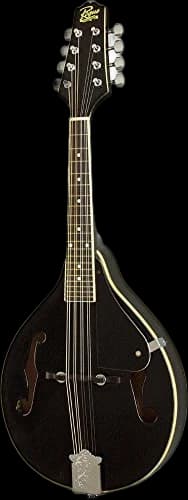
Best absolute budget Rogue RM-100A A-Style Mandolin | Trying the instrument before spending more | $130 | Buy on Amazon → |
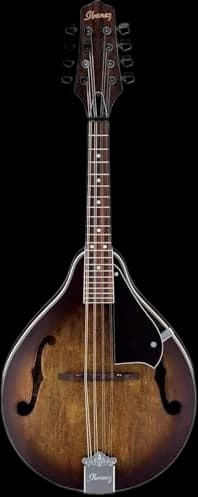 Best value step-up Ibanez M510OVS A-Style Acoustic Mandolin | Beginners who want better fit and finish | $200 | Buy on Amazon → |
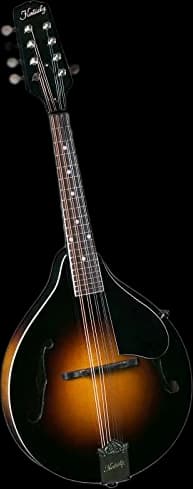 | Beginners who want solid wood without carved-top pricing | $582 | Buy on Amazon → |
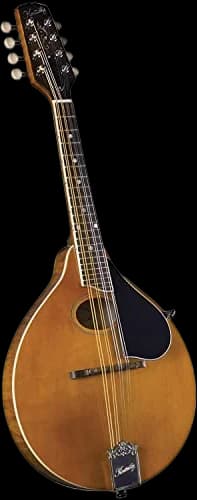 Best hand-carved / vintage oval-hole tone Kentucky KM-272 Artist Oval Hole A-Model Mandolin | Old-time, Celtic, and vintage-tone players | $695 | Buy on Amazon → |
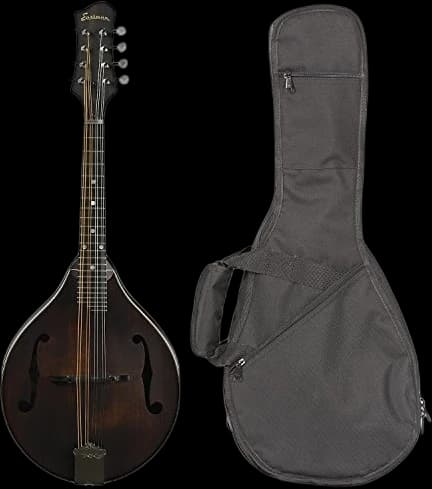 | Committed beginners who want to skip upgrading | $729 | Buy on Amazon → |
* Prices are approximate and may vary. Please check the latest price on Amazon.
A mandolin's shape gets more attention than it deserves — A-style versus F-style is mostly cosmetic, a scroll and some points that don't change the tone. What actually matters is whether the top is carved or pressed, solid wood or laminate, and whether you can find a shop to set it up when it arrives with the action too high, which happens more than beginner marketing admits. These six picks run from a $130 way to find out if the instrument is for you, to a $730 carved instrument worth keeping for years.
$130
Buy on Amazon01 · Best absolute budget
Rogue RM-100A A-Style Mandolin
Cheapest way to find out if mandolin is for you.
The RM-100A exists to answer one question cheaply: do you actually want to play mandolin? It's a pressed-top A-style with a dovetail neck joint and chrome tuners — nothing fancy, but functional. Reddit's r/mandolin regulars are candid that instruments in this tier, this one included, often arrive with action set too high to play comfortably, so budget for a local shop to lower it, or expect to do some work yourself. Skip it if you're confident you'll stick with mandolin for more than a few months — the Kentucky KM-150 below costs considerably more but needs far less intervention.
Strengths
- + Lowest price to try the instrument before committing
- + Traditional A-style body and GDAE tuning
- + Widely available with easy return policies
Trade-offs
- − Frequently needs a setup (action, intonation) before it plays its best
- − Pressed top has a flatter, less resonant tone than carved instruments
- Style
- A-style
- Top
- Pressed spruce
- Back/sides
- Pressed mahogany
- Neck joint
- Dovetail
- Tuners
- Chrome geared
$200
Buy on Amazon02 · Best value step-up
Ibanez M510OVS A-Style Acoustic Mandolin
A real step up in consistency for not much more money.
Ibanez's M510 is a step above the cheapest A-styles without leaving beginner pricing: a spruce top over a mahogany body that Ibanez describes as delivering rich, warm lows and sustain. It won't compete with a carved-top instrument for complexity of tone, but the fit and finish — frets, tuners, setup out of the box — is generally more consistent than rock-bottom options, which matters more than any spec sheet in the first year of playing. Skip it if you've already decided you want to commit to bluegrass long-term; the Kentucky and Eastman picks below carve rather than press their tops.
Strengths
- + Noticeably better fit and finish than absolute-budget A-styles
- + Warm lows and sustain from the mahogany body
- + Backed by Ibanez's wider dealer network
Trade-offs
- − Still a pressed, not carved, top
- − Fewer finish/color options than higher-tier brands
- Style
- A-style
- Top
- Spruce
- Body
- Mahogany
- Tuners
- Chrome geared
- Finish
- Vintage sunburst
03 · Best overall for beginners
Kentucky KM-150 Standard A-Model Mandolin
The default recommendation for a first, all-solid mandolin.
The KM-150 shows up constantly in forum threads as the standard answer to 'what's a good first mandolin' — an all-solid, pressed-top A-style with a comfortable neck and period-correct vintage looks. Solid wood means it will open up tonally with play, unlike a laminate top, even though the pressed (not hand-carved) construction keeps it a notch below true carved-top instruments. It's the pick to buy if you're not yet sure how serious you'll get about mandolin but don't want to outgrow the instrument in three months.
Strengths
- + All-solid tonewoods rather than a laminate top
- + Comfortable neck profile many reviewers compare favorably to pricier models
- + Widely recommended as the safest first 'real' mandolin
Trade-offs
- − Pressed, not hand-carved, top — a step below the KM-272 or Eastman below
- − Open-geared tuners are a small step down from sealed tuners on step-up models
- Style
- A-style
- Top
- Solid German spruce (pressed)
- Back/sides
- Solid Alpine maple
- Neck joint
- Modified dovetail
- Bridge
- Adjustable tonewood
4.4 out of 5 from 114 Amazon ratings
Amazon’s summary of its reviews: Customers find this mandolin to be a lovely instrument for beginners and intermediates, with excellent sound quality and good value for the price. They appreciate its appearance and playability, with one customer noting it's ready to play out of the box. The setup receives mixed feedback, with some finding it easy to set up while others report it wasn't properly configured. Durability is a concern, with multiple customers reporting issues with the pick guard falling off and strings breaking with minimal use.
What buyers praise
- quality — 83% positive of 29 mentions
- sound quality — 86% positive of 22 mentions
- value for money — 93% positive of 15 mentions
$695
Buy on Amazon04 · Best hand-carved / vintage oval-hole tone
Kentucky KM-272 Artist Oval Hole A-Model Mandolin
Hand-carved construction and a sweeter, vintage oval-hole voice.
The KM-272 moves from pressed to genuinely hand-carved: a solid carved German spruce top and carved Alpine maple back and sides, finished with a slim maple neck and radiused rosewood fingerboard. Its oval sound hole is the pre-1922 style — Kentucky's own material describes it as having a distinctive sound suited to a wide range of styles, and it's real: oval holes trade some raw volume for a sweeter, rounder voice that suits old-time and Celtic playing especially well. Skip it if you mainly play bluegrass in a jam setting, where an F-hole mandolin's extra cut and volume matters more.
Strengths
- + Hand-carved solid top and back, a real step up from pressed construction
- + Oval hole gives a sweeter, more vintage tone than F-hole instruments
- + Includes a padded gig bag
Trade-offs
- − Quieter and less cutting than an F-hole mandolin in a jam setting
- − More expensive than the KM-150
- Style
- A-style, oval hole
- Top
- Solid carved German spruce
- Back/sides
- Solid carved Alpine maple
- Neck
- Slim Alpine maple
- Fingerboard
- Radiused rosewood
05 · Best for a committed beginner
Eastman MD305 A-Style Mandolin
The one to buy if you already know you're serious.
Eastman built its reputation on hand-carved instruments at prices below where hand-carving usually starts, and the MD305 is the entry point to that lineup: solid spruce top, solid maple back and sides, ebony fingerboard, and a bone nut. Forum consensus across mandolin communities treats Eastman as one of the most consistently well-built of the entry-carved brands, arriving properly set up rather than needing the action work budget instruments often do. It's the pick for someone who already knows they're serious about the instrument and wants to buy the mandolin they'll still be playing in years, not just one to start on.
Strengths
- + Hand-carved solid top and back at a price below most hand-carved competitors
- + Ebony fingerboard and bone nut typically reserved for pricier instruments
- + Ships professionally set up, which matters more than any spec on this list
Trade-offs
- − The biggest investment of the six picks here
- − Mandolin forums note Eastman's finish can be laid on thick, muting some brightness
- Style
- A-style
- Top
- Solid spruce
- Back/sides
- Solid maple
- Fingerboard
- Ebony
- Nut
- Bone, 1-3/32 in
- Tailpiece
- Cast aluminum
4.8 out of 5 from 32 Amazon ratings
Amazon’s summary of its reviews: Customers find this mandolin beautifully crafted and appreciate its great sound. They like its appearance and consider it a nice instrument for the money.
A-style vs. F-style: shape, not sound
The F-style's scroll and curled points are a visual signature borrowed from early-1900s designs, and they add cost and fragility without changing the tone in any way a player can hear. A-style bodies are simpler to carve or press, which makes them cheaper and, for a first mandolin, arguably the more sensible choice. Reach for F-style once you know you want the classic bluegrass look, or if resale value in that scene matters to you — not because it will sound different from a comparable A-style instrument.
Carved vs. pressed tops
A carved top is shaped from a solid block of wood, hand- or machine-graduated to a specific thickness that lets it resonate and improve with playing time — the same principle as a solid-top guitar or ukulele. A pressed top is stamped into shape under heat and pressure, which is faster and cheaper to produce and holds up well to temperature and humidity changes, but doesn't develop the same complexity over years of play. Budget A-style mandolins are almost always pressed; carved tops start appearing once you're spending $300-plus.
Oval hole vs. F-holes
The oval sound hole is the older design, used on mandolins built before around 1922, and it produces a sweeter, more contained tone that suits old-time, Celtic, and classical playing. F-holes — two curved cutouts flanking the top — came later and project more volume with a slightly brighter, more cutting edge, which is why they dominate modern bluegrass, where a mandolin needs to be heard over a full string band. Neither is an upgrade over the other; they're suited to different music.
What a beginner mandolin setup should include
Mandolin forums are consistent on one point: instruments under roughly $150–200 frequently arrive with the action (string height) set too high to play comfortably, sometimes described as strings sitting far off the fingerboard. That's a fixable problem — a shop can lower the action and check intonation for $30–60 — but it's worth budgeting for rather than assuming a new mandolin is ready to play the moment it's unboxed. Instruments from Kentucky, Eastman, and The Loar are more consistently reported as arriving properly set up than rock-bottom generic brands.
How these six differ, and how to choose
Start with the Rogue RM-100A only to test whether you'll stick with mandolin at all. Move to the Ibanez M510 for a modest step up in consistency, or the Kentucky KM-150 if you want all-solid wood without carved-top pricing. Choose the Kentucky KM-272 for a hand-carved, sweeter oval-hole tone suited to old-time and Celtic playing. And choose the Eastman MD305 if you already know you're committed and would rather buy the instrument you'll still be playing in years.
Questions people ask
Should a beginner buy an A-style or F-style mandolin?
A-style is the more practical choice for most beginners — it's cheaper, structurally simpler, and sounds no different from a comparable F-style instrument. F-style's scroll and points are mostly about looks and bluegrass tradition; buy one if that aesthetic matters to you, not because it plays or sounds better.
What's the difference between a carved and pressed mandolin top?
A carved top is shaped from solid wood and continues to resonate more as it's played, similar to a solid-top guitar. A pressed top is stamped into an arched shape under heat and pressure — cheaper and more stable, but it won't develop the same tonal complexity over years of playing. Most sub-$300 mandolins use pressed tops.
Why does my new mandolin feel hard to play?
High action — the strings sitting too far above the fingerboard — is a common complaint on budget mandolins straight out of the box, and it makes every chord harder to fret cleanly. A local shop can lower the action and check intonation for $30–60; it's a normal step, not a sign you bought the wrong instrument.
Is an oval-hole or F-hole mandolin better for bluegrass?
F-hole mandolins project more volume with a brighter, more cutting tone, which is why they dominate modern bluegrass jams where a mandolin has to be heard over guitars, banjo, and bass. Oval-hole mandolins have a sweeter, more contained voice better suited to old-time, Celtic, or solo playing.
How much should a first mandolin cost?
A budget A-style like the Rogue RM-100A can get you started for around $130, but many players and forum regulars suggest $300 and up buys genuinely solid tonewoods and a more reliable setup — the Kentucky KM-150 now sits well above that line and is a frequently recommended first 'real' instrument.
Sources
- MD305 — official Eastman Guitars spec page
- Kentucky KM-272 Artist Oval Hole A-Model Mandolin — product page
- Best Mandolins Under $1000 (2023 Buyer's Guide)
- r/mandolin: Kentucky vs Eastman vs Loar in the ~$500-600 dollar range?
- r/mandolin: Want to buy my First Mandolin
- Amazon listing: Rogue RM-100A A-Style Mandolin
As an Amazon Associate, SlowHum earns from qualifying purchases, at no extra cost to you. Full disclosure.