The Best Harmonicas
Diatonic in the key of C is where almost every beginner should start — here's what comb material and reed type actually change, plus 6 real picks.
Published September 16, 2026 · 6 min read
Quick answer
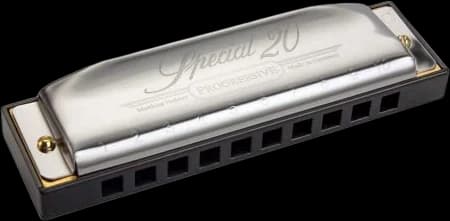
For most beginners, the Hohner Special 20 in the key of C is the easiest recommendation — a plastic comb that's comfortable from day one and the harmonica nearly every online lesson is taught on.
Key takeaways
- Start with a diatonic harmonica in the key of C — it's what almost every beginner tutorial is taught on.
- Plastic and ABS combs are more forgiving for beginners than wood; they don't swell and stay airtight.
- Stainless steel reeds resist corrosion from moisture better than the traditional brass alloy, at a higher price.
- Chromatic harmonicas (with a slide button) are a later step — nearly all beginner music is played on diatonic.
At a glance
| Pick | Best for | Price* | |
|---|---|---|---|
Best overall beginner pick Hohner Special 20 Diatonic Harmonica, Key of C★ 4.7 (5,920 Amazon ratings) | First harmonica, long beginner practice sessions | $49 | Buy on Amazon → |
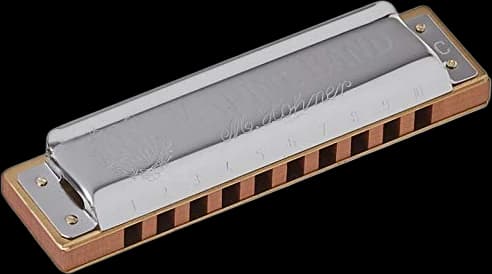 Best classic / traditional tone Hohner 1896/20 Marine Band Harmonica, Key of C★ 4.7 (4,440 Amazon ratings) | Traditional blues tone, players who don't mind wood care | $57 | Buy on Amazon → |
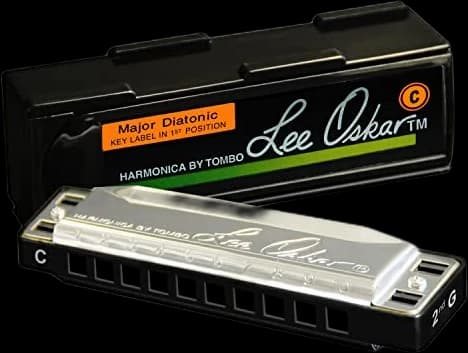 Best for player-serviceability Lee Oskar Major Diatonic Harmonica, Key of C | Players who'll own several keys long-term | $50 | Buy on Amazon → |
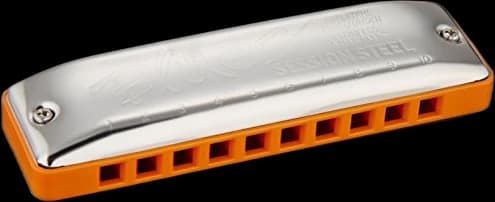 | Frequent players who want reeds that outlast brass | $65 | Buy on Amazon → |
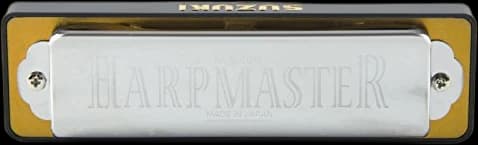 | Tight budgets who still want laser-tuned reeds | $40 | Buy on Amazon → |
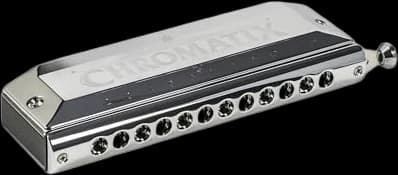 Best next step after diatonic Suzuki SCX-48 Chromatix Chromatic Harmonica, Key of C | Diatonic players ready to expand into other genres | $250 | Buy on Amazon → |
* Prices are approximate and may vary. Please check the latest price on Amazon.
Almost every beginner harmonica question has the same first answer: diatonic, in the key of C. That single choice is why nearly all online lessons, tab, and tutorials default to it, and it's the right starting point regardless of which specific harmonica you buy. From there, the real differences are comb material — plastic versus wood versus synthetic — and reed material, brass versus stainless steel, both of which change comfort and durability more than they change how quickly you'll learn. These six picks run from a $40 budget model to a $250 chromatic worth trying only once diatonic feels natural.
01 · Best overall beginner pick
Hohner Special 20 Diatonic Harmonica, Key of C
The comfortable, easy-bending default almost every beginner should start on.
The Special 20 was designed specifically to fix what beginners struggle with on older harmonicas: a plastic comb that won't swell or dry out, and reed plates recessed into it so the mouthpiece has no exposed sharp edges against your lips. It's genuinely easy to bend notes on out of the box, which matters for blues and folk playing where bending is constant. It's also the harmonica most C-key lesson videos assume you own, so following along is simpler. Skip it only if you specifically want the brighter, more traditional tone of a wood comb.
Strengths
- + Plastic comb is airtight and comfortable for long practice sessions
- + Recessed reed plates keep lips off sharp metal edges
- + Easy, reliable bending for blues and folk playing
Trade-offs
- − Reed plates are riveted, not screwed — harder to service yourself than the Marine Band or Seydel
- − Plain black plastic looks utilitarian compared to wood-comb models
- Type
- Diatonic, 10-hole
- Key
- C
- Comb
- Injection-molded plastic
- Reed plates
- Recessed into comb
- Reeds
- Brass alloy
4.7 out of 5 from 5,920 Amazon ratings
Amazon’s summary of its reviews: Customers find this harmonica plays and sounds great, with excellent craftsmanship that doesn't feel cheap. They appreciate its suitability for beginners, with one customer noting it's particularly good for learning blues. Customers praise its ease of use, particularly the blowing and drawing capabilities, and its bending features, with one mentioning it handles mid-range draw notes well.
What buyers praise
- sound quality — 92% positive of 405 mentions
- quality — 91% positive of 170 mentions
- suitability for beginners — 99% positive of 148 mentions
- playability — 92% positive of 127 mentions
02 · Best classic / traditional tone
Hohner 1896/20 Marine Band Harmonica, Key of C
The classic tone, with a small maintenance tradeoff for it.
The 1896 is the original harmonica most blues and folk playing is built around, continuously produced with the same pearwood comb and reed plate layout since it launched. Reddit's r/harmonica community is consistent that it produces a brighter, more traditional tone than plastic-comb models, at the cost of a wood comb that can swell slightly with moisture over time. Hohner also sells a Marine Band Deluxe and Crossover with sealed or composite combs specifically to reduce that swelling if lip comfort during long sessions becomes an issue. Skip it if you want the most trouble-free option from day one.
Strengths
- + The blues and folk harmonica most players eventually try
- + Warmer, more resonant tone than plastic-comb models
- + Pearwood comb has a genuine vintage pedigree
Trade-offs
- − Unfinished wood comb can swell slightly and needs occasional attention
- − Nailed construction is harder to service than the screwed Special 20
- Type
- Diatonic, 10-hole
- Key
- C
- Comb
- Pearwood (unfinished)
- Cover plates
- Stamped stainless steel
- Reeds
- Brass alloy
- Produced since
- 1896
4.7 out of 5 from 4,440 Amazon ratings
Amazon’s summary of its reviews: Customers find this harmonica to be one of the best brands, with a warm organic tone and great build quality for the price. The instrument is easy to play and learn, making it suitable for both beginners and professionals, and customers enjoy playing it daily. While the functionality works well, opinions about intune performance are mixed.
What buyers praise
- quality — 92% positive of 372 mentions
- sound quality — 93% positive of 176 mentions
- value for money — 91% positive of 87 mentions
- playability — 92% positive of 85 mentions
03 · Best for player-serviceability
Lee Oskar Major Diatonic Harmonica, Key of C
Built to be repaired instead of replaced — pays off over time.
Lee Oskar's harmonicas are built around an interchangeable system — comb, reed plates, and cover plates are all separate, screwed-together parts, so a worn-out reed plate can be swapped for about a third the cost of a new harmonica instead of replacing the whole instrument. That serviceability is the real selling point once you own more than one or two keys, since a gigging or practicing player wears out reed plates faster than combs or covers. It's also a genuinely easy harmonica to bend notes on, per repeated player feedback. Skip it if you'd rather just replace a cheap harmonica than maintain one.
Strengths
- + Reed plates can be replaced individually instead of buying a whole new harmonica
- + Widely reported as easy to bend for beginners
- + Consistent tuning and quality across keys, useful once you own several
Trade-offs
- − Priced alongside the Hohner picks above rather than under them
- − Some players find the tone slightly brighter/thinner than Marine Band
- Type
- Diatonic, 10-hole
- Key
- C
- Comb
- ABS plastic
- Reed plates
- Replaceable, screwed (not riveted)
- Tuning
- Standard Richter
04 · Best durability
Seydel Blues Session Steel Harmonica, Key of C
The durability pick for anyone who'll play daily for years.
Every other harmonica on this list uses a brass reed alloy, which is the traditional choice but corrodes over time from the moisture in your breath. Seydel's Blues Session Steel swaps in stainless steel reeds specifically to resist that corrosion, which matters most for players who practice daily or gig regularly rather than occasional players. The tradeoff, reported by players who've switched, is that steel reeds can feel slightly stiffer to bend until they're broken in, compared to brass. Skip it if you're not yet playing often enough to wear out a standard brass-reed harmonica in the first place.
Strengths
- + Stainless steel reeds resist corrosion from moisture far better than brass
- + Ergonomic cover plate shape is comfortable for extended playing
- + Airtight synthetic comb needs no break-in
Trade-offs
- − Among the pricier diatonic picks here
- − Stainless steel reeds are reported as slightly stiffer to bend until broken in
- Type
- Diatonic, 10-hole
- Key
- C
- Comb
- Synthetic (ABS)
- Reeds
- Stainless steel
- Cover plates
- Ergonomic contoured metal
4.5 out of 5 from 272 Amazon ratings
Amazon’s summary of its reviews: Customers find the harmonica's sound quality good, particularly for blues music, and appreciate its playability, with one noting it plays beautifully out of the box. Moreover, the instrument is well-built, durable, and customers consider it worth the price. They like its design, with one customer noting it fits their mouth better, and they appreciate its bendability. However, the hole size receives mixed feedback, with several customers mentioning the holes are slightly bigger than expected.
What buyers praise
- sound quality — 88% positive of 52 mentions
- playability — 79% positive of 24 mentions
- value for money — 77% positive of 22 mentions
05 · Best budget alternative
Suzuki MR-200-C Harpmaster Harmonica, Key of C
A genuinely solid budget alternative to the Hohner picks.
Suzuki's Harpmaster is the budget option that doesn't cut the obvious corners: a solid ABS comb that's airtight from the first note, laser-tuned phosphor bronze reeds, and a hard-shell case included at a price close to the cheapest generic harmonicas on Amazon. It's a legitimate alternative to the Hohner Special 20 for a beginner on a tighter budget, though it's less common in U.S. lesson content, so a first-time player following tutorials built around the Special 20 may find fewer key-specific resources. Skip it only if brand availability for future reed-plate replacements matters to you.
Strengths
- + Comes with a hard-shell case, unusual at this price
- + Airtight ABS comb needs no break-in like wood
- + Laser-tuned reeds are a genuine step above unbranded budget harmonicas
Trade-offs
- − Less common in the U.S. than the Hohner/Lee Oskar picks, so replacement parts are harder to find
- − Not as widely used in beginner lesson content as the Special 20
- Type
- Diatonic, 10-hole
- Key
- C
- Comb
- Solid ABS
- Reeds
- Phosphor bronze, laser-tuned
- Cover plates
- Polished stainless steel
- Includes
- Hard-shell case
4.4 out of 5 from 530 Amazon ratings
Amazon’s summary of its reviews: Customers find this harmonica to be a good first instrument with a unique tone. They appreciate its playability, with one customer noting it's incredibly playable straight out of the box, and consider it pretty darn good for the price.
What buyers praise
- musical quality — 96% positive of 28 mentions
$250
Buy on Amazon06 · Best next step after diatonic
Suzuki SCX-48 Chromatix Chromatic Harmonica, Key of C
The right next instrument once diatonic feels comfortable, not before.
Everything else in this guide is diatonic — one key, ten holes, built for blues, folk, and rock. The SCX-48 is the chromatic option, adding a spring-loaded slide button that shifts every hole up a half-step, so a single harmonica can play in any key and handle chromatic passages diatonic instruments can't. That flexibility comes with a real learning curve; it's a legitimately harder instrument to play well, and beginner blues or folk lesson content almost never uses one. Buy it only after you're comfortable on a diatonic in C and want to expand into jazz, classical, or more melodically complex playing.
Strengths
- + Full chromatic scale in every key from one instrument via the slide button
- + Chrome-plated covers and a precise slide mechanism reviewers describe as smooth
- + A real step toward jazz, classical, or film-score style playing
Trade-offs
- − Considerably harder to learn than diatonic — not a beginner's first harmonica
- − Heavier and pricier than any diatonic pick here
- Type
- Chromatic, 12-hole
- Key
- C
- Comb
- ABS
- Reed plates
- Phosphor bronze
- Cover plates
- Chrome-plated
- Mechanism
- Slide button
Diatonic vs. chromatic — start here
A diatonic harmonica has 10 holes and plays cleanly in one key, which is exactly what almost all blues, folk, rock, and country harmonica relies on — and it's what nearly every beginner tutorial is taught on. A chromatic harmonica adds a spring-loaded slide button that shifts every note up a half-step, letting one instrument play in any key and handle passages a diatonic can't reach, which is why it shows up in jazz and classical playing. Buy diatonic first; a chromatic is a genuinely harder instrument to learn and makes sense as a second harmonica, not a first.
Comb materials: plastic, wood, and metal
The comb is the body the reed plates attach to, and it's the single biggest factor in day-to-day comfort. Plastic and ABS combs, like the Special 20 and Harpmaster use, are airtight straight out of the box, don't swell with moisture, and are the easiest to maintain — which is why they're the common beginner recommendation. Wood combs, like the Marine Band's pearwood, produce a warmer tone that many experienced players prefer, but can swell slightly over time and benefit from occasional light sanding or a wax seal. Metal combs are less common on beginner models but show up on some higher-end instruments for their bright, edgy tone.
Why key of C first
A C harmonica isn't tonally special — it's a convention. Because most instructional material, tab, and jam-along tracks are written assuming a C harmonica, starting on any other key means constantly transposing what you're learning. Once the fundamentals of breathing, bending, and hole control are comfortable, adding a second harmonica in a different key (commonly A or G) is a natural next step, not a replacement for the C.
Reed material: brass vs. stainless steel
Most harmonicas, including the Hohner and Lee Oskar picks here, use a brass reed alloy — the traditional choice, responsive and easy to bend, but vulnerable over years to corrosion from the moisture in your breath. Stainless steel reeds, used in Seydel's Blues Session Steel, resist that corrosion far better, which mainly matters to players who practice daily or perform regularly rather than occasional players. Steel reeds are sometimes described as needing a short break-in period before they bend as easily as brass.
How these six differ, and how to choose
Start with the Hohner Special 20 for the most comfortable, easiest-bending default. Choose the Marine Band 1896 if the classic wood-comb tone matters more to you than convenience. Pick the Lee Oskar if you expect to own several harmonicas long-term and want parts you can replace individually. Go with the Seydel Blues Session Steel if you'll be playing daily for years and want reeds that outlast brass. The Suzuki Harpmaster is the value pick if budget is the deciding factor. And the Suzuki SCX-48 chromatic is worth adding only after a diatonic in C already feels natural.
Questions people ask
What key of harmonica should a beginner buy?
Key of C. It's not musically special, but nearly every beginner tutorial, tab sheet, and jam-along track assumes a C harmonica, so starting there means you're not constantly transposing what you're learning. A second harmonica in a different key, often A or G, makes sense once the basics feel comfortable.
Special 20 or Marine Band — which should I buy first?
The Special 20 for most beginners: its plastic comb is airtight from the first note and won't swell with moisture, and it's easier on your lips during long practice. The Marine Band's wood comb gives a warmer, more traditional tone that many players eventually prefer, but it needs a little more care.
Should a beginner start with a diatonic or chromatic harmonica?
Diatonic, without exception. It's the 10-hole harmonica used for almost all blues, folk, rock, and country playing, and it's what beginner lessons are built around. A chromatic harmonica's slide mechanism lets it play in any key, but it's a genuinely harder instrument to learn and makes more sense as a second purchase.
Do harmonica reeds wear out?
Yes — reeds are thin metal strips that fatigue with playing over months or years, especially with hard blowing or frequent bending. Brass reeds wear faster than stainless steel. Some harmonicas, like Lee Oskar's, use screwed-together reed plates that can be replaced individually; others require replacing the whole harmonica once reeds fail.
Is a $15 harmonica good enough to learn on?
It can work, but very cheap harmonicas are more likely to have air leaks, uneven reed response, or poor tuning that makes bending and clean notes harder to learn — problems that can make a beginner blame themselves for what's actually a low-quality instrument. A budget-but-reputable pick like the Suzuki Harpmaster avoids most of that for not much more money.
Sources
- Which Harmonica to Buy? – The Best & Worst Harmonicas
- Hohner Special 20 (Set of 12) – Harmonica Review
- r/harmonica: Marine band vs Special 20
- r/harmonica: Beginner which one should I buy
- Amazon listing: Seydel Blues Session Steel Harmonica, Key of C
- Amazon listing: Suzuki SCX-48 Chromatix Series Harmonica, C, 12 Hole
As an Amazon Associate, SlowHum earns from qualifying purchases, at no extra cost to you. Full disclosure.