The Best Earplugs for Sleeping
Foam, silicone putty, and soft reusable plugs, matched to how you actually sleep, using real noise-reduction numbers instead of marketing ones.
Published September 15, 2026 · 6 min read
Quick answer
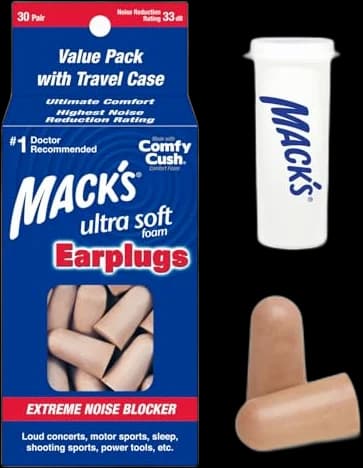
For most sleepers, Mack's Ultra Soft Foam Earplugs are the best starting point: a 33 dB NRR foam plug, cheap enough to buy in bulk, that works lying on your back or side.
Key takeaways
- Foam plugs post the highest NRR numbers; silicone putty and soft reusable plugs trade some noise reduction for comfort.
- NRR is a lab rating. NIOSH and OSHA guidance derates it by roughly half to estimate real-world protection.
- Side sleepers do best with low-profile silicone or moldable putty that doesn't press into the ear against a pillow.
- Nightly use can push wax back into the canal, per Consumer Reports' safety guidance, so give your ears occasional breaks.
At a glance
| Pick | Best for | Price* | |
|---|---|---|---|
Best overall Mack's Ultra Soft Foam Earplugs | Anyone who wants the highest published NRR in a foam plug | $12 | Buy on Amazon → |
 Best for side sleepers Loop Dream Earplugs | Side sleepers who don't want a plug pressing into the pillow | $50 | Buy on Amazon → |
 Best moldable putty Mack's Pillow Soft Silicone Earplugs | A custom, waterproof seal without inserting into the canal | $8 | Buy on Amazon → |
 Best budget foam Hearos Ultimate Softness Earplugs | Bulk buyers who still want a high published NRR | $7 | Buy on Amazon → |
 Best non-foam reusable Ohropax Classic Wax Earplugs | People who dislike foam and silicone stems entirely | $10 | Buy on Amazon → |
 Best reusable all-rounder Loop Quiet 2 Earplugs | One plug for sleep, flights, studying, and noise sensitivity | $25 | Buy on Amazon → |
 Best bulk value Howard Leight MAX Foam Earplugs | Households that go through earplugs fast, or loud snorers | $52 | Buy on Amazon → |
* Prices are approximate and may vary. Please check the latest price on Amazon.
The best earplugs for sleeping aren't necessarily the ones with the biggest number on the box. Mack's Ultra Soft Foam Earplugs publish a 33 dB NRR and cost next to nothing per pair, which makes them a fair default. But a side sleeper pressing a rigid plug into a pillow all night has a different problem than someone trying to block a snoring partner, and no single material solves both. This guide compares foam, silicone putty, and soft reusable plugs on what they're actually rated for, not on marketing copy, and explains why the number on the package isn't the number you'll get in bed.
01 · Best overall
Mack's Ultra Soft Foam Earplugs
The highest-NRR foam plug most people can find in bulk, and a fair default pick.
Mack's lists a 33 dB NRR for the Ultra Soft Foam, about as high as foam earplugs get, using a softer roll-down foam than most industrial brands. They're single-use, so plan on replacing a pair after a night or two once they lose their shape. On r/BuyItForLife threads about blocking a snoring partner, Mack's and Hearos are the two names that keep coming up. Skip them if foam expanding in a narrow ear canal has bothered you before; try silicone putty instead.
Strengths
- + Highest published NRR among common foam plugs
- + Cheap enough to replace often
- + Softer foam than most industrial brands
Trade-offs
- − Single-use, not washable
- − Foam can feel like too much pressure for narrow canals
- Material
- Polyurethane foam
- NRR
- 33 dB
- Pack size
- 30 pairs
- Reusable
- No, single-use
02 · Best for side sleepers
Loop Dream Earplugs
Sits flush enough for side-sleeping, at the cost of a lower NRR than foam.
Loop built Dream to sit low in the ear rather than protrude, which is the main complaint side sleepers have about most earplugs. Loop's own site lists it at 27 dB SNR (roughly 21 dB NRR), lower than a foam plug, since keeping that flush fit means less material blocking sound. It ships with silicone and foam-silicone tip sets in four sizes, plus a case. Skip it if you're sleeping through loud snoring or street noise and need maximum blocking over comfort.
Strengths
- + Low profile built for side sleeping
- + Reusable and washable
- + Multiple tip sizes included
Trade-offs
- − Lower noise reduction than foam
- − Pricier than disposable options
- Material
- Silicone / foam-silicone tips
- Noise reduction
- 27 dB SNR (maker); ~21 dB NRR
- Tip sizes
- XS, S, M, L
- Reusable
- Yes, 3-6 months typical use
03 · Best moldable putty
Mack's Pillow Soft Silicone Earplugs
Moldable putty that seals over the ear rather than inside it, good for canal sensitivity.
Pillow Soft is silicone putty you knead and press over the ear canal opening instead of inserting, which is also why it's sold as a swimmer's plug. Mack's lists a 22 dB NRR, lower than their own foam line, since it seals over rather than plugging the canal. Each piece is reusable for a few nights before it loses tack. It's a reasonable pick if foam or silicone stems bother your ear canal, but skip it if maximum attenuation is the priority.
Strengths
- + No insertion into the ear canal
- + Waterproof seal, doubles as a swim plug
- + Moldable to any ear shape
Trade-offs
- − Lower NRR than foam options
- − Loses stickiness after repeated use
- Material
- Silicone putty
- NRR
- 22 dB
- Insertion
- Molds over the ear canal opening, not inserted
- Reusable
- Yes, several uses per piece
04 · Best budget foam
Hearos Ultimate Softness Earplugs
A close second to Mack's foam on paper, usually cheaper per pair.
Hearos lists a 32 dB NRR for the Ultimate Softness line, a point below Mack's Ultra Soft, built from a slow-recovery foam that gives more time to seat it before it expands. It's one of the two brands that come up constantly in threads about cheap, disposable plugs for a snoring roommate or a loud apartment, and it's widely stocked at grocery and drugstore chains. Skip it if you want something reusable rather than disposable.
Strengths
- + High NRR at a low per-pair cost
- + Slow-recovery foam is easy to seat
- + Widely stocked at drugstores and grocery chains
Trade-offs
- − Single-use
- − Foam texture won't suit everyone
- Material
- Polyurethane foam
- NRR
- 32 dB
- Pack size
- 20 pairs
- Reusable
- No, single-use
05 · Best non-foam reusable
Ohropax Classic Wax Earplugs
A wax-and-cotton plug made almost the same way since 1907.
Ohropax Classic is cotton wool soaked in petroleum jelly and paraffin wax, kneaded into a ball and pressed over the ear canal opening rather than inserted. The maker's own product data sheet lists a 23 dB NRR, lower than foam, which tracks with sealing over the canal rather than plugging it. It's an easy recommendation for anyone who's tried foam and silicone and found both irritating. Skip it if you want the highest possible attenuation, or dislike a tackier, waxier feel against skin.
Strengths
- + Genuinely different material for foam- or silicone-sensitive ears
- + No insertion into the canal
- + Long manufacturing track record
Trade-offs
- − Lower attenuation than the top foam picks
- − Waxy texture isn't for everyone
- Material
- Cotton wool, petroleum jelly, paraffin wax
- NRR
- 23 dB (maker data sheet)
- Insertion
- Molds over the ear canal opening
- Reusable
- Yes, several uses per piece
06 · Best reusable all-rounder
Loop Quiet 2 Earplugs
A comfortable reusable plug for steady background noise, not for blocking loud snoring alone.
Loop's own listing puts Quiet 2 at 24 dB SNR (about 14 dB NRR), a real step down from a 33 dB foam plug, in exchange for a soft, low-profile silicone body meant for repeated nightly wear rather than being thrown away. It ships with four tip sizes so more ear shapes get a genuine seal, which matters more for reusable plugs than disposables. It's a reasonable pick for one earplug covering sleep, travel, and noisy offices, but skip it if a loud snorer or street noise is the actual problem; foam will out-attenuate it.
Strengths
- + Comfortable for repeated nightly use
- + Washable and reusable
- + Multiple tip sizes for fit
Trade-offs
- − Lower attenuation than foam
- − Cost adds up compared to disposables
- Material
- Flexible silicone
- Noise reduction
- 24 dB SNR (maker); ~14 dB NRR
- Tip sizes
- XS, S, M, L
- Reusable
- Yes, 3-6 months typical use
07 · Best bulk value
Howard Leight MAX Foam Earplugs
An industrial-grade 33 dB foam plug sold in bulk boxes for not much money.
Howard Leight, a Honeywell brand, rates MAX at 33 dB NRR, tying the highest foam ratings on the market, with a contoured bell shape designed to resist backing out of the canal overnight. It's built for factory floors, which is exactly why a 200-pair box costs less per plug than most consumer sleep brands. The tradeoff is industrial packaging and marketing rather than anything sleep-branded. Skip it if you'd rather try a small pack before committing to 200 pairs.
Strengths
- + Tied for the highest published foam NRR
- + Lowest cost per pair in bulk
- + Contoured shape resists backing out overnight
Trade-offs
- − Only sold in large quantities
- − Industrial packaging, not sleep-branded
- Material
- Polyurethane foam
- NRR
- 33 dB
- Pack size
- 200 pairs
- Reusable
- No, single-use
Foam, silicone putty, or a soft reusable plug
Foam earplugs post the highest published NRR numbers, 32 to 33 dB is normal for brands like Mack's, Hearos, and Howard Leight, because the foam expands to fully plug the canal. They're cheap and disposable, useful if you replace them often, but the insertion depth and pressure bother some sleepers.
Silicone putty and wax plugs, like Mack's Pillow Soft and Ohropax Classic, seal over the ear canal opening instead of inserting into it. Published NRR drops into the low-to-mid 20s dB, but for ears that don't tolerate anything inside the canal, that's the more comfortable option.
Reusable silicone plugs, like Loop Quiet 2 and Loop Dream, trade more noise reduction again, often in the mid-teens to low-20s dB, for a washable plug worn night after night without buying more.
What the NRR number actually means
Noise Reduction Rating (NRR) comes from a lab test, not a night in your actual bedroom. It's measured under controlled conditions with a practiced fit, not the fit most people get fumbling with a foam plug in the dark.
OSHA's own guidance derates the labeled NRR by roughly 50% to estimate real-world protection, and NIOSH has historically recommended derating formable foam plugs by about half, and other earplug types even further. In practice, a 33 dB foam plug behaves closer to a mid-teens real-world number once an imperfect fit is accounted for, still meaningful protection, just not what's printed on the box.
If you sleep on your side
The main complaint from side sleepers isn't noise reduction, it's a plug that presses painfully into the ear against a pillow. Low-profile silicone designs like Loop Dream are built specifically to sit flush rather than protrude, and putty-style plugs like Mack's Pillow Soft avoid the issue entirely by sealing over the opening instead of filling the canal.
Foam plugs can work for side sleeping too if you trim them slightly shorter after inserting, so less of the plug extends past the ear.
Keeping your ears healthy
Consumer Reports' guidance on earplug safety is straightforward: insert a plug deep enough to block sound but never so far that it hurts, checking with a mirror or a second opinion if you're unsure. Pain means remove it.
The same guidance warns that nightly earplug use can push wax back into the canal and cause impaction, and that constant use can encourage bacterial growth. The practical fix is to wash hands before handling plugs, replace foam earplugs rather than reusing them past their shape, and give your ears the occasional night off.
How these seven differ
If raw noise blocking is the goal and comfort is secondary, the foam plugs, Mack's Ultra Soft, Hearos Ultimate Softness, and Howard Leight MAX, post the highest published NRR and cost the least per pair. If you're a side sleeper or your ear canal doesn't tolerate foam, Loop Dream or Mack's Pillow Soft trade some attenuation for comfort. Ohropax Classic is worth trying if both foam and silicone bother you, it's a genuinely different material. Loop Quiet 2 makes sense if you want one reusable plug for sleep, flights, and noisy offices rather than a sleep-only product.
A quieter room helps more than a better plug
Earplugs solve the noise that's already reaching your ear; a calmer sound environment before bed helps with the rest. If falling asleep to something other than silence works better for you, SlowHum's sleep listening guide is a reasonable next stop alongside whatever plug you land on.
Questions people ask
What NRR is good enough for sleeping earplugs?
Anything from the low 20s dB up works for most bedrooms. The highest foam plugs publish 32-33 dB NRR, but NIOSH and OSHA guidance suggests real-world attenuation runs well below that number, so don't chase the highest rating alone; fit and comfort matter more for a plug you'll actually keep in all night.
Are silicone earplugs or foam better for sleeping?
Foam posts a higher published NRR and costs less, but silicone putty and reusable silicone plugs are usually more comfortable for side sleepers and for ears that don't tolerate something inserted into the canal. Neither is objectively better; it depends on what's actually keeping you awake.
Can I sleep with earplugs every night?
You can, but Consumer Reports' earplug-safety guidance notes that nightly use can push wax back into the canal and encourage bacterial growth. Give your ears an occasional night off, wash your hands before handling plugs, and replace foam earplugs rather than reusing a worn-out pair.
How do I stop earplugs from hurting when I'm side sleeping?
Switch to a low-profile design built for side sleeping, like Loop Dream, or a putty plug like Mack's Pillow Soft that seals over the ear rather than filling the canal. If you're using foam, insert it fully, then trim off any bit that still protrudes past the ear.
How long do reusable earplugs like Loop last?
Manufacturers generally rate reusable silicone earplugs for three to six months of nightly use with regular soap-and-water cleaning, though the tips wear out and lose grip faster with heavier use.
Sources
- CDC/NIOSH - Noise and Hearing Loss overview
- OSHA 1910.95 Appendix B - Methods for Estimating the Adequacy of Hearing Protector Attenuation
- CDC/NIOSH - Provide Hearing Protection guidance
- Consumer Reports - How to Use Earplugs Correctly
- Mack's Ear Plugs - Ultra Soft Foam Ear Plugs product page
- Loop Earplugs - Dream product page
- Ohropax - Classic product data sheet (PDF)
- Hearos - Ultimate Softness Series product page
As an Amazon Associate, SlowHum earns from qualifying purchases, at no extra cost to you. Full disclosure.