The Best Singing Bowls
Most bowls sold as Tibetan are made in Nepal or India, hand-hammered ones sound different from cast ones, and the healing claims are mostly unsourced - here's what actually matters.
Published September 17, 2026 · 6 min read
Quick answer
For most first-time buyers, the Silent Mind beginner set is the easiest place to start: a well-reviewed, mid-size hand-hammered bowl sized for both striking and rim-rubbing, with a guide included.
Key takeaways
- Most bowls sold as 'Tibetan' today are actually handmade in Nepal or northern India; that is normal, not a red flag.
- Hand-hammered bowls have richer, layered overtones; machine-made or cast bowls sound cleaner and simpler and cost less.
- Bigger bowls ring lower, smaller bowls ring higher - a 4-to-6-inch bowl is the most flexible single first purchase.
- 'Seven metals' and chakra/healing claims are traditional marketing language we could not verify - treat them as flavor text, not a spec.
At a glance
| Pick | Best for | Price* | |
|---|---|---|---|
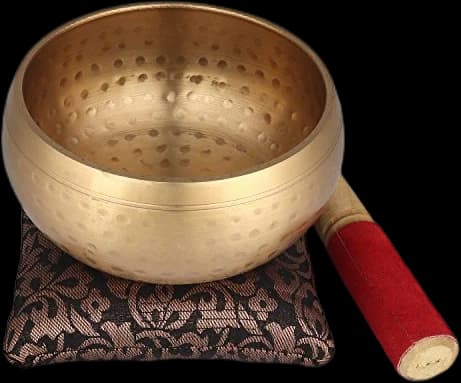
Cheapest solid starting point Zap Impex 5-Inch Hand-Hammered Brass Singing Bowl Set | Trying the instrument before spending more | $25 | Buy on Amazon → |
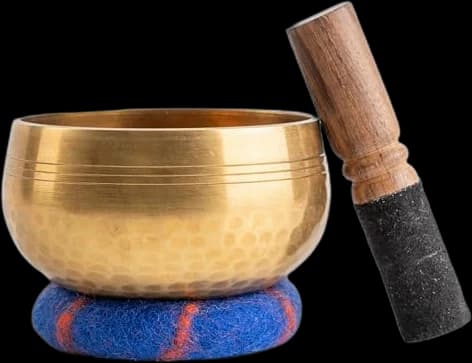 Best true beginner size The Ohm Store 4-Inch Hand-Hammered Singing Bowl Set | A first bowl sized for one hand | $30 | Buy on Amazon → |
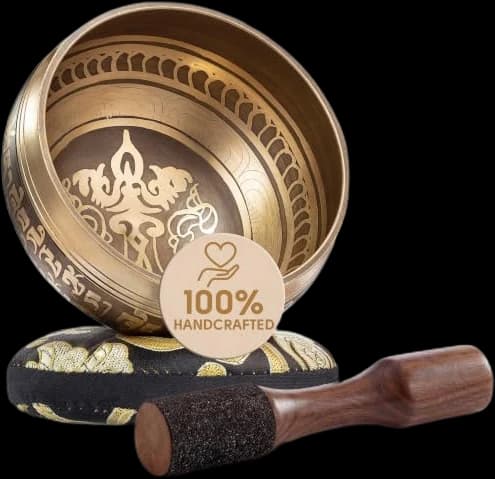 Best overall for most beginners Silent Mind Beginner-Friendly Tibetan Singing Bowl Set★ 4.6 (26,428 Amazon ratings) | Someone who wants one well-rounded bowl and a guide | $25 | Buy on Amazon → |
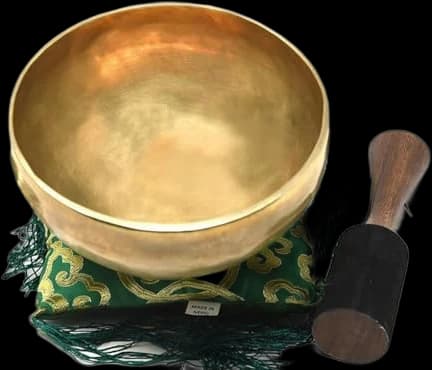 Best large, hand-hammered bowl Thamelmart 8.5-Inch Hand-Hammered Singing Bowl | Group sound baths or a deep, room-filling tone | $190 | Buy on Amazon → |
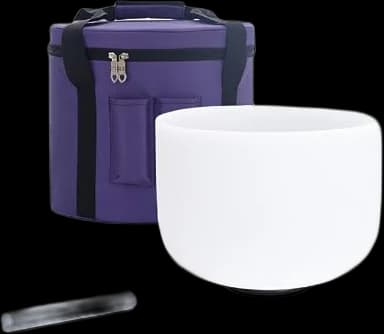 | Someone who wants the crystal category specifically, not a metal-bowl upgrade | $90 | Buy on Amazon → |
* Prices are approximate and may vary. Please check the latest price on Amazon.
Most bowls sold as "Tibetan" today are made in Nepal or India, not Tibet, by artisans continuing a genuinely old metalworking tradition - that is not a red flag, it is just the honest label. What actually separates a good bowl from a bad one is simpler than the marketing: hand-hammered bowls ring with more complex, layered overtones and irregular shapes; machine-made or cast bowls ring cleaner and more consistent, and cost less.
Size sets the pitch - bigger and lower, smaller and higher - and a cushion plus the right mallet do more for the sound than any "seven metal" claim on the box. The picks below run from a $25 starter bowl to a large hand-hammered piece, plus one crystal bowl as a genuinely separate category.
01 · Cheapest solid starting point
Zap Impex 5-Inch Hand-Hammered Brass Singing Bowl Set
A genuinely hand-hammered brass bowl at a price that makes it easy to just start.
Zap Impex is a long-running India-based maker whose bowls show up across Amazon, Walmart, and specialty percussion shops - a sign of a real supply chain rather than a one-off import. At 5 inches, this bowl sits in a comfortable mid-high pitch range for a first purchase, and it ships with the cushion and mallet needed to actually play it, not just the bowl alone. Do not expect the layered overtone complexity of the pricier hand-hammered bowls in this guide; at this price, the tone is simpler and brighter.
Strengths
- + Genuinely hand-hammered brass, not cast
- + Comes with cushion and mallet included
- + Low-risk price for a first bowl
Trade-offs
- − Simpler overtones than the larger, pricier bowls here
- − Small size limits it to solo, quiet use
- Size
- 5 in diameter
- Material
- Hand-hammered brass
- Origin
- India
- Construction
- Hand-hammered
- Included
- Mallet, cushion
02 · Best true beginner size
The Ohm Store 4-Inch Hand-Hammered Singing Bowl Set
Small, high-pitched, and honestly labeled - the maker states plainly that it's hammered in Nepal.
The Ohm Store is upfront that its bowls are hand-hammered by artisans in the Himalayan foothills of Nepal, which is the kind of specific, checkable claim worth more than a vague authentic-Tibetan label. At 4 inches it is small enough to hold and strike in one hand, sitting near the top of the singing range, and it includes a wooden striker and a hand-sewn cushion. It is a genuinely small bowl - if you want something with more presence in a room, size up.
Strengths
- + Specific, checkable origin claim (Nepal, hand-hammered)
- + Comfortable one-hand size for beginners
- + Includes striker and cushion
Trade-offs
- − High pitch and small size mean limited low-end presence
- − Not loud enough for a group sound bath
- Size
- 4 in diameter
- Material
- Hand-hammered brass/bronze alloy
- Origin
- Nepal (Himalayan foothills)
- Included
- Wooden striker, hand-sewn cushion
03 · Best overall for most beginners
Silent Mind Beginner-Friendly Tibetan Singing Bowl Set
One of the most reviewed beginner sets in the category, sized for both striking and rim-rubbing.
Silent Mind's beginner set is built around the two skills a new player needs: an easy-to-play size and shape, plus an included guide for learning the rim-rubbing technique. It sits between the smaller Ohm Store and Zap Impex bowls and the larger hand-hammered pieces in this guide, which makes it the more flexible single-bowl choice if you are only buying one. The cushion and mallet are included, and the set is positioned as gift-ready if that matters to you.
Strengths
- + Sized well for both striking and rim-rubbing
- + Includes a beginner's guide
- + Widely reviewed, well-established listing
Trade-offs
- − Mid-size means it's not the deepest or the most portable option
- − Beginner-friendly bowls trade some tonal complexity for ease of play
- Material
- Hand-hammered bronze/brass alloy
- Origin
- Nepal
- Included
- Cushion, mallet, guide
- Use case
- Meditation, beginner practice
4.6 out of 5 from 26,428 Amazon ratings
Amazon’s summary of its reviews: Customers find the singing bowl to be beautifully crafted and well worth the money, with one mentioning it's perfect for transporting to different meditation groups. The sound quality receives positive feedback for its soothing tones, and customers enjoy using it, with one noting their entire family enjoys it. The size receives mixed reactions - while some find it good for beginners, others say it's quite small.
What buyers praise
- quality — 96% positive of 3,055 mentions
- sound quality — 93% positive of 2,435 mentions
- singing bowl — 100% positive of 844 mentions
- value for money — 92% positive of 844 mentions
$190
Buy on Amazon04 · Best large, hand-hammered bowl
Thamelmart 8.5-Inch Hand-Hammered Singing Bowl
A genuinely large hand-hammered bowl - treat the seven-metals and master-healing branding as flavor text, not a spec.
At 8.5 inches, this is a real step up in both size and pitch depth from the starter bowls above, and it is hand-hammered rather than cast, which shows up as more layered overtones on a strike. Thamelmart, a Nepal-based maker, markets it as a bell-bronze or seven-metals alloy said to represent celestial bodies - a traditional claim with no metallurgical documentation behind it, so we are naming it here without repeating it as fact. It ships with a cushion, carry box, and both a mallet and a drumstick striker. Buy it for the size and the hammering, not the metal-composition story.
Strengths
- + Genuinely large size for real room presence
- + Hand-hammered, not cast
- + Ships with cushion, carry box, and two strikers
Trade-offs
- − Seven-metals and master-healing naming is unverifiable marketing
- − Priced well above the starter bowls in this guide
- Size
- 8.5 in diameter (per the Amazon listing)
- Material
- Bronze/bell-metal alloy (marketed as "seven metals")
- Origin
- Nepal
- Included
- Cushion, carry box, wooden mallet, drumstick
05 · Best crystal bowl to start with
KVKA 10-Inch Crystal Singing Bowl (D Note)
A single-note frosted quartz bowl - the honest entry point into crystal, rather than a full multi-bowl set.
Crystal bowls are cast from quartz sand rather than hammered, and they are sold and tuned per note rather than as a generic singing bowl the way metal ones are - this one is tuned to D. Buying a single bowl instead of a seven-piece chakra set is the lower-commitment way to find out whether you like the brighter, longer-ringing crystal tone before spending on a full set. It ships with a carrying case and suede striker. Handle it more carefully than a metal bowl: quartz cracks where brass just dents.
Strengths
- + Single note lets you try crystal without a full set
- + Longer sustain and clearer pitch than most metal bowls
- + Includes carrying case and suede striker
Trade-offs
- − Fragile - a drop can crack it, unlike a metal bowl
- − Higher, brighter tone than traditional metal bowls, which some practices prefer
- Size
- 10 in diameter
- Material
- Frosted quartz crystal
- Note
- D (marketed as "Sacral Chakra")
- Tuning
- 432 Hz
- Included
- Carrying case, suede striker
Hand-hammered vs. machine-made
A hand-hammered bowl is worked by hand over hundreds of individual strikes, which leaves it slightly asymmetric - you can often see faint hammer marks and a shape that is not perfectly round. That imperfection is also what gives it a richer, more layered overtone: strike it and you will hear more than one pitch shift and blend as the sound decays. A cast or machine-finished bowl is more uniform in shape and tone, which sounds cleaner but flatter, and it is usually the reason a bowl costs $25 instead of $150. Neither is a wrong purchase - it depends on whether you want a single clean note or a more complex wash of sound.
Where these bowls are actually made
The word "Tibetan" on a singing bowl today is a style name more than a country of origin. Most bowls sold in the US, including nearly every pick in this guide, are handmade in Nepal or northern India, where the metalworking tradition has continued for centuries. A seller that is upfront about "handmade in Nepal" rather than vaguely implying Tibet is generally the more trustworthy one.
Size and pitch
Bowl size and pitch move together in one direction: bigger bowls ring lower, smaller bowls ring higher. A palm-sized 4-inch bowl sits near the top of a singing range and works well for a nightstand or a desk; a 9-to-12-inch bowl produces a deep tone felt as much as heard, better suited to a room full of people in a sound bath than a single quiet listener. If you only want one bowl, a mid-size 5-to-6-inch bowl is the most flexible starting point.
Cushion and mallet: the accessories that actually matter
A bowl needs to sit on something that does not damp its ring - a hard tabletop kills the sustain, which is why every set here ships with a fabric cushion. The mallet matters almost as much as the bowl: a bare wood striker gets a sharper, more percussive strike tone, while a suede- or leather-wrapped mallet is what you want for the continuous rim-rubbing technique that makes a bowl sing rather than just ring once. Most starter sets include one mallet that can do both reasonably well; a dedicated suede striker is a worthwhile second purchase once you know you will keep playing. If you use a bowl to wind down at night, it pairs naturally with the calmer listening in our sleep sound guide.
Crystal bowls: a different instrument
Crystal singing bowls are not a fancier version of a metal bowl - they are cast from crushed quartz sand in a spun mold, not hammered, and they are tuned to a specific musical note rather than sold as whatever a hammering session produced. They ring higher, clearer, and longer than most metal bowls, which is why sound-bath practitioners often collect a set tuned to different notes. They are also genuinely fragile: a metal bowl survives a drop that will crack quartz. Treat a crystal bowl as a distinct purchase decision, not an upgrade path from a metal one.
What the marketing claims actually mean
"Seven metals," "master healing grade," and specific chakra-note correspondences are traditional branding language repeated across almost every listing in this category, not claims backed by any metallurgical or medical documentation we could find - treat them as flavor text, not a spec. Health and healing claims show up constantly in this market, and we could not verify any of them, so we do not repeat them here. What is real and worth paying for: hand-hammering, metal thickness, and a maker who says plainly where the bowl was made.
Questions people ask
Are Tibetan singing bowls actually from Tibet?
Almost never, today. Most bowls sold as 'Tibetan' are handmade in Nepal or northern India by artisans working in the same tradition. That is the honest, common answer across the category - a listing that says 'handmade in Nepal' is being more accurate than one that only says 'Tibetan'.
What size bowl should a beginner buy?
A 4-to-6-inch bowl is the easiest starting point: high enough in pitch to sit comfortably on a desk or nightstand, and light enough to hold in one hand while you learn the rim-rubbing technique. Save a large 9-to-12-inch bowl for once you know you want the deeper, room-filling tone.
Is a hand-hammered bowl actually better than a machine-made one?
Better for what you are doing. Hand-hammered bowls have more complex, layered overtones and cost more; machine-made or cast bowls ring cleaner and simpler and cost less. Neither is wrong - a beginner learning to play often gets just as much use from an inexpensive machine-finished bowl as a $200 hand-hammered one.
Do singing bowls have real health or healing benefits?
We could not find sourced, verifiable evidence for the specific healing and chakra claims common in this market, and we do not repeat them. What is not in dispute is that a sustained, low tone is broadly experienced as calming, the same reason white noise and ambient music get used for focus and sleep.
How do you actually play a singing bowl?
Two techniques: striking the rim or side with a padded mallet for a single ringing note, or rubbing the mallet around the outer rim in a continuous circular motion to build a sustained singing tone. Rim-rubbing takes more practice - keep steady pressure and speed rather than pressing harder to get more volume.
Should a first bowl be crystal or metal?
Metal, in most cases. Crystal bowls are a distinct, more fragile category, usually bought to complement a metal bowl once you already know you will keep practicing, not as the first purchase. A metal bowl is also more forgiving of an accidental drop.
Sources
- How to Choose a Singing Bowl: Complete Guide - Shanti Bowl
- 10 Best Singing Bowls of 2026 (Yoga Instructor-Reviewed) - mybest
- Large Tibetan Singing Bowl Set - 9" Master Healing Grade - Himalayan Bazaar product page
- The Jupiter Bowl: Large 12-Inch Handmade Bronze Singing Bowl From Nepal - The Ohm Store
- Zap Impex 5-Inch Tibetan Singing Bowl Set - Amazon listing
- The Ohm Store 4-Inch Hand-Hammered Singing Bowl Set - Amazon listing
Keep reading
As an Amazon Associate, SlowHum earns from qualifying purchases, at no extra cost to you. Full disclosure.