Kalimba · 6 min read
How to Start the Kalimba
The mbira's gentle modern descendant is the easiest first instrument there is. Here's how to choose one that lasts, and what to play in your first week.
If a recording of the mbira drew you here, the kalimba is the doorway. It is the most forgiving instrument we know of: you hold it in two hands, brush a tine with a thumbnail, and a clear bell-like note simply appears. There is no embouchure to fail at, no bow to scrape, no chord shape to cramp your hand. A child can make it sound good in a minute. That low floor is the whole point — it lets you spend your attention on listening rather than fighting the instrument.
01
What a kalimba actually is
The kalimba belongs to the lamellophone family — instruments with tuned metal or cane tongues plucked by the thumbs. Its ancestors are the African mbira and karimba, played for centuries across Zimbabwe and the surrounding region. The modern, tuned, mass-produced kalimba you can buy today was standardized in the twentieth century, with the tines laid out so the lowest note sits in the middle and the scale alternates outward, left and right.
A modern beginner kalimba has 17 keys, tuned to C major. That single design decision is why it feels so calm: in a plain major tuning, there are no “wrong” notes to stumble into. Run your thumbs at random and it sounds intentional. This is the same reason it works as background music for focus or sleep — the instrument is built so that wandering sounds like composition.
02
What to look for in your first one
You do not need to spend much. A good first kalimba runs around $25–40, and the differences that matter at this price are small but real:
17 keys, C major. Don't be tempted by 8- or 10-key novelty ones, and don't jump to a 21-key or chromatic model yet. Seventeen is the standard for a reason.
Solid body vs. hollow body. A solid-wood (often mahogany or koa) board gives a focused, intimate tone — the classic kalimba sound. A hollow body is louder and warmer with more sustain. For a first instrument and for quiet listening, a solid mahogany board is the safe, lovely default.
What should come in the box. A decent kalimba arrives already tuned, with a small tuning hammer and a sheet of number-and-letter stickers for the tines. If a listing doesn't mention a tuning hammer, skip it.
03
Tune it once, then forget about tuning
Here is the relief: a new kalimba comes tuned to C, and you can leave it that way more or less forever. Tines drift only slightly over months, and you nudge them back with the included hammer and a free tuner app. Unlike a guitar, there is no nightly ritual. Tune it when it sounds off — which, for a casual player, may be never.
04
What to play in the first week
You can read music if you want to, but you don't have to. Kalimba notation is usually just numbers (or letters) that map directly to the stickers on the tines. A beginner songbook turns “learning an instrument” into “following dots,” and you'll have a recognizable melody within an hour.
Our advice for week one: don't chase songs at all for the first few days. Put on a recording you love, and simply answer it — play slowly, let each note ring out fully before the next, and listen to the overtones decay. The kalimba rewards space more than speed. Once that feels natural, a songbook gives you somewhere to go.
05
Where it goes from here
If it sticks, the upgrade path is gentle. A hollow-body kalimba adds resonance and sustain. A 21-key extends the range upward. And a chromatic kalimba — with a second row of tines for the sharps and flats — lets you play in any key and follow more ambitious arrangements. None of that is necessary to be happy; plenty of people play one $35 board for years. But it's nice to know the instrument grows with you rather than capping you.
At a glance
| Pick | Best for | Price | |
|---|---|---|---|
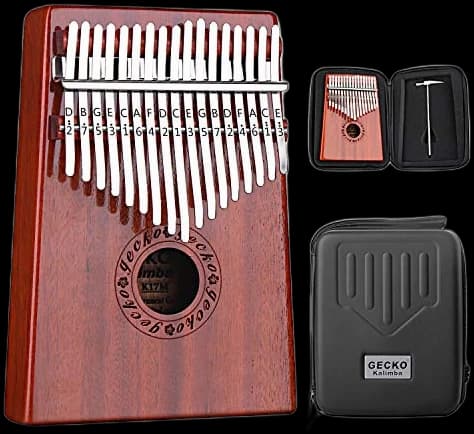 GECKO 17-Key Kalimba (Mahogany)· our pick | The instrument | $32 | Buy → |
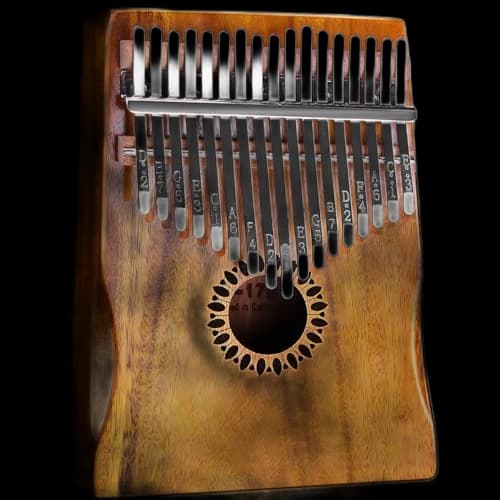 Newlam 17-Key Kalimba | The instrument | $26 | Buy → |
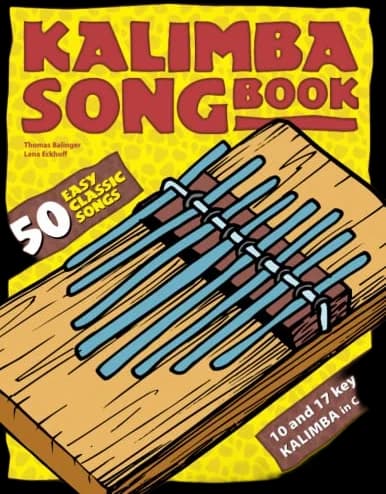 Kalimba Songbook: 50 Easy Classic Songs | To play | $10 | Buy → |
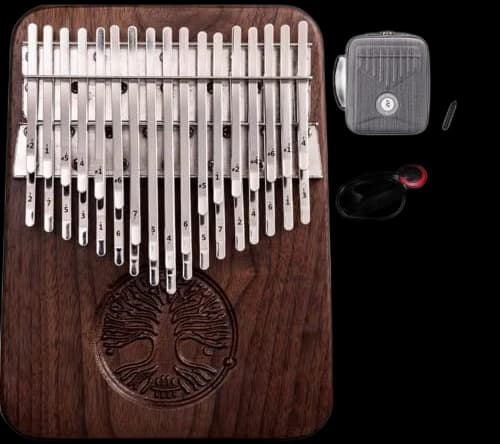 Hluru 34-Key Chromatic Kalimba | The instrument | $90 | Buy → |
Amazon prices are from our last check and change often — the listing has today's.
From the listener to the player
What we'd actually buy
The shortlist — what we'd actually reach for, and why each earns its place.
The instrument
$32
GECKO 17-Key Kalimba (Mahogany)
The default first kalimba. Solid mahogany board, ships tuned to C with a hammer and sticker set, and has the warm focused tone the instrument is loved for. Hard to do better at the price.
Buy on AmazonThe instrument
$26
Newlam 17-Key Kalimba
The budget pick. A few dollars less, same 17-key C tuning, same starter kit in the box — a fine way in if you want to spend the minimum to find out whether it's for you.
Buy on AmazonTo play
$10
Kalimba Songbook: 50 Easy Classic Songs
Number notation that maps straight to the tine stickers. The fastest path from holding the instrument to playing something you recognize.
Buy on AmazonThe instrument
$90
Hluru 34-Key Chromatic Kalimba
For later, not now. A double-row chromatic with every sharp and flat, so you can play in any key. Buy this only once a 17-key has stopped being enough.
Buy on AmazonAffiliate links
These are honest recommendations — the ones we’d point a friend toward. As an Amazon Associate, SlowHum earns from qualifying purchases; we may also earn from other links. It costs you nothing extra. Amazon prices are from our last check and change often. Full disclosure.
Listen first
The mbira — Zimbabwe
Hear the tradition this instrument comes from →
Listen while you learn.
New traditions arrive on the SlowHum channel regularly. Subscribe to keep the well full while you practice.
Subscribe on YouTubeFree · No email required